
TL;DR

Turn the school run and nap time into listening time
- Thousands of audiobooks, podcasts and originals
- Listen on your phone, tablet or Echo — also offline
- Cancel anytime
White, pink, and brown noise each have distinct sound profiles that can help soothe babies. Pink and brown noise tend to be softer and more natural, potentially offering a gentler sleep aid. Keeping volume below 50 decibels and limiting use supports safety and healthy sleep habits.
Ever noticed how some white noise machines sound like static, while others produce a deep, rumbling hum? It turns out, not all noise is created equal—especially when it comes to soothing your baby. Choosing the right sound can make a big difference in helping your little one fall asleep and stay asleep.
In this guide, you’ll learn the differences between white, pink, and brown noise—what makes each unique, how they affect your baby’s sleep, and what safety tips to keep in mind. Get ready to decode those soothing sounds and find what works best for your family.
Pink and brown noise are perceived as softer and more natural than white noise, often making them better choices for infants.
Keep volume below 50 decibels to protect your baby’s hearing while using noise machines.
Limit noise use to sleep periods to avoid dependence and potential long-term effects.
Position the sound device at least 3 feet away from the crib for safety.
Experiment with different noise types to find what your baby finds most soothing.
Which Sleep Sound Is Gentlest for Your Baby?
White, pink, and brown noise can all soothe babies, but they do it differently. White noise masks sharp sounds with static-like coverage, while pink and brown noise lean deeper, softer, and more natural.
Pink and brown noise are often perceived as less harsh than white noise, making them helpful options for babies who startle easily.
Three Sound Profiles, One Sleep Goal
Noise machines work by creating a steady background sound that masks sudden disruptions. The difference is frequency balance: white is bright and even, pink slopes softer, and brown moves deepest.
White Noise
Sounds like radio hiss or TV static. Useful when doors, traffic, pets, or household sounds keep waking your baby.
Pink Noise
Sounds like rain, a waterfall, or distant thunder. Often gentler for babies who find white noise too sharp.
Brown Noise
Sounds like rolling thunder or a low waterfall. Helpful when a baby seems soothed by deeper, steadier bass tones.
Side-by-Side: Which Fits Your Baby Best?
There is no universal winner. The best sound is the one your baby settles with at a safe volume, from a safe distance, and during a limited sleep window.
| Feature | White Noise | Pink Noise | Brown Noise |
|---|---|---|---|
| Sound profile | Static, consistent, all frequencies equally loud | Deeper, softer, lower-frequency emphasis | Deep, rumbling, bass-heavy |
| Perceived feel | ~ Can feel sharp for sensitive babies | ✓ Gentle, rain-like, less intrusive | ✓ Grounding, thunder-like, very soothing |
| Best use | Masking sudden household sounds | When white noise feels too bright | When deeper sound blocks disruptive noise |
| Safety priority | ✓ Keep below 50 dB | ✓ Keep below 50 dB | ✓ Keep below 50 dB |
| Watch-out | ✗ Avoid loud, close placement | ~ Still needs limits | ~ Still needs limits |
How to Introduce Sleep Noise Safely
Start gently, observe your baby’s response, and treat sound as a sleep cue rather than a constant background. Safety is less about the color of noise and more about volume, placement, and duration.
Choose a sound
Try pink or brown noise if white noise feels too sharp.
Set the volume
Keep it below 50 decibels, similar to a soft conversation.
Move it away
Place the machine at least 3 feet from the crib.
Use sleep windows
Reserve sound for naps and bedtime instead of all-day use.
Taper if needed
Gradually reduce volume if your baby becomes dependent.
When Brown Noise Helps
A parent dealing with loud construction places a brown-noise machine across the room, keeps it just below 50 dB, and uses the deep hum to mask the racket during sleep. The lesson: deeper noise can be useful, but setup matters.
Trace the Bedtime Decision
Use your baby’s reaction as the guide. Consistency helps create a sleep association, but it is fine to test pink and brown noise if white noise seems overstimulating.
Parent FAQs
The common questions all come back to the same principle: keep the sound gentle, distant, and limited.
Is white noise safe for my baby?
Yes, when played below 50 decibels, used for limited periods, and placed at least 3 feet from your baby’s head.
Which noise is best for a fussy baby?
Many parents find pink or brown noise more soothing because they sound more natural and less harsh than white noise.
Can noise machines cause dependence?
Some babies may become used to sound as a sleep cue. If needed, reduce volume gradually over time.
When should I stop using one?
Consider tapering when your baby can fall asleep independently or if the noise seems necessary for every sleep.
What exactly is white noise, and why do parents love it?
White noise is a consistent static-like sound that contains all the audible frequencies played at equal intensity. Imagine the hiss of a radio tuned between stations or the static of a TV turned to snow—this is white noise. It’s popular because it masks sudden household sounds, like a door slam or barking dog, helping your baby stay asleep.
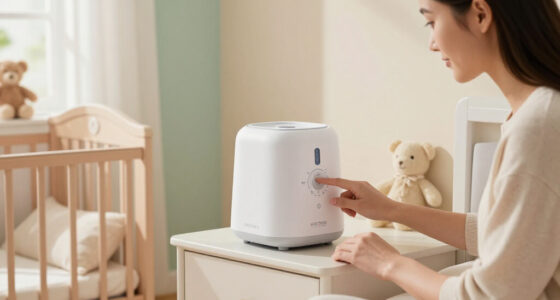
For example, a parent might use a white noise machine in the nursery during nap time to block out street noise from passing cars. The uniform sound creates a calming environment that mimics the natural sounds your baby heard in the womb, giving a sense of security.
Popular right now

Sony WH-1000XM4C Wireless Noise-Cancelling Headphones, Black

De'Longhi Stilosa Compact Manual Espresso Machine with Milk Frother

De'Longhi Dinamica Plus Fully Automatic Espresso Machine
As an affiliate, we earn on qualifying purchases.
How is pink noise different, and why might it be gentler for your baby?
Pink noise is similar to white noise but emphasizes lower frequencies, making it sound deeper and softer. Think of the gentle hum of a waterfall or distant thunder—less sharp, more soothing. It’s created by reducing the high-frequency components of white noise, which can sometimes be perceived as harsh.
For instance, a parent might choose pink noise for a baby who finds white noise too startling or loud. Many find pink noise more natural and less likely to cause overstimulation, helping babies drift off peacefully.
What is brown noise, and why do some parents swear by it?
Brown noise, also called red noise, emphasizes even more on the low frequencies, producing a deep, rumbling sound akin to distant thunder or a rolling waterfall. It’s called ‘brown’ because of its relation to Brownian motion—think of it as the bass-heavy cousin of white and pink noise.
Imagine a lullaby that’s a gentle, earth-shaking hum. Some parents prefer brown noise because it’s incredibly soothing and can drown out loud environmental disruptions, like construction or loud neighbors.
Compare white, pink, and brown noise side-by-side — which fits your baby best?
| Feature | White Noise |
|---|---|
| Sound profile | Static, consistent, all frequencies equally loud |
| Perceived as | Harsh, sharp, similar to TV static |
| Best for | Masking sudden, sharp household sounds |
| Feature | Pink Noise |
|---|---|
| Sound profile | Deeper, softer, emphasizes lower frequencies |
| Perceived as | Gentle hum—like rain or distant thunder |
| Best for | Babies sensitive to white noise’s sharpness |
| Feature | Brown Noise |
|---|---|
| Sound profile | Deep, rumbling, bass-heavy |
| Perceived as | Earth-shaking, thunder-like |
| Best for | Babies who need a very soothing, natural sound |
How to safely introduce noise to your baby’s sleep routine
- Choose a noise type your baby responds to—try pink or brown noise if white feels too sharp.
- Keep volume below 50 decibels—the sound of a soft conversation—using a reliable sound machine.
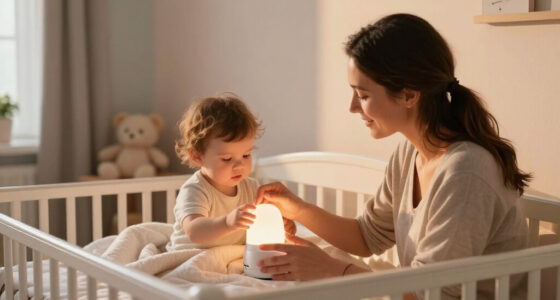
- Position the machine at least 3 feet away from the crib, ideally at ear level or lower.
- Limit use to sleep times—avoid continuous, all-night exposure.
- Gradually reduce volume over time if you want to transition away from the noise.
Safety tips: Keeping sound soothing without risking hearing damage
- Always monitor the volume—use a decibel meter if needed.
- Place the machine away from your baby’s head at a safe distance.
- Use for limited periods—ideally during naps and bedtime, not all day.
- Check for recall or safety warnings on your sound device, especially if it’s a newer model.
- Watch for signs of dependence—if your baby struggles to sleep without noise, consider reducing use gradually.
Should you stick with one noise type or switch it up?
Many parents wonder whether to choose a single noise type or experiment. Consistency often helps your baby associate that sound with sleep. However, some infants respond better to different sounds over time. It’s fine to rotate between pink and brown noise to see what soothes your baby most.
What the latest research says about noise and baby sleep
Recent studies highlight that moderate noise exposure—below 50 decibels—can promote longer sleep without harming hearing. Pink and brown noise tend to be perceived as more natural and less intrusive. However, ongoing research emphasizes the importance of volume control and limited duration to prevent potential long-term effects.
Real-life scenario: How a parent used brown noise to help a restless sleeper
Imagine a parent struggling with a baby who wakes often during loud construction outside. They switch to a brown noise machine, set just below 50 decibels, placed across the room. Overnight, the deep hum drowns out the noise, and the baby sleeps through the racket—peace at last.
Frequently Asked Questions
Is white noise safe for my baby?
White noise is safe when played at a low volume—below 50 decibels—and for limited periods. Always monitor volume levels and place the device at least 3 feet away from your baby’s head to prevent hearing damage.
Which noise type is best for a fussy baby who has trouble settling?
Many parents find pink or brown noise more soothing because they sound more natural and less harsh than white noise. Try both to see which your baby responds to best, and always keep the volume gentle.
Can using noise machines cause long-term hearing issues?
When used responsibly—at safe volumes and limited durations—noise machines are unlikely to cause long-term harm. Regularly check volume levels and avoid continuous use overnight if possible.
When should I stop using a noise machine?
Many parents choose to stop once their baby can fall asleep independently or if they notice signs of dependence. Gradually reducing volume or use can help transition your baby off the noise without fuss.
Are there differences in effectiveness between white, pink, and brown noise?
Yes. Pink and brown noise tend to be perceived as more natural and soothing, especially for sensitive babies. White noise remains popular but may be too sharp or loud for some infants, so observe your baby’s reactions.
Conclusion
Choosing the right noise can turn bedtime into a peaceful ritual, not a battle. Remember, the goal is to soothe without risking your baby’s hearing or comfort. A gentle hum—whether pink or brown—can be your secret weapon for better sleep.
So next time you press that button, think about what sound feels most natural and calming for your little one. After all, a good night’s sleep starts with the right kind of noise—simple, safe, and soothing.