
TL;DR

Turn the school run and nap time into listening time
- Thousands of audiobooks, podcasts and originals
- Listen on your phone, tablet or Echo — also offline
- Cancel anytime
Humidifier mold can develop within 24-48 hours if not cleaned properly. Weekly cleaning plus monthly deep cleans with vinegar or peroxide, combined with using distilled water, keep mold at bay. Modern models with antimicrobial features can further help prevent growth.
Nothing feels quite as soothing as a warm, humid nursery on a chilly night. But if your humidifier isn’t cleaned regularly, it turns into a mold magnet. That fuzzy, greenish film isn’t just gross — it’s a health hazard for your little one. Understanding how mold grows and sticking to a solid cleaning routine can keep your nursery air safe and fresh.
In this guide, you’ll learn exactly how often to clean, what solutions work best, and how to spot the signs of mold. Plus, we’ll peek at the latest tech that can make mold prevention easier. Because when it comes to your baby’s comfort and health, a little routine goes a long way.
Clean your humidifier weekly to prevent mold growth — don’t skip it.
Deep clean with vinegar or peroxide monthly to eliminate hidden spores and deposits.
Use distilled or filtered water to reduce mineral buildup and mold-friendly environments.
Watch for early signs like musty smells or fuzzy patches — act fast.
Modern models with antimicrobial features can boost your mold prevention routine.
Humidifier Mold: Cleaning Schedules That Actually Prevent It
A humidifier can make a chilly nursery feel soothing—but standing water, warmth and mineral scale create ideal conditions for fungus. The winning strategy is simple: empty daily, clean weekly and deep-clean monthly.
Mold may begin developing when water and residue remain inside.
Disassemble, scrub, rinse and dry before spores become established.
Fewer minerals mean less scale for microbes to colonize.
Empty + fully dry
Scrub every removable part
Descale + inspect filters
For stubborn scale
Three rhythms. One mold-resistant routine.
Consistency matters more than occasional perfection. Each interval removes a different part of the mold equation: water, residue or hidden buildup.
Empty + dry
Discard remaining water. Wipe accessible surfaces and let the tank and base dry completely. Never leave water standing overnight.
Scrub + rinse
Disassemble the tank, nozzle and removable components. Loosen deposits with a soft brush, then rinse thoroughly and dry.
Deep clean
Descale with vinegar or clean with a manufacturer-approved peroxide method. Inspect filters, seals and hard-to-reach crevices.
From last mist to clean reset
Check the manufacturer’s instructions first. Never mix cleaning agents, and keep the electrical base out of water.
Unplug + empty
Discard all standing water.
Disassemble
Remove tank, filter and nozzle.
Descale
Use 1:1 white vinegar and water.
Soak
Allow 15 minutes for stubborn scale.
Scrub
Reach seams with a soft brush.
Rinse well
Remove all cleaner residue.
Dry fully
Air-dry before reassembly.
Moisture starts the cycle. Mineral scale helps it stay.
Mold spores are already present in ordinary air. Inside a warm, wet humidifier, residue and dust provide surfaces where they can settle—then the device may disperse contaminated mist into the room.
The growth recipe
Warmth + standing water + residue creates a mold-friendly interior that can be difficult to see.
- Hard-water scale creates rough, sheltered surfaces.
- Stagnant water gives spores time to establish.
- Hidden seams and filters retain moisture.
- Airborne exposure may aggravate allergies or asthma.
Match the solution to the job
Use only products allowed by the humidifier manufacturer. Never combine vinegar, peroxide, bleach or other disinfectants.
| Method | Best use | Strength | Watch-out | Verdict |
|---|---|---|---|---|
| White vinegar | Mineral scale and routine descaling | ✓ Excellent on deposits | Rinse until odor-free | ✓ Weekly / monthly |
| Hydrogen peroxide | Manufacturer-approved deep cleaning | ✓ Microbial control | Use correct concentration | ✓ Deep-clean option |
| Mild disinfectant | Compatible washable components | ~ Product dependent | Confirm device compatibility | ~ Follow label |
| Bleach | Only when explicitly permitted | ✓ Powerful | Fumes, dilution and residue risks | ✗ Never improvise |
| Water-only rinse | Daily emptying support | ✗ Won’t remove scale | Not a substitute for scrubbing | ~ Daily only |
Spot trouble early. Let technology assist—not replace—the routine.
Stop-use signals
Turn the unit off and clean it when any of these signs appear. Replace damaged or persistently contaminated components.
Helpful modern features
Choose designs that are easy to open, inspect, scrub and dry. Convenience features are most useful when they support good maintenance.
The clean-air chain
What Exactly Is Mold, and Why Does It Grow in Your Humidifier?
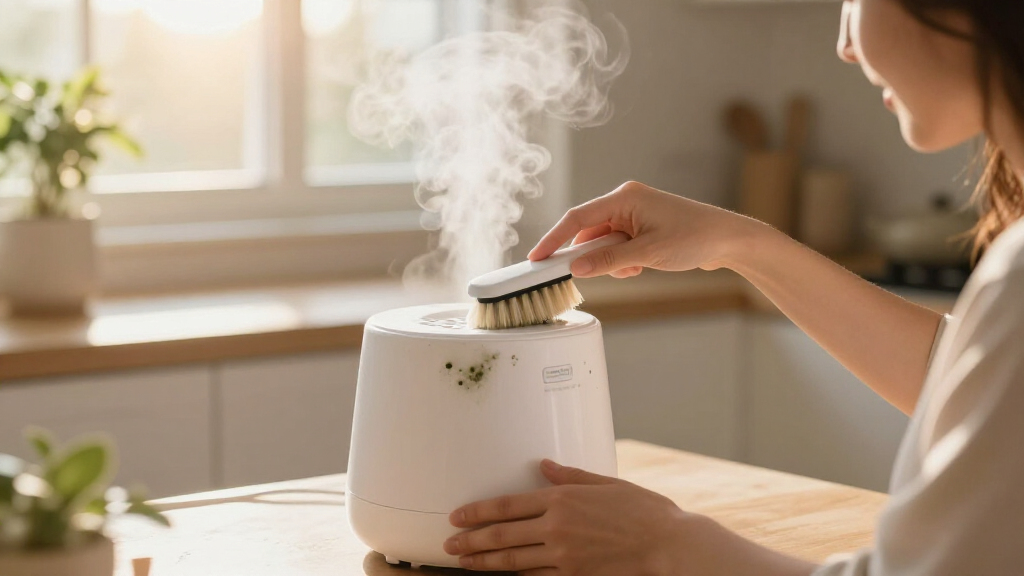
Humidifier mold is a type of fungus that thrives in warm, damp environments. It starts with tiny spores floating around, settling into the moist interior of your device. Once there, if conditions are right — especially with mineral deposits and leftover water — it begins to grow. The smell of musty, damp towels is a dead giveaway that mold might be lurking.
Imagine leaving a glass of water out overnight. The next day, a thin layer of slime or discoloration often appears. That’s what’s happening inside your humidifier — just hidden behind plastic and water. If left unchecked, mold can spread through the air, aggravating allergies and respiratory issues. The implications are serious because mold spores can compromise indoor air quality, leading to increased allergy symptoms, asthma flare-ups, and other respiratory problems, especially in vulnerable infants and children. The tradeoff of ignoring this is risking your child’s health for the convenience of a humidifier that seems clean but harbors unseen mold.
As an affiliate, we earn on qualifying purchases.
Why Weekly Cleaning Is Non-Negotiable for Mold Prevention
Cleaning your humidifier at least once a week isn’t just a good idea — it’s essential. Think of it like brushing your teeth: skipping can lead to plaque buildup. During a typical week, mineral deposits from tap water settle and can harbor mold spores. If you ignore this, mold starts to flourish within 24 to 48 hours, making weekly cleaning a crucial barrier against rapid mold growth.
By dedicating just a few minutes each week to wipe down and disinfect, you prevent the accumulation of mineral deposits and remove spores before they can take hold. This routine not only keeps your device functioning efficiently but also directly impacts your child’s health by reducing exposure to airborne mold spores. The tradeoff of skipping weekly cleaning is the risk of mold becoming entrenched, which then requires more intensive cleaning or replacement, and could lead to health issues down the line. Regular maintenance is a small effort with significant health benefits.
antimicrobial humidifier with mold prevention
As an affiliate, we earn on qualifying purchases.
As an affiliate, we earn on qualifying purchases.
Step-by-Step: How to Clean Your Humidifier to Keep Mold Out
- Empty the water tank completely after each use. Don’t leave standing water, as it provides a perfect environment for mold spores to settle and grow.
- Disassemble all removable parts — tanks, filters, nozzles — to ensure thorough cleaning, since mold can hide in small crevices.
- Scrub the tank and parts with a mixture of 1 part white vinegar to 1 part water. Use a soft brush or cloth to reach every corner, as this helps dissolve mineral deposits and kills mold spores on contact.
- For stubborn deposits or mold patches, soak parts in vinegar solution for at least 15 minutes before scrubbing. This enhances the disinfecting power and ensures thorough removal of residues that promote mold growth.
- Rinse all parts thoroughly with plain water to remove any vinegar residue, which could cause fumes or residual acidity that may irritate your child’s respiratory system.
- Dry all parts completely with a clean towel or air dry before reassembling. Moisture left behind can lead to new mold growth, so thorough drying is essential.
- Store in a dry, well-ventilated place if not used for a while to prevent mold spores from settling during periods of inactivity.
This routine takes around 10 minutes but is vital for preventing mold and ensuring your humidifier operates safely and efficiently over time. Consistency in this process helps avoid the buildup of mold spores, which can be difficult and costly to remove once established.
As an affiliate, we earn on qualifying purchases.
Frequently Asked Questions
How often should I clean my humidifier to prevent mold?
Most experts recommend a quick clean once a week, with a deeper clean every month. Regular maintenance keeps mold spores from settling and growing.Is vinegar safe for cleaning my humidifier?
Yes, white vinegar is a natural, non-toxic disinfectant that effectively dissolves mineral deposits and kills mold spores. Just rinse thoroughly afterward to remove any vinegar smell.Can using distilled water really prevent mold?
Using distilled or filtered water greatly reduces mineral deposits, which are a breeding ground for mold and bacteria. It’s a simple step that makes cleaning easier and keeps your humidifier cleaner longer.What are the signs my humidifier has mold?
Look for a musty smell, fuzzy or slimy patches, discoloration, or increased allergy symptoms. Visually inspecting the tank regularly helps catch mold early.Are antimicrobial humidifiers worth the extra cost?
Models with antimicrobial coatings or UV sterilization can reduce mold growth, making routine maintenance easier and offering extra peace of mind—especially during cold months when use peaks.humidifier deep cleaning vinegar peroxide kit
As an affiliate, we earn on qualifying purchases.
As an affiliate, we earn on qualifying purchases.
Conclusion
Keeping mold out of your humidifier isn’t about perfection — it’s about consistency. A simple weekly routine combined with monthly deep cleans can make a huge difference. Think of it as giving your nursery the clean, safe air it deserves.
Remember, a fresh, mold-free humidifier isn’t just healthier — it’s peace of mind. When you see the next fog of moisture, you’ll know it’s doing its job, not hiding mold.
Fall Picks
fall essentials
As an affiliate, we earn on qualifying purchases.