
TL;DR

Turn the school run and nap time into listening time
- Thousands of audiobooks, podcasts and originals
- Listen on your phone, tablet or Echo — also offline
- Cancel anytime
Filterless humidifiers avoid replacement filters but may require more frequent cleaning and descaling, especially with hard water. Filter humidifiers rely on replaceable wicks that need regular swapping, but tend to have simpler maintenance routines. Your water quality and willingness to clean determine which is less hassle.
Use distilled water whenever possible to reduce scale and white dust in both filter and filterless humidifiers.
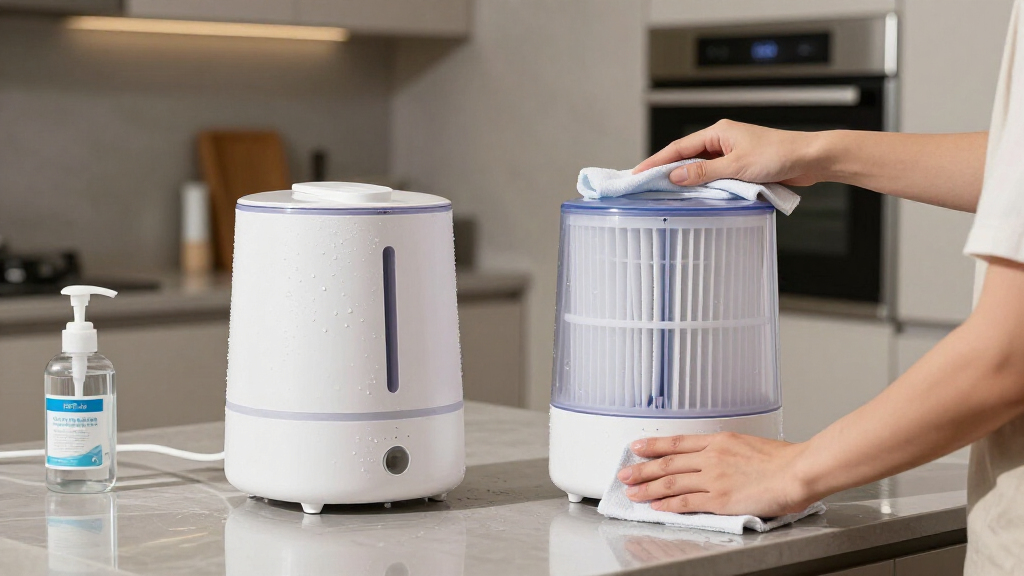
Regular cleaning and descaling are vital—never skip a wipe-down or rinse, especially with hard water.
Replace filter wicks based on appearance and smell, not just calendar schedules—discoloration or odor means it’s time.
Descaling internal components like ultrasonic transducers or heating chambers prevents performance drops and clogs.
Choosing the right water source and cleaning routine can save time, money, and health risks.
Filterless vs Filter Humidifiers: Maintenance Differences That Matter
Filterless units avoid replacement wicks but often demand more hands-on descaling. Filter models add recurring parts costs, yet concentrate some mineral buildup in an easy-to-swap component. Your water—not the label on the box—usually decides which feels simpler.
Replace the mineral catcher—or clean the mineral landing zone.
Neither design is maintenance-free. Both still require tank and base cleaning because a filter does not sterilize water, and distilled water does not eliminate microbial growth.
The wick takes the hit
A wet wick traps a portion of minerals and debris as a fan draws air through it. Maintenance is predictable, but replacement timing depends on condition—not only the calendar.
- Swap when the wick is hard, crusted, discolored, damaged or odorous.
- Clean the tank and base even when the filter still looks usable.
- A clogged wick can reduce output and restrict airflow.
- Persistent moisture can support odor, mold and bacterial growth.
Internal surfaces take the hit
Without a routine disposable wick, minerals settle on a transducer or heating chamber—or travel into the room as white dust. Cleaning technique matters more.
- Wipe away film and scale before deposits become stubborn.
- Descale transducers and heating chambers gently and regularly.
- Watch for reduced mist, unusual noise and visible residue.
- No wick expense, but distilled water may become an ongoing cost.
What actually changes in the maintenance routine?
The highlighted column shows where filterless designs often shift work from a replaceable part to hands-on cleaning.
| Maintenance issue | Filter humidifier | Filterless humidifier |
|---|---|---|
| Recurring parts | ✗Wick or filter requires replacement. | ✓Usually no standard filter replacement. |
| Cleaning workload | ~Tank and base still require cleaning. | ✗More direct descaling may be needed. |
| Mineral management | ✓Some minerals collect in the wick. | ~Scale stays inside or becomes white dust. |
| Microbial risk | ~Wet, overdue wicks can develop biofilm. | ~Standing water and internal film remain risks. |
| Performance signal | ~Stiff wick, odor, low output or poor airflow. | ~Scale, dust, noise or declining mist. |
| Operating cost | ✗Higher recurring parts expense. | ✓Lower parts cost; water choice may cost more. |
Each mechanism creates a different cleaning target.
Before choosing a routine, identify how the unit produces moisture. “Filterless” describes the missing disposable filter—not the maintenance method.
Ultrasonic
A vibrating transducer aerosolizes water. Dissolved minerals may travel with the mist and settle as white dust. Use a soft cloth and gentle, manufacturer-approved descaling methods.
Main targets / transducer + baseWarm mist
Water is heated, so minerals tend to remain as scale in the heating chamber. Regular descaling protects efficiency and helps prevent thick deposits or clogs.
Main target / heating chamberImpeller
A rotating mechanism flings water into the air. Thorough reservoir and surface cleaning is essential because standing water and residue can support microbial growth.
Main targets / reservoir + surfacesWater quality sets the maintenance difficulty.
Hard water accelerates scale, shortens wick life and increases white dust. Distilled water reduces the mineral burden in both designs, but fresh-water handling and surface cleaning are still required.
Small habits prevent the biggest hygiene problems.
Cleaning alerts, top-fill tanks and dishwasher-safe parts can make access easier, but none replaces manual inspection or proper descaling.
For every humidifier
- DailyEmpty stale water, refill with fresh water and wipe obvious residue.
- OftenInspect the base, tank and contact surfaces for slime, film, odor or scale.
- As directedUse manufacturer-approved products, concentrations and contact times.
- Season endClean thoroughly and dry every part before storage.
Condition-based triggers
- WickReplace when stiff, crusted, discolored, smelly, damaged or unevenly wet.
- UltrasonicDescale when deposits, white dust, lower mist or unusual noise appear.
- Warm mistRemove chamber scale before thick buildup impairs heating performance.
- Any modelStop and clean when visible biofilm or a musty smell develops.
Match the design to your water and your habits.
The easiest humidifier is the one whose maintenance tradeoff you will perform consistently—especially during busy nursery routines.
Choose filtered if…
You prefer a straightforward wick swap, use ordinary tap water and accept ongoing parts costs. Best fit: predictable replacement over detailed descaling.
Choose filterless if…
You want to avoid disposable filters, can access internal surfaces easily and will descale them consistently. Best fit: hands-on cleaning over recurring parts.
Use distilled water if…
You want less scale and white dust in either design and accept the added water expense. Remember: it reduces minerals, not microbial risk.
Filtered means replace the mineral-loaded wick. Filterless means clean the mineral-loaded machine. Fresh water and consistent hygiene matter either way.
What Exactly Is the Difference in Maintenance? Here’s the Quick Breakdown
Filter humidifiers use a replaceable wick or cartridge that captures minerals and debris. When it gets crusty, discolored, or smelly, it’s time for a swap. These filters are the main maintenance item, but the tank and base still need regular cleaning.
Filterless units, on the other hand, leave that filter step out. Instead, they rely on internal components like ultrasonic transducers or heating chambers that need descaling and cleaning to keep mineral deposits, mold, and bacteria at bay. The tradeoff? No filters to buy, but more frequent internal maintenance.
As an affiliate, we earn on qualifying purchases.
Filter Humidifiers: What Maintenance Looks Like in Practice
Imagine a typical evaporative humidifier in your nursery. The wick acts like a sponge, soaking up minerals from tap water. Over a few months, it turns crusty, smells musty, or becomes stiff from mineral buildup. Replacing it is straightforward but depends on local water quality and how often you use the unit.
Regular cleaning involves emptying the tank, scrubbing the base, and rinsing the wick. Some manufacturers recommend replacing the wick every 3-6 months, but hard water can shorten that window to just a month or two. The filter’s main job is catching minerals, but it’s not a sterilizer—biofilm can still grow if you neglect cleaning.
Why does this matter? Because a dirty or worn wick can harbor bacteria and mold, which can then circulate into your baby’s airways. Regular replacement and cleaning are not just about maintaining efficiency—they are critical for your child’s health. The tradeoff is that these filters add ongoing costs and require attention to avoid potential health risks.
filter humidifier with replaceable wicks
As an affiliate, we earn on qualifying purchases.
As an affiliate, we earn on qualifying purchases.
Filterless Humidifiers: What You Need to Know About Cleaning and Descaling
Ultrasonic models vibrate water into tiny droplets, but dissolved minerals hitch a ride with those mist particles, leaving a white dust on furniture and walls. Regularly wiping the base and descaling the transducer with gentle materials like a soft cloth and vinegar helps keep performance steady. Failing to do so can lead to mineral buildup that reduces efficiency and increases dust emissions, which can irritate your baby’s respiratory system.
Warm-mist units boil water, so minerals tend to settle as scale inside the heating chamber rather than dispersing as dust. Descaling with vinegar or manufacturer-approved solutions every few weeks prevents buildup, ensuring the unit runs smoothly and safely. Impeller models fling water into mist, but their reservoirs must be cleaned thoroughly to prevent microbial growth. Neglecting this can cause mold and bacteria to multiply, risking your child’s health. Proper cleaning routines thus directly influence the safety and longevity of your device.
As an affiliate, we earn on qualifying purchases.
The Maintenance Habits That Make (or Break) Your Humidifier’s Life
Regardless of type, your best move is to avoid leaving stale water sitting in the tank. Empty it after use, and refill with fresh water daily. Dry the unit completely before storing it for the season. These habits prevent bacterial and mold growth, which are common issues in neglected humidifiers and can pose health hazards.
Regularly inspect for slime, film, or scale—these are signs maintenance is overdue. Use manufacturer-approved cleaning products, and avoid mixing chemicals like bleach and vinegar, which can damage your unit or create harmful fumes. Hands should be clean before handling internal parts to prevent introducing bacteria. Establishing a routine maintenance schedule and sticking to it ensures your humidifier remains a safe and effective part of your nursery environment.
As an affiliate, we earn on qualifying purchases.
Water Quality: The Hidden Factor in Maintenance Hassles
The type of water you use can dramatically affect maintenance. Hard tap water deposits scale quickly, shortening wick life and increasing cleaning frequency. Distilled water minimizes minerals, reducing white dust and scale buildup, but costs more. Using poor-quality water can lead to clogged components and microbial growth, which compromise air quality and device longevity.
Filtered water depends on the filter; carbon pitchers mostly improve taste and odor but do little for minerals. Softened water reduces calcium and magnesium but adds sodium, which may not be ideal for babies. Well water varies widely and might need testing or treatment. Choosing the right water source is a crucial step in reducing long-term maintenance and health risks, making it an important consideration when selecting your humidifier.
Which Humidifier Is Less Work? It Depends on Your Water and Routine
Both types can be low-maintenance if you choose wisely. Filter humidifiers need filter replacements, which can cost over $10 each and last 3-6 months depending on water quality. Filterless units often require more frequent internal cleaning, especially with hard water, but no filters to buy. The decision hinges on weighing ongoing filter costs against the time and effort needed for internal cleaning routines.
Think about your water source, willingness to buy distilled water, and how much time you want to spend cleaning. A well-maintained ultrasonic humidifier with distilled water might be the easiest, while a filterless model with soft water could be even lower effort—if you stay on top of cleaning. The key is consistency—skipping regular maintenance can turn a low-effort device into a health hazard.
Latest Trends: Making Maintenance Easier and Smarter
Modern humidifiers are adding features like wider, top-fill tanks that make cleaning easier, and removable, dishwasher-safe parts. Some include automatic humidity sensors, cleaning alerts, or antimicrobial coatings. These improvements aim to reduce manual labor and improve hygiene. However, these features are not foolproof; they often still require routine manual cleaning to prevent buildup and microbial growth.
Understanding the limitations of these innovations is important. While they can reduce some maintenance tasks, they do not eliminate the need for regular descaling and cleaning. Recognizing these tradeoffs allows you to select a unit that genuinely simplifies your routine without giving a false sense of maintenance-free operation.
Frequently Asked Questions
Are filterless humidifiers really easier to maintain?
Not always. While they don’t require filter replacements, they often need more frequent internal cleaning and descaling, especially with hard water. Your routine will depend on water quality and how vigilant you are with regular maintenance.Do I need to use distilled water in a filterless ultrasonic humidifier?
Using distilled or demineralized water significantly reduces white dust and mineral buildup. It can make maintenance easier and extend the life of internal parts, but it doesn’t eliminate the need for regular cleaning.How often should I clean my humidifier?
You should clean and descale your humidifier whenever you notice film, slime, or odors. For frequent use, this might mean weekly cleaning, while occasional use might allow for longer intervals. Always follow the manufacturer’s instructions.Can I reuse or wash the wick in my filter humidifier?
Some wicks are washable, but many are disposable. Check your model’s instructions. Washing can damage some types, and a worn or dirty wick should be replaced to maintain performance and hygiene.What’s the biggest mistake in humidifier maintenance?
Neglecting regular cleaning and descaling. Mineral deposits, mold, and bacteria thrive in neglected tanks, risking your child’s health. A quick weekly wipe and thorough descale can prevent most issues.Conclusion
Your choice between filterless and filter humidifiers hinges on how much maintenance you’re willing to handle. Regular cleaning, good water choices, and attention to signs of buildup keep your nursery air healthy and your unit working smoothly. Remember: a well-maintained humidifier is a quiet hero in your child’s comfort and safety, not a forgotten chore.
Keep it simple, stay vigilant, and your baby will breathe easier. After all, a little effort now prevents bigger headaches later—so stay on top of your humidifier’s needs, and it will reward you with consistent, safe moisture day after day.
Fall Picks
fall essentials
As an affiliate, we earn on qualifying purchases.