
TL;DR

Turn the school run and nap time into listening time
- Thousands of audiobooks, podcasts and originals
- Listen on your phone, tablet or Echo — also offline
- Cancel anytime
The main question is whether your indoor air is too damp or too dry. Use a hygrometer to measure humidity and pick a dehumidifier for over 50%, a humidifier for below 30%. Proper choice improves comfort and reduces mold or dryness-related issues.
Ever notice how a damp basement smells musty or how a dry winter makes your skin crack? The secret to nursery comfort isn’t just about temperature — it’s about humidity. Too damp, and mold or mildew become problems. Too dry, and your baby’s skin and respiratory passages suffer.
Figuring out which device to use can feel overwhelming. Should you grab a dehumidifier or a humidifier? The answer hinges on one simple question: Is your indoor air too damp or too dry? This guide will help you decode your home’s humidity needs with practical signs, measurements, and tips so your nursery stays cozy, safe, and healthy.
Dehumidifier or Humidifier?
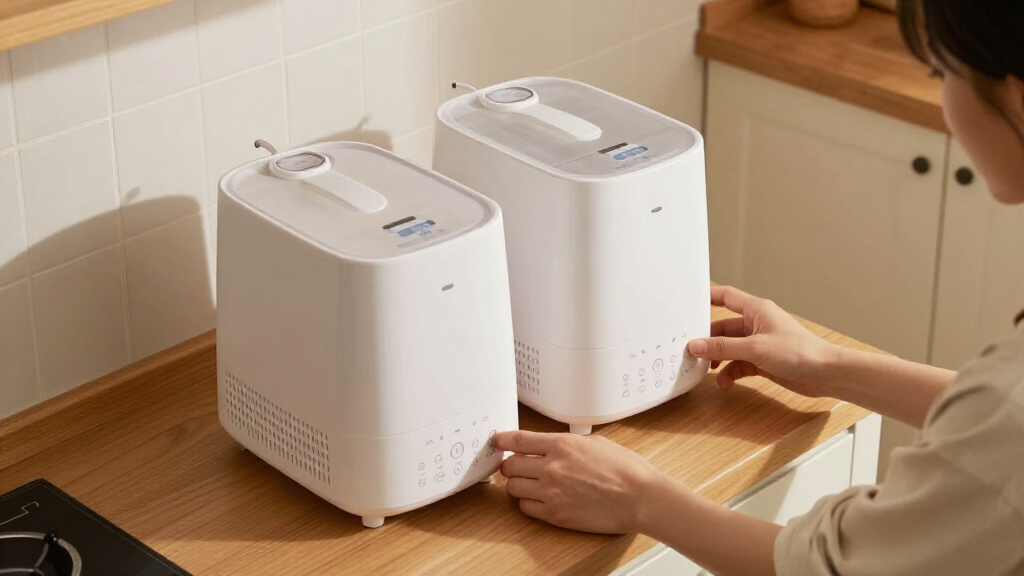
The choice comes down to one measurable question: is the room too damp or too dry? A dehumidifier removes moisture; a humidifier adds it. Measure first, then aim for balanced nursery humidity rather than treating symptoms alone.
Practical indoor relative-humidity target for comfort and moisture control.
Persistent readings above this point signal excess moisture worth investigating.
Dry-air territory where a properly maintained humidifier may improve comfort.
What are the signs?
Clues can point you in the right direction, but several have other causes. Treat them as prompts to measure—not as a diagnosis by themselves.
Reach for a dehumidifier
Damp air supports conditions favored by mold, mildew and dust mites. The room may feel clammy even when its temperature seems comfortable.
- Window or pipe condensation
- Musty, earthy odors
- Visible mold or mildew
- Peeling paint or warped wood
- Damp closets or bathrooms
- Laundry drying slowly indoors
- Persistent clamminess
- Humidity above 50–60%
Reach for a humidifier
Heating systems can make winter air exceptionally dry, irritating skin and respiratory passages while increasing static electricity.
- Dry or itchy skin
- Chapped lips
- Dry nose or throat
- Frequent static shocks
- Dry cough or nasal discomfort
- Cracking wood or instruments
- Plants drying unusually fast
- Humidity below 30%
Measure before you switch on
A short series of room-specific readings produces a better decision than guessing from a dry throat, musty smell or a single whole-house number.
Notice clues
Look for dampness, condensation, dryness or static.
Place a hygrometer
Keep it away from vents, windows, sunlight and appliance output.
Log several days
Check morning, evening and changing weather conditions.
Add or remove
Below 30%: humidify. Above 50%: dehumidify.
Recheck the room
Adjust the setting and investigate persistent moisture sources.
One adds. One removes.
The appliances solve opposite problems. Using the wrong one can intensify the condition you meant to correct.
| Feature | Dehumidifier | Humidifier |
|---|---|---|
| Primary action | ✓Removes moisture from damp indoor air. | ✓Adds moisture to overly dry indoor air. |
| Best trigger | Readings consistently above roughly 50%, especially with dampness. | Readings consistently below roughly 30%, especially with dryness. |
| Most useful for | Basements, humid climates, laundry spaces and damp bathrooms. | Heated winter rooms, dry bedrooms and moisture-sensitive wood. |
| Can help with | ✓Clamminess, slow laundry drying and conditions favored by mold or mites. | ✓Dry-air discomfort, static electricity and moisture-sensitive furnishings. |
| Cannot solve | ✗Leaks, drainage faults, poor ventilation or established mold contamination. | ✗Infections, allergies or other medical conditions requiring professional care. |
| Main misuse risk | ~Over-drying the room and irritating skin or respiratory passages. | ~Over-humidifying and encouraging mold, bacteria or dust mites. |
| Selection priority | Capacity, humidistat, drainage, cool-room operation and noise. | Easy cleaning, output control, quiet operation and child-safe cool mist. |
Humidity varies by room
A comfortable living room does not guarantee a balanced nursery. Measure in the specific space where the appliance will operate.
Where not to place the hygrometer
Avoid direct sunlight, heating vents, open windows, kitchens, showers and the output stream of either appliance. Track readings over several days because weather, heating and daily routines can shift indoor humidity.
Balanced air needs clean equipment
Neither device is automatically healthier. Maintenance, water choice, placement and control settings determine whether it improves the room or creates another problem.
Choose cool mist
Around children, cool-mist models avoid the burn risk associated with steam and warm-mist units. Keep cords and appliances out of reach.
Control minerals
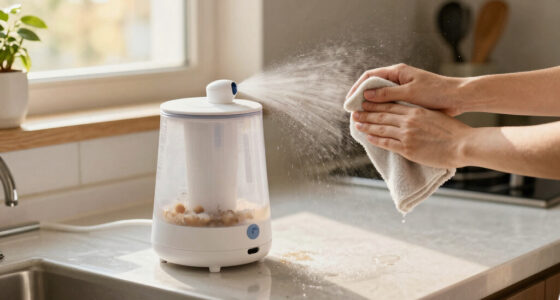
Ultrasonic humidifiers may disperse mineral “white dust” when filled with hard tap water. Distilled or demineralized water can reduce it.
Clean on schedule
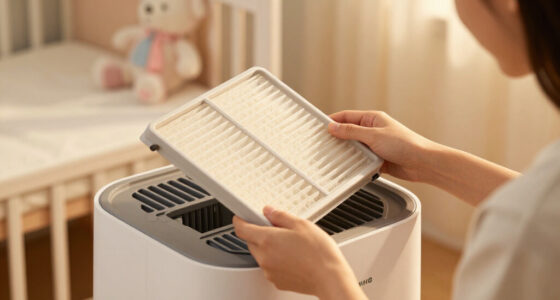
Dirty tanks, filters, coils or buckets can accumulate microorganisms. Follow the manufacturer’s cleaning and replacement guidance.
The bottom line
Use a dehumidifier when repeated readings show excess moisture and a humidifier when readings confirm overly dry air. Investigate leaks or visible mold separately, and seek professional advice for persistent respiratory concerns.
How to tell if your nursery needs a dehumidifier
If your nursery feels damp, smells musty, or shows visible mold, it’s time for a dehumidifier. These devices remove excess moisture, making the air feel crisper and less mold-friendly. Excess humidity creates an environment where mold spores thrive, which can aggravate asthma or allergies in sensitive babies. By reducing moisture, dehumidifiers help prevent mold growth, which is crucial because mold exposure can lead to respiratory issues, allergic reactions, and long-term health problems.
Common signs include condensation on windows or walls, peeling paint, and a persistent clammy feeling. These indicators suggest that the air has high moisture content that could foster mold or dust mites, both of which pose health risks. For example, if you notice a musty smell in your basement after heavy rain, or see mold patches on bathroom walls, these are clear signs of excessive humidity. If your home’s basement or bathroom feels damp despite good ventilation, a dehumidifier can target those trouble spots effectively, helping to maintain a safe humidity level. Especially in humid climates or poorly ventilated spaces, it’s vital to keep moisture levels in check to prevent mold proliferation, which can be difficult to detect early but has serious health implications.
Tip: Use a digital hygrometer to measure humidity over several days. If readings stay above 50–60%, a dehumidifier can make a real difference by actively reducing moisture levels, thereby lowering the risk of mold and dust mites that can exacerbate respiratory and allergy issues. Think of it as giving your home a breath of fresh air—preventing the silent buildup of mold that can jeopardize your baby’s health.
As an affiliate, we earn on qualifying purchases.
How to tell if your nursery needs a humidifier
If your baby’s skin feels cracked, your lips are chapped, or static shocks happen every time you touch a doorknob, the air might be too dry. Dry indoor air can cause skin irritation, nasal congestion, and increased susceptibility to colds, as it dries out mucous membranes that act as the body’s first line of defense against pathogens. Humidifiers add moisture, which helps keep skin soft, prevents cracking, and eases breathing discomfort, especially in winter months when heating systems tend to dry out indoor air.
Imagine a winter morning when your child’s cheeks are chapped or their nose bleeds easily—these are classic signs of dry air. If you notice your wooden furniture or floors are developing cracks or your skin feels tight and itchy, it’s a sign that the air lacks sufficient moisture. Dry air can impair the function of tiny hairs in your baby’s respiratory tract, called cilia, which help clear mucus and prevent infections. For example, during the cold months, heated indoor air can become as dry as a desert, making your baby more prone to coughs and colds. Using a humidifier in such conditions is like giving your home a gentle moisture boost—creating a more comfortable, resilient environment for your little one.
Pro tip: Use a hygrometer to confirm if humidity dips below 30%. That’s the prime zone for a humidifier to work its magic, restoring the right moisture balance to support your baby’s delicate skin and respiratory health, preventing issues like chapped lips and nasal dryness that can lead to discomfort and increased infection risk. Think of it as nurturing a soft, healthy environment where your baby can breathe easy and grow comfortably.
As an affiliate, we earn on qualifying purchases.
The difference between dehumidifiers and humidifiers — and why it matters
| Feature | Dehumidifier |
|---|---|
| Purpose | Removes excess moisture from the air, preventing mold growth and reducing dust mites, which can cause allergies and respiratory issues. It’s crucial in damp environments where high humidity fosters mold and dust mite proliferation that can severely impact health, especially in infants with developing immune systems. |
| Best for | Damp basements, mold-prone spaces, humid climates where excess moisture can cause health and structural issues. |
| Signs you need one | Condensation, visible mold, musty smell, peeling paint, and a clammy feeling—these indicate humidity levels are too high, risking health and structural damage. Ignoring these signs can lead to persistent mold problems, which are difficult to eradicate once established and can cause ongoing health issues. |
| Ideal humidity range | Below 50%, ideally between 30% and 50% for comfort and health. |
| Feature | Humidifier |
|---|---|
| Purpose | Adds moisture to dry indoor air, which can alleviate skin irritation, nasal congestion, and static electricity. It’s especially beneficial in winter or heated spaces where dryness can cause discomfort and increase susceptibility to infections. |
| Best for | Heated rooms in winter, dry skin, static electricity, and environments where low humidity impairs comfort or health. |
| Signs you need one | Chapped lips, nosebleeds, cracking furniture or wood, dry coughs, and nasal congestion—these indicate that humidity is below optimal levels, risking skin and respiratory issues. Overly dry air can also impair the mucociliary clearance in the respiratory tract, making infections more likely. |
| Ideal humidity range | Above 30%, ideally between 30% and 50% for safety and comfort. |
As an affiliate, we earn on qualifying purchases.
As an affiliate, we earn on qualifying purchases.
Fall Picks
fall essentials
As an affiliate, we earn on qualifying purchases.