
TL;DR

Turn the school run and nap time into listening time
- Thousands of audiobooks, podcasts and originals
- Listen on your phone, tablet or Echo — also offline
- Cancel anytime
Running a humidifier all night can be safe when humidity stays within 30–50%, but automatic cycling or bursts often work better. The key is targeting the right humidity level, not just continuous run time. Proper placement, maintenance, and monitoring matter most.
It’s late, your baby’s fussing, and the room feels dry enough to crack your lips. You wonder: should I keep the humidifier running all night or turn it off after a few bursts? The answer isn’t as simple as plugging it in and walking away.
The truth is, the best approach depends on your space, your device, and what’s around you. Running the humidifier nonstop might seem like an easy fix, but it can cause more problems than it solves—like mold or mineral residue. Instead, understanding how to match operation patterns with your nursery’s needs can make all the difference in keeping your little one comfy and safe.
Use a humidistat to maintain 30–50% humidity — automatic cycling is safer and more effective.
Place your humidifier on a stable, water-resistant surface, away from bedding, electronics, and walls.
Regular cleaning and water changes prevent microbial growth and mineral dust, especially ultrasonic models.
Adjust run time based on room size, outdoor climate, and humidity levels — not just a clock.
Monitor surfaces and windows for condensation; lower humidity if you see dampness or musty odors.
Humidifier Run Time: All Night or in Bursts
Running a humidifier overnight can be safe—but only when the room stays in the right humidity range. The smartest schedule follows the air, not the clock: monitor, cycle, and stop before comfortable mist becomes excess moisture.
Your nursery decides the run time—not a timer.
Starting humidity, ventilation, room size, climate, device output, heating, and open doors all change how quickly moisture accumulates.
The humidity target zone
Use a separate digital hygrometer away from the mist plume for a more representative room reading.
What changes the schedule?
All night or in bursts?
Overnight use works best when the humidifier can cycle itself. Short bursts suit mild dryness or devices without automatic humidity control.
| Operating pattern | Best suited to | Control quality | Main concern |
|---|---|---|---|
| All night with humidistat | Persistently dry rooms | ✓Automatic cycling | Sensor accuracy and maintenance |
| Timed bursts | Mild or occasional dryness | ~Manual timing | Humidity may fluctuate |
| Continuous, unmonitored | Generally not recommended | ✗No feedback | Over-humidification and mold |
| Intermittent evaporative | Routine overnight comfort | ✓Moderated output | Filter replacement |
| Short pre-bed use | Minor dryness relief | ~Limited duration | Benefits may fade overnight |
Measure. Run. Recheck. Adjust.
A safe schedule is a feedback loop. Each observation informs the next night’s setting.
Measure first
Read room humidity with a hygrometer positioned away from the humidifier’s mist.
Select a mode
Choose automatic cycling for persistent dryness or a short burst for mild dryness.
Watch the room
Check windows, bedding, walls, furniture, and the air for dampness or musty odor.
Correct course
Reduce output or stop the unit when humidity reaches the target or condensation appears.
Placement and care matter more than the exact number of hours.
A clean, correctly positioned device running longer is safer than a neglected unit running briefly.
Keep mist clear
Place the unit on a stable, water-resistant surface several feet from the bed. Keep mist away from bedding, curtains, walls, electronics, and outlets.
Change the water
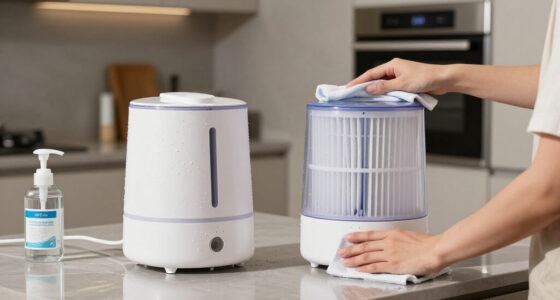
Empty standing water, dry the reservoir, and refill as directed. Follow the manufacturer’s cleaning schedule to limit bacteria, mold, and biofilm.
Control white dust
Ultrasonic models can aerosolize tap-water minerals. Distilled or appropriately demineralized water usually reduces fine residue on surfaces.
Condensation is your practical warning.
If windows fog, nearby surfaces feel damp, or a musty odor develops, lower the setting, shorten the run, improve ventilation, or switch the unit off.
Which pattern fits the room?
These bars show the relative fit of each situation with automatic overnight cycling. They are decision cues—not fixed run-time prescriptions.
Comfort without excess moisture
Why Your Humidifier’s Run Time Depends on Your Room, Not a Timer
Humidifier run time isn’t about clocking hours — it’s about reaching and maintaining the right humidity. For most nurseries, that’s roughly 30% to 50% relative humidity. Too dry? Keep it going. Too damp? Cut it off.
A humidifier that runs eight hours straight isn’t always better than one that cycles on and off. Factors like room size, outdoor climate, and ventilation shape how long it should operate. For example, a small nursery in a cold climate might need longer runs, while a well-ventilated space with higher humidity won’t need continuous misting.
Using a digital hygrometer helps you see real-time humidity levels, rather than relying solely on the humidifier’s built-in sensors, which can be less accurate when placed near the mist source.
Understanding these environmental factors is crucial because they influence how quickly the room reaches desired humidity levels and how stable those levels remain. If your room is very dry or has poor insulation, the humidifier may need to run longer or more frequently. Conversely, in a naturally humid or well-ventilated space, less operation is needed. By tailoring run time to these conditions, you can avoid unnecessary energy use and prevent over-humidification, which can lead to mold or dust mites. The goal is to interpret the room’s needs rather than follow a fixed schedule, making the operation more effective and safer.
humidifier with humidistat for nursery
As an affiliate, we earn on qualifying purchases.
As an affiliate, we earn on qualifying purchases.
All Night or Bursts? When to Keep It Running or Cut It Off
Deciding between all-night operation and bursts hinges on your room’s needs and your humidifier’s features. Here’s a quick comparison:
| Operating Pattern | Best For | Main Concern |
|---|---|---|
| All night with humidistat | Persistently dry rooms, automatic control | Sensor accuracy, maintenance |
| Timed bursts | Minor dryness, units without control | Fluctuating humidity |
| Continuous without monitoring | Rarely recommended | Over-humidification, mold risk |
| Intermittent evaporative | Comfort during sleep | Filter upkeep, moderate humidity |
| Short pre-bed use | Minor dryness relief | Overnight benefits may fade |
For most nurseries, humidistat-controlled models that cycle automatically offer a safe, effective approach. They turn on when needed and shut off once the desired humidity is reached, preventing over-humidification and reducing the risk of mold growth. This automatic cycling ensures the room maintains a stable, safe humidity level without constant babysitting, which is especially important during overnight hours when manual adjustments are less feasible.
On the other hand, bursts—say, running the humidifier for an hour or two before bedtime—can be sufficient if your space quickly reaches comfortable levels and you want to avoid condensation or damp surfaces. This approach works best when you know your room’s conditions and can time the bursts accordingly, but it requires careful monitoring to avoid over-humidification or dry spots.
Ultimately, the key is to prioritize steady, safe humidity levels over fixed hours of operation. Both methods have their place, but understanding their implications helps you choose the safest and most effective strategy for your nursery.
ultrasonic humidifier with auto shut-off
As an affiliate, we earn on qualifying purchases.
As an affiliate, we earn on qualifying purchases.
The Benefits of Proper Run Time: Comfort, Safety, and Peace of Mind
Maintaining the right humidity can ease dry nasal passages, soothe irritated skin, and reduce static—little comforts that make bedtime less stressful. But it’s not just about comfort; it’s about safety, too.
Over-humidifying—above 50%—can feed mold, dust mites, and even cause paint or furniture to deteriorate. When humidity exceeds ideal levels, the risk of microbial growth increases exponentially, which can lead to respiratory issues or allergies in sensitive children. Proper control minimizes these risks by preventing excess moisture that creates a hospitable environment for mold and dust mites. Additionally, well-maintained humidity levels help avoid condensation that can damage walls or furniture, preserving the nursery environment’s integrity.
Remember: a humidifier is a tool, not a cure-all. It helps with dryness and static, but it won’t fix allergies, colds, or sleep disorders on its own. The effectiveness of humidification depends on how well you balance the benefits against the risks, which is achieved through targeted operation and regular monitoring.
The key? Regular maintenance, correct placement, and matching run time with your space’s needs, not just a timer or a fixed schedule. This tailored approach ensures your nursery remains a safe, comfortable haven, supporting your child’s health and well-being over the long term.
baby room humidifier safe for overnight use
As an affiliate, we earn on qualifying purchases.
As an affiliate, we earn on qualifying purchases.
Risks of Overdoing It: Mold, Dust, and Microbial Growth
Running a humidifier too long or without proper maintenance can backfire. Humidity above 50% encourages mold, mildew, and dust mites. These invisible threats can worsen allergies or asthma, especially if your device isn’t clean. Excess moisture creates a breeding ground for microbes that can be dispersed into the air, increasing health risks for sensitive children and adults alike.
Standing water and mineral buildup can harbor bacteria, mold, and biofilms that disperse irritants into the air when the humidifier operates. Regular cleaning and water changes are your best defense, but neglecting these can lead to microbial contamination. Mineral deposits from tap water can also cause biofilms and white dust, which can irritate lungs or settle on surfaces, creating additional cleaning hazards. Ultrasonic models are particularly prone to this if not properly maintained, making routine cleaning and the use of distilled water essential.
Warm mist humidifiers pose a burn risk if tipped or touched, making cool-mist models a safer choice around children and pets. Always place your humidifier on a stable, water-resistant surface, away from bedding or electrical outlets, to prevent accidents and water damage. Proper placement and maintenance are crucial for safety and to prevent microbial proliferation, which can have serious health implications if overlooked.
adjustable humidity humidifier for nursery
As an affiliate, we earn on qualifying purchases.
As an affiliate, we earn on qualifying purchases.
Safe Placement and Daily Care: Keep It Safe and Effective
Where and how you place your humidifier matters just as much as how long it runs. Position it several feet from the bed, on a stable, water-resistant surface. Keep it away from walls, curtains, and electronics to avoid dampness and condensation.
Never put it directly on carpet or bedding. Aim the mist toward open space, not directly at your sleeping baby’s face. This helps prevent irritation and dampness that could lead to mold. Proper placement ensures even humidity distribution, reducing the risk of localized damp spots that can foster mold growth or cause skin irritation.
Automatic shutoff features help prevent dry operation, but they don’t control room humidity. Use a hygrometer to monitor levels and adjust your humidifier’s run time accordingly. Regularly inspect and clean your device, paying close attention to mineral deposits and mold buildup, which can compromise safety and efficiency. Avoid adding fragrances or oils unless your model explicitly allows it—many oils can damage internal parts or create inhalation hazards, increasing risks rather than reducing them.
Adhering to these practices ensures your nursery remains both comfortable and safe, reducing health hazards associated with improper placement or neglectful maintenance.
Latest Tech and Trends: Smarter, Safer, Easier to Use
Modern humidifiers pack a punch in safety and convenience. Many now include built-in humidistats that automatically cycle to maintain your set humidity. Some connect to apps, letting you monitor and adjust from your phone—ideal for busy parents.
Newer models feature larger, top-fill tanks for easier refills, and evaporative designs that self-regulate as humidity rises. Whole-home systems linked to your HVAC are also gaining popularity, adjusting humidity based on outdoor temps and indoor needs.
But beware: ultrasonic models can produce white dust unless you use distilled water. Many brands now tout antimicrobial features, but routine cleaning remains your best line of defense. Some units even remind you when filters need replacing or tanks need a scrub.
Overall, technology is making humidifier use safer, simpler, and more automatic—giving you one less thing to worry about overnight.
Special Tips for Babies, Allergies, and Cold Weather
When using a humidifier around babies, always opt for a cool-mist model to avoid burns. Keep the device out of reach, on a stable surface, and monitor humidity levels closely. Excess moisture can cause damp bedding and increase mold risk. Ensuring the right humidity level helps prevent the growth of mold and bacteria, which can be particularly harmful to sensitive infants.
If your child has allergies or asthma, maintaining humidity around 40% can help reduce dryness while avoiding excess moisture that promotes mold and dust mites. Regular cleaning is critical to prevent microbial buildup that can trigger or worsen symptoms. Proper hygiene minimizes health risks and ensures the humidifier functions effectively without adding irritants to the air.
During cold weather, lower humidity targets if you notice condensation on windows or walls, as excess moisture can lead to mold growth. In summer, humidifiers are less useful; a dehumidifier may be a better choice if indoor air feels damp. Adjusting humidity according to seasonal conditions reduces the risk of microbial proliferation and maintains a healthy nursery environment.
Always follow safety guidelines, and consult your pediatrician if you’re unsure about how humidification affects your child’s health. Tailoring humidity levels to seasonal and individual needs helps optimize health and comfort while minimizing risks.
Your Most Common Questions, Answered
- Can I leave a humidifier running all night? Yes, if humidity stays within 30–50%, the unit has automatic shutoff, and it’s properly maintained. Humidistats make overnight control safer and more efficient by automatically adjusting operation to maintain safe levels, reducing the risk of over-humidification or dry spots.
- How long should a humidifier run? It depends. Run until your room reaches the target humidity, then turn it off or let the humidistat cycle it. Using a hygrometer allows precise control, preventing unnecessary energy use and avoiding excess moisture that could lead to mold or dust mites.
- Is continuous or burst operation better? Automatic cycling is generally safer and more efficient because it responds to the room’s needs, preventing over-humidification. Bursts can work if timed correctly but require vigilant monitoring to avoid risks associated with rapid changes in humidity.
- What humidity level is right for a bedroom? Around 30%–50%. This range supports comfort and health, but always check surfaces and windows for signs of dampness or condensation, adjusting as needed to prevent mold growth.
- Can too much humidifier use make someone sick? Yes, excess humidity fosters mold and dust mites, which can trigger allergies or respiratory issues. Additionally, a dirty or poorly maintained unit can disperse bacteria, mold spores, or irritants, emphasizing the importance of regular cleaning to keep the environment safe.
Frequently Asked Questions
Can I leave a humidifier running all night?
Yes, if humidity stays within 30–50%, your device has a humidistat, and you monitor for condensation. Automatic cycling makes this safer and more effective.How many hours should a humidifier run?
It varies. Run it until the room reaches your target humidity, then turn it off or let a humidistat cycle it. Use a hygrometer for precise control.Is continuous or burst operation better?
Automatic cycling is generally safer and more efficient. Bursts work well if humidity levels are quick to reach and over-humidification isn’t a concern.What humidity should I aim for in the nursery?
Between 30% and 50%. Keep an eye on surfaces and windows, lowering the setting if you see dampness or condensation.Can too much humidifier make my baby sick?
Yes. Excess humidity encourages mold and dust mites. A dirty unit can also disperse bacteria or irritants, so regular cleaning is key.Conclusion
Perfectly timed humidifier runs aren’t about hours—they’re about harmony. Your goal is steady, safe humidity that keeps your nursery comfortable without inviting mold or dust.
Think of your humidifier as a gentle helper, not a constant blaring alarm. With a little attention to placement, maintenance, and monitoring, it can quietly support your little one’s comfort all night long—without the risks.
Evergreen bestsellers Picks
bestsellers
As an affiliate, we earn on qualifying purchases.