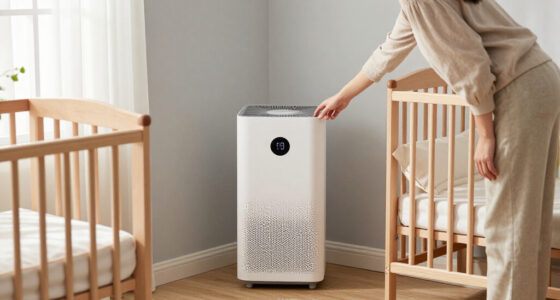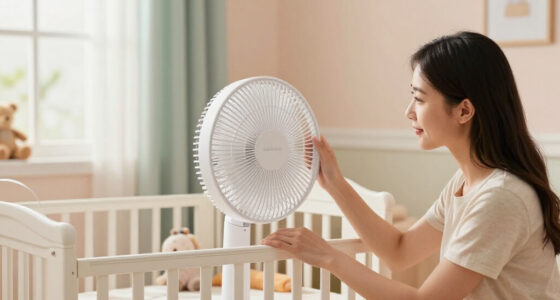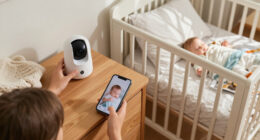
Choose and use a nursery humidifier by checking the room’s humidity, setting up the device safely, and following a regular cleaning routine. This guide is for parents and caregivers who want to add moisture to a baby’s room without creating damp surfaces or letting the device become dirty. The steps are beginner-friendly and take about 30-60 minutes for initial setup, followed by brief daily checks.

Turn the school run and nap time into listening time
- Thousands of audiobooks, podcasts and originals
- Listen on your phone, tablet or Echo — also offline
- Cancel anytime

DREO HM311 4L Ultrasonic Cool Mist Humidifier
- ✔ Capacity: 4 liters
- ✔ Runtime: Up to 36 hours
- ✔ Noise: 28 dB

Vicks Filter-Free Ultrasonic Cool Mist Humidifier, 1.2-Gallon Tank
- ✔ Tank capacity: 1.2 gallons
- ✔ Runtime: Up to 30 hours
- ✔ Type: Ultrasonic cool mist

Frida 3-in-1 Cool Mist Humidifier with Diffuser and Nightlight
- ✔ Tank capacity: 0.66 gallons
- ✔ Runtime: Up to 60 hours on low; 24–48 hours on medium or high
- ✔ Coverage: Up to 320 sq. ft.
Difficulty: Beginner | Time: 30-60 minutes for setup; 10-15 minutes daily for checks and care
What You’ll Need
Tools & Materials:
- Room thermometer and hygrometer, or a combined temperature-and-humidity meter
- Humidifier with an intact power cord and manufacturer instructions
- Clean water as specified by the manufacturer
- Soft cloth and cleaning supplies specified in the manual
Knowledge:
- Basic ability to operate and clean a household appliance
- Ability to read the humidifier manual and follow its cleaning directions
Check with your child’s clinician if you are considering a humidifier to manage a medical condition. A humidifier can ease dry-air discomfort, but it does not treat the cause of breathing symptoms. Follow the device manual and your local health guidance for water choice and cleaning.
DREO HM311 4L Ultrasonic Cool Mist Humidifier
The DREO HM311 takes the top spot because it offers the most useful combination for a nursery: a 4-liter tank, adjustable humidity control, and stated 28 dB operation. Its up-to-36-hour runtime is shorter than Frida’s low-setting maximum, but it is a more balanced figure alongside a control that lets caregivers adjust humidity rather than simply choose a mist level. Its stated coverage is up to 300 square feet, close to Frida’s 320-square-foot figure.Top filling should make routine refills more manageable, and the nightlight adds a gentle convenience without being the core reason to choose it. DREO also includes an aroma diffuser, though essential oils are not supplied. Compared with Vicks, it offers more control and nursery-oriented extras; Vicks counters with a slightly larger stated capacity and a simpler feature set. The DREO’s tradeoffs are its corded power, plastic construction, and the need to clean it regularly. Choose it when you want more say over humidity and quiet operation; skip it if your priority is the simplest possible humidifier.
Pros:
- Adjustable humidity control
- 4-liter capacity with up to 36 hours of stated runtime
- Quiet 28 dB operation
- Top-fill design, nightlight, and aroma diffuser
Cons:
- Requires a corded electrical connection
- Essential oils are not included
- Still needs regular tank cleaning
Best for: Caregivers who want adjustable humidity, quiet stated operation, and a top-fill tank for a nursery or child’s room.
Not ideal for: Buyers who want a basic unit without extra controls or who need cordless operation.
Bottom line: We recommend the DREO HM311 for most nurseries because it pairs practical humidity adjustment with quiet operation and an easy-access top-fill tank.
“We recommend the DREO HM311 for most nurseries because it pairs practical humidity adjustment with quiet operation and an easy-access top-fill tank.”
Vicks Filter-Free Ultrasonic Cool Mist Humidifier, 1.2-Gallon Tank
Vicks is the most straightforward pick in this group. Its 1.2-gallon tank and filter-free design suit caregivers who want a familiar cool-mist setup without tracking replacement filters. The stated runtime is up to 30 hours, below DREO’s 36-hour maximum and well below Frida’s low-setting claim, but the larger tank capacity may appeal if you prefer fewer refills and do not need humidity adjustment.A wide opening is specified for filling and cleaning, an important practical detail for regular maintenance. The unit is described as quiet and includes automatic shutoff, while an optional VapoPad holder can add scent. Compared with the DREO, it has fewer controls and no listed nightlight; compared with Frida, it has the largest stated tank and a simpler feature mix. It is designed for medium-sized rooms, so we would not choose it for a larger space. Its appeal is restraint: skip it if you want humidity settings or built-in nursery lighting.
Pros:
- 1.2-gallon tank
- Filter-free design
- Wide tank opening for filling and cleaning
- Quiet operation and automatic shutoff
Cons:
- Designed for medium-sized rooms
- No adjustable humidity control is listed
- VapoPads are optional rather than included
Best for: Caregivers looking for a simple, filter-free cool-mist humidifier with a large tank and wide opening for cleaning.
Not ideal for: Buyers who need adjustable humidity, a built-in nightlight, or coverage for a larger room.
Bottom line: We’d choose Vicks for a no-frills nursery setup where filter-free operation and tank access matter more than added controls.
“We’d choose Vicks for a no-frills nursery setup where filter-free operation and tank access matter more than added controls.”
Frida 3-in-1 Cool Mist Humidifier with Diffuser and Nightlight
Frida makes the most sense when a nursery needs a humidifier plus two small conveniences: a nightlight and essential-oil diffuser. Its top-fill removable tank and compact dimensions give it a practical footprint, while coverage is listed up to 320 square feet. That is slightly more than DREO’s stated 300 square feet, though DREO provides humidity adjustment and a specified noise level that Frida’s listed details do not.The headline runtime needs context: up to 60 hours applies on low, while medium or high is listed at 24–48 hours. That gives Frida an advantage for long, low-output operation, but the maximum should not be treated as an all-settings expectation. Vicks is simpler and has a 1.2-gallon tank; Frida differentiates itself with bundled lighting and a diffuser. The tradeoff is maintenance: the tank should be emptied daily and cleaned and air-dried regularly. Pick Frida for a compact, multi-function setup, and pass if humidity control or a longer runtime at stronger output is the priority.
Pros:
- Combines cool mist, diffuser, and nightlight
- Top-fill removable tank
- Up to 60 hours on low
- Auto shutoff and low-water indicator
Cons:
- Runtime falls to 24–48 hours on medium or high
- Tank should be emptied daily and cleaned regularly
- Plastic construction
Best for: Caregivers who want a compact top-fill humidifier with a nightlight and diffuser in one nursery appliance.
Not ideal for: Buyers who want adjustable humidity control or expect the longest stated runtime at medium or high output.
Bottom line: We’d choose Frida when a nursery benefits from a nightlight and diffuser as well as humidification, provided its low-setting runtime matches your use.
“We’d choose Frida when a nursery benefits from a nightlight and diffuser as well as humidification, provided its low-setting runtime matches your use.”
As an Amazon Associate we earn from qualifying purchases.
Before You Start
Measure the room before buying or setting up a humidifier. Many households aim for indoor relative humidity between 30% and 50%; avoid letting it stay above 50%, since excess moisture can encourage mold and dust mites. Room conditions vary, so use the hygrometer to guide operation rather than running the humidifier continuously.
Keep the appliance well away from the crib, bedding, curtains, and places where a child can reach or pull its cord. Never place a hot-steam unit where a child could be burned by steam or spilled hot water. Follow the manual’s clearance requirements and keep the device on a stable, water-resistant surface.
Step-by-Step Instructions
Step 1: Measure the nursery humidity
Place the hygrometer in the nursery near the area where the baby sleeps, but away from windows, heating vents, and direct humidifier mist. Let the reading settle, then record the room’s humidity and temperature. Check the reading at different times if heating or ventilation changes during the day.
Tip:A reading below 30% may indicate dry air. A reading at or above 50% is a reason to avoid adding moisture until the room is drier.
Check: You have a baseline humidity reading that is not affected by a nearby vent, window, or mist plume.
Step 2: Choose a suitable humidifier
Select a model sized for the nursery, with controls that let you adjust output or set a humidity target. Compare the cleaning instructions, tank size, noise level, and whether the unit uses cool mist or warm mist. Choose a design you can take apart and clean as the manufacturer directs.
Tip:Cool-mist models avoid the burn hazard associated with hot water and steam. They still need regular cleaning because stagnant water and mineral deposits can contaminate the device.
Check: The model fits the room, has clear maintenance instructions, and can be placed outside the child’s reach.
Step 3: Read the manual and prepare the location
Read the sections on water, assembly, operation, clearances, and cleaning before filling the unit. Choose a flat, stable surface that cannot tip and is positioned beyond the crib and child’s reach. Keep mist away from walls, windows, electrical outlets, and fabrics, and route the cord where it cannot be pulled or tripped over.
Tip:Do not set the humidifier on the crib rail, a shelf above the crib, or a surface that could be reached by a crawling child.
Check: The appliance is stable, the cord is secured, and the mist will not land directly on bedding or nearby surfaces.
Step 4: Fill and start the humidifier
Wash your hands, unplug the unit if the manual instructs you to, and fill the tank with the specified water. Do not add essential oils, medications, or fragrances unless the manufacturer explicitly approves them for that model. Reassemble the unit, plug it into a safe outlet, and select a low or moderate setting.
Tip:Some units call for distilled or demineralized water to limit mineral dust. Use the type stated in the manual; do not assume that all humidifiers need the same water.
Check: The unit runs without leaking, unusual noise, or mist blowing onto the crib or dampening nearby surfaces.
Step 5: Adjust output using the hygrometer
Check the room humidity after the humidifier has run long enough for conditions to change. Increase or decrease output to keep the room in a comfortable range, generally 30%-50%, and turn the unit off if the reading reaches 50% or condensation appears. Recheck after changing the setting.
Tip:Do not rely only on a built-in humidistat; its reading may differ from conditions elsewhere in the nursery. A separate hygrometer helps you spot that difference.
Check: The room stays below 50% humidity, and windows, walls, and bedding remain dry.
Step 6: Refresh the water and clean on schedule
Follow the manual’s schedule for emptying, drying, and cleaning. As a daily habit, turn the appliance off, unplug it before handling, empty leftover water, and let removable parts dry if the instructions allow. Clean the tank and other parts at the recommended interval using only approved products, rinse as directed, and dry completely before refilling.
Tip:Never mix cleaning products. In particular, mixing bleach with vinegar or other cleaners can release hazardous fumes. Keep cleaning chemicals away from children.
Check: The tank has fresh water, the parts are free of visible deposits or residue, and the unit is dry before storage or refilling.
Step 7: Check the room and device each day
Look at the hygrometer, the humidifier, and nearby surfaces each day while the device is in use. Turn it off if the room is too humid, if condensation or dampness develops, or if the appliance leaks, smells unusual, or has visible buildup. Follow the manual for resolving the issue before restarting.
Tip:Use the humidifier only when the room needs added moisture; it does not need to run all day or all night by default.
Check: The room remains within the chosen humidity range, surfaces stay dry, and the device shows no signs of leaks or buildup.
Common Mistakes to Avoid
- Running the humidifier continuously without checking room humidity. — Use a separate hygrometer and switch the unit off when humidity reaches 50% or dampness appears.
- Placing the unit close to the crib or on a surface that can tip. — Use a stable, out-of-reach location and follow the clearance guidance in the manual.
- Leaving old water in the tank or skipping cleaning. — Empty and refresh water regularly, then clean and dry parts according to the manufacturer’s schedule.
- Adding oils or scented products to the tank. — Use only water and approved supplies; add nothing unless the manual specifically permits it.
Troubleshooting
Problem: Humidity does not rise after the humidifier runs.
Solution: Check that the unit is assembled correctly, the tank has water, and the output setting is on. Confirm that the room size is within the model’s rating and that the hygrometer is positioned away from vents. If the device still does not work, consult the manual or manufacturer.
Problem: Windows, walls, or bedding feel damp.
Solution: Turn the humidifier off, dry the affected surfaces, and ventilate the room as appropriate. Lower the output or move the unit farther from surfaces, then restart only when the room is dry and humidity is below 50%.
Problem: White dust appears near the humidifier.
Solution: Turn off and clean the unit according to its manual. Check whether the device requires distilled or demineralized water, and use that type if specified. Keep the mist from blowing toward the crib or other furnishings.
Problem: The unit smells musty or has visible film.
Solution: Stop using it, unplug it, and clean all parts as directed. Replace filters or other parts if the manual calls for replacement. Do not restart until the device is clean, rinsed as instructed, and fully dry.
What Success Looks Like
The humidifier is stable and out of the child’s reach, the nursery humidity stays around 30%-50% without condensation, and the tank is refreshed and cleaned on the schedule in the manual. The device runs without leaks, unusual odors, or visible residue. If the baby has breathing trouble or other concerning symptoms, contact a clinician rather than relying on room humidity alone.
Next Steps
Keep the hygrometer in the nursery and check it whenever heating, ventilation, or weather changes affect the room. Continue the device’s cleaning schedule, replace filters or other parts when required, and stop using the humidifier if it is damaged or cannot be cleaned properly. Ask your child’s clinician for guidance if you are using it because of persistent symptoms.
Frequently Asked Questions
What humidity should I aim for in a nursery?
A common indoor target is 30%-50% relative humidity. Use a hygrometer to track the room, and avoid adding moisture when the reading is already 50% or higher.
Should a nursery humidifier run all night?
Only run it when the room needs added moisture and the appliance can be placed and operated safely. Check humidity and nearby surfaces; switch it off if the room becomes damp or exceeds your target.
Can I put essential oils in the humidifier?
Do not add essential oils unless the manufacturer explicitly approves them for that model. Oils can damage parts or create exposure that is unsuitable for a baby’s room.
How often should I clean a nursery humidifier?
Follow the specific cleaning schedule in the manual. Empty and refresh the water regularly, and clean and dry the tank and other parts as directed to reduce buildup and microbial growth.
Is cool mist safer than warm mist for a nursery?
Cool mist avoids the hot water and steam burn hazard of warm-mist units. Keep any humidifier out of reach, follow its manual, and clean it regularly.