TL;DR

Turn the school run and nap time into listening time
- Thousands of audiobooks, podcasts and originals
- Listen on your phone, tablet or Echo — also offline
- Cancel anytime
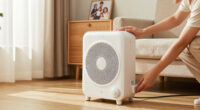
A nursery fan can improve air circulation and help prevent overheating without aiming airflow directly at the crib. The safest approach is gentle, indirect circulation combined with established safe-sleep practices.
Ever wonder if a fan can help keep your nursery comfortable without risking your baby’s safety? The answer is yes, but only if you use it thoughtfully. Many parents worry about drafts, chill, or dust stirring up — and rightly so. The key is understanding how to circulate air safely, without blowing directly on your little one.
In this guide, you’ll learn practical ways to set up a nursery fan that improves airflow, prevents overheating, and keeps your baby cozy and safe. It’s about gentle, indirect circulation — not blasting cold air or creating a breeze across the crib. Let’s get into the details so you can keep your baby comfortable and safe, even at 3 a.m.
Position fans to circulate air indirectly — aim at walls or ceilings, not directly at your baby, to prevent chilling and skin irritation.
Regularly check the baby’s skin for signs of overheating or chill — don’t rely on room temperature alone, as it can be misleading due to drafts or uneven heati…
Secure all cords, avoid extension cords, and keep fans out of reach to prevent accidents, ensuring a safe sleep environment.
Use fans to support comfort and air flow, but don’t depend on them to replace safe sleep practices or prevent overheating—these remain essential.
Balance noise and airflow—moderate fan sound helps sleep without causing discomfort or excessive drying of skin and mucous membranes.
Airflow without blowing on the crib
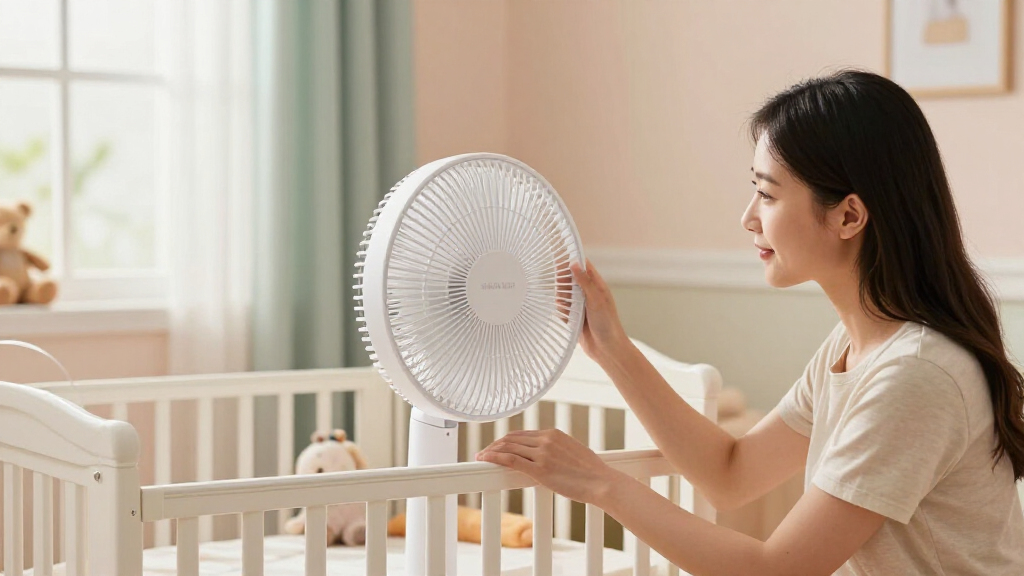
A nursery fan can reduce stuffiness and help prevent overheating when it gently circulates room air. The aim is not to create a breeze across the baby—it is to keep air moving indirectly while preserving every established safe-sleep practice.
Redirect air away from the crib and distribute it softly through the room.
Check airflow with your hand at mattress height. It should never feel like a steady gust.
A fan assists circulation; it does not replace a firm surface, an empty crib, or back sleeping.
Stir the room’s air—not the air around the baby
Indirect circulation helps balance warm and cool spots without concentrating airflow on delicate skin, eyes, or airways. These three decisions make the biggest difference.
Bounce the airflow
Aim a pedestal or table fan toward a wall or ceiling. The redirected air creates broad, gentle circulation instead of a focused draft.
Use oscillation
Moving airflow prevents one part of the crib area from receiving a persistent breeze and helps reduce stagnant pockets around furniture.
Choose the lowest effective speed
More power is not automatically better. Mild movement is enough when the goal is comfortable, evenly distributed room air.
The fan is secondary. Safe sleep comes first.
For every sleep, place the baby on their back, on a firm, flat and level surface, inside an empty crib, bassinet, or approved play yard.
Back to sleep
Place the baby on their back for naps and nighttime sleep.
Firm and flat
Use an approved level sleep surface with a fitted sheet.
Empty space
Keep loose and padded items completely outside the crib.
No substitute
Never treat fan use as a stand-alone SIDS-prevention measure.
A four-step path to gentle circulation
Start with placement, soften the airflow, verify conditions at crib height, then reassess as the baby becomes mobile.
Place
Set a stable fan several feet from the crib, beyond reach and away from curtains or water.
Redirect
Aim toward a wall, ceiling, doorway, or stagnant corner—not toward the mattress.
Soften
Select low speed and oscillation. Avoid maximum speed merely to generate white noise.
Verify
Check airflow and the baby’s chest or neck; adjust for room size, fan power, and comfort.
The hand test
Hold your hand at mattress height in several crib positions.
Choose the arrangement, not just the appliance
A secure, low-speed ceiling fan can reduce cord and tipping concerns, while a portable fan offers precise placement. Either option still requires monitoring.
| Setup | Indirect airflow | Cord / tipping risk | Best use | Verdict |
|---|---|---|---|---|
| Ceiling fan on low | ✓ Broad circulation | ✓ Low when secure | Even, whole-room movement | ✓ Strong option |
| Fan aimed at wall | ✓ Gentle rebound | ~ Secure cord and base | Redirecting air across a room | ✓ Recommended |
| Oscillating fan across room | ✓ Distributed flow | ~ Requires clear placement | Reducing stagnant pockets | ✓ Useful |
| Fan beside crib | ✗ Concentrated breeze | ✗ Reach and cord hazard | Not appropriate | ✗ Avoid |
| Fan on maximum for noise | ✗ Excess airflow | ~ Varies by model | Use separate moderate sound if needed | ✗ Avoid |
Trust the chest or neck
Look for sweating, flushed skin, damp hair, or a hot chest. Hands and feet often feel cooler and are not reliable measures of core warmth.
Secure the entire setup
- Fasten cords against the wall and never run them beside the crib.
- Avoid extension cords where possible.
- Use a stable base and complete protective grille.
- Inspect ceiling fans for wobbling or loose components.
What the evidence does—and does not—show
A 2008 observational study found an association between fan use during infant sleep and lower SIDS risk, especially in some warmer or poorly ventilated settings. Association is not proof of prevention, so established safe-sleep guidance remains the foundation.
Frequently asked questions
Should a fan blow directly on a sleeping baby?
No. Aim it away from the crib so it creates mild, indirect circulation without a persistent draft.
How far should the fan be from the crib?
Several feet away—often about 3–6 feet—then adjust for fan power, room size, reach hazards, and the mattress-height hand test.
Can a fan make a baby too cold?
Yes, especially with strong airflow or an already cool room. Check the chest or back of the neck rather than relying on hands and feet.
Does a fan prevent SIDS?
No causal prevention claim has been established. Some observational evidence suggests an association, but a fan is not a substitute for safe sleep.
Is a ceiling fan safer than a portable fan?
It can reduce cord and tipping hazards when securely installed, inspected for wobble, and operated at low speed.
What about fan noise?
A steady, quiet sound may mask household noise. Keep volume moderate at the crib and avoid placing a loud fan close to the baby’s head.
Point away, set low, secure every cord, test at mattress height, and keep safe-sleep basics non-negotiable.
Why a nursery fan isn’t just about airflow — it’s about safety first
A nursery fan can help with air quality and temperature, but it’s not a magic solution for sleep safety. Safe sleep always comes first: your baby should sleep on their back, on a firm surface, in an empty crib, with nothing loose inside. Fans don’t replace these basics. They’re just a tool to support a comfortable, well-ventilated environment.
Using a fan improperly — aiming it directly at your baby — can cause discomfort, dry skin, or even chilling. The goal is indirect, gentle circulation that encourages air movement without creating a draft. Think of it as stirring the room’s air, not blowing it onto your baby. This distinction matters because direct airflow can lead to unintended consequences, such as chilling or skin irritation, which might increase health risks or disturb sleep. Properly managed, fans help maintain a stable environment that supports healthy breathing and thermal regulation.
Understanding why safety is paramount helps you make informed choices. For instance, direct airflow might cool the baby too much or dry out their skin, leading to potential health issues or sleep disturbances. Conversely, a well-managed, indirect airflow strategy supports a stable, comfortable environment that promotes restful sleep and reduces health risks. Recognizing these tradeoffs underscores the importance of careful fan placement and operation.
As an affiliate, we earn on qualifying purchases.
How to create gentle, indirect airflow that keeps your baby safe
- Point the fan toward the wall or ceiling, not directly at the crib. This bounce of air creates a gentle circulation pattern, avoiding cold drafts that can chill your baby or cause discomfort. Indirect airflow ensures the room remains evenly ventilated, reducing hot or cold spots that might disturb sleep or cause skin issues.
- Place the fan several feet away from the crib—at least 3–6 feet—to ensure the air movement remains mild. This distance allows for effective circulation without creating a strong breeze that could wake your baby or cause chilling. The tradeoff is that too close, and the airflow becomes disruptive; too far, and it might be less effective, so adjust based on room size and fan power.
- Use oscillation to distribute air evenly across the room, preventing persistent drafts in one spot. Oscillating fans create a more uniform environment, reducing localized cooling or drying that could irritate skin or disturb sleep. This even distribution helps maintain stable temperatures and humidity levels, supporting overall comfort.
- Run ceiling fans at low speed—this creates minimal air movement that prevents stuffiness without chilling the room. Low-speed operation minimizes risks while still promoting healthy air exchange. Overly fast fans can produce drafts, so always opt for the lowest effective setting.
- Position the fan to move warm or stale air out of corners or behind furniture, which helps balance the room’s temperature and reduces indoor pollutants. Proper positioning supports a healthier environment, especially if your room tends to have uneven heating or ventilation issues.
Test the airflow by placing your hand at mattress height. It should feel faint or neutral, not like a gust. This subtle circulation supports healthy air exchange, reduces the likelihood of dry skin or chills, and maintains a comfortable environment for sleep.
For example, in a room with a ceiling fan, turning it to low and ensuring it rotates without a strong breeze keeps the air fresh and prevents the formation of hot or cold spots that could affect your baby’s comfort and safety.
As an affiliate, we earn on qualifying purchases.
Frequently Asked Questions
Should a fan blow directly on my sleeping baby?
No. The best approach is to aim the fan away from the crib, creating a mild, indirect flow that helps with air circulation without causing discomfort or chills.How far should the fan be from the crib?
Position the fan several feet away—enough so it doesn’t blow directly on your baby and cords are out of reach. Adjust based on the fan’s power and the room size.Can a fan make my baby too cold?
Yes, especially if airflow is strong or the room is cooled. Check your baby’s chest or neck regularly to ensure they’re comfortable and not overheated or chilled.Does a fan reduce SIDS risk?
Some evidence suggests a possible association, but fans are not a proven SIDS prevention tool. Use safe sleep practices alongside gentle airflow for best results.Is a ceiling fan safer than a portable fan?
It can be, since it reduces cord and tipping hazards. Still, it must be securely installed and run at low speed, with careful monitoring.As an affiliate, we earn on qualifying purchases.
Conclusion
Using a nursery fan isn’t about aiming a breeze at your baby — it’s about creating a gentle, indirect flow that keeps the air fresh without chilling or drying them out. Think of it as a quiet helper, supporting safe, comfortable sleep every night.
Remember: safety first. Keep cords out of reach, avoid direct drafts, and always follow established sleep guidelines. A well-placed fan can be a simple, effective tool — as long as you use it wisely.
As an affiliate, we earn on qualifying purchases.
Fall Picks
fall essentials
As an affiliate, we earn on qualifying purchases.