TL;DR

Turn the school run and nap time into listening time
- Thousands of audiobooks, podcasts and originals
- Listen on your phone, tablet or Echo — also offline
- Cancel anytime
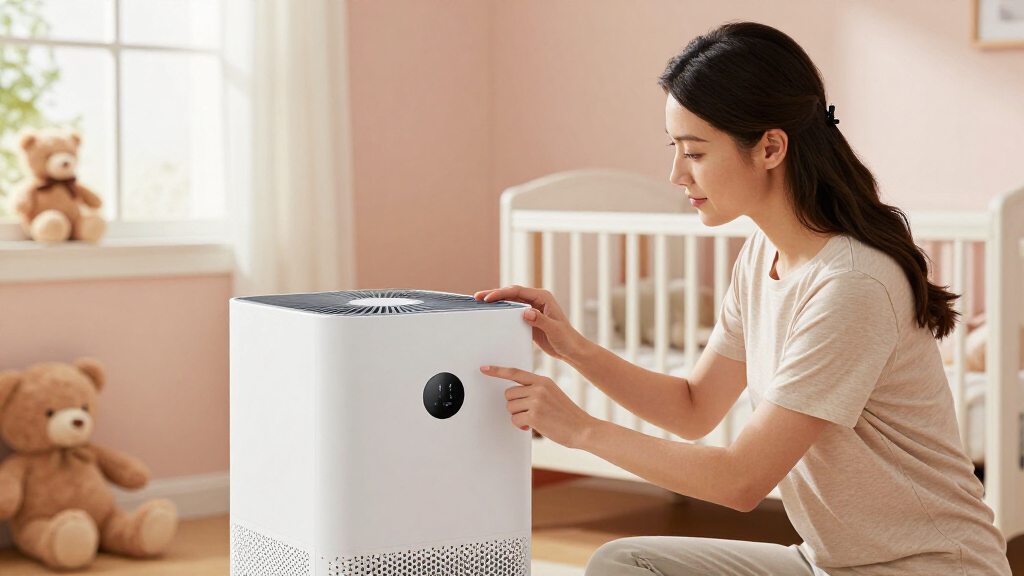
Wildfire smoke contains fine particles that can enter homes through small gaps. Running your air purifier continuously at high speed, using proper sizing, and avoiding unnecessary features help keep nursery air clean and safe for infants.
Wildfire smoke drifts in like an unwelcome guest—thick, gray, and filled with tiny particles that can sneak through tiny gaps and tiny filters. For your baby, these particles aren’t just an annoyance; they can irritate delicate lungs and immune systems still learning to defend themselves.
Knowing how to tune your air purifier during smoky days isn’t just about noise levels or fancy features. It’s about making sure every breath your little one takes is as clean as possible. In this guide, I’ll walk you through simple, practical steps to set your purifier for maximum safety—without fuss or confusion.
Run your purifier continuously at high speed during smoky days for maximum protection.
Size your purifier based on room volume and aim for at least five air changes per hour.
Prioritize HEPA filters with high smoke CADR and avoid ionizers that produce ozone.
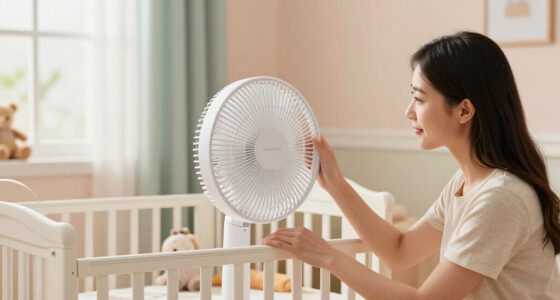
Place the purifier several feet away from the crib, on a stable surface, and out of reach.
Keep windows and doors closed, and use recirculate mode on your HVAC system to prevent outdoor smoke entry.
Purifier Settings That Help
Wildfire smoke slips indoors through gaps, vents, and opened doors. For a nursery, the practical response is simple: filter continuously, size for at least five air changes per hour, and use mechanical filtration without ozone-producing extras.
Exchange the nursery’s full air volume at least five times each hour.
Start on Turbo or maximum speed, then step down only if indoor air stays clean.
A useful smoke-CADR range for a 12 × 12 × 8-foot room.
Build a relentless clean-air cycle
Smoke infiltration continues even when the room looks clear. A fixed, continuous airflow removes particles more dependably than brief or sensor-triggered bursts.
Run continuously
Keep filtration active day and night throughout smoky periods.
Start on Turbo
Use maximum speed for 30–60 minutes after smoke arrives or a door opens.
Hold medium-high
Reduce speed only after indoor particle levels stabilize.
Override Auto
Nearby sensors may react slowly or miss changes elsewhere in the room.
Limit Sleep mode
Use quiet settings only when they still deliver adequate room cleaning.
Choose CADR, not marketing claims
Room-size labels can be based on gentle conditions or low air-change targets. Smoke CADR reveals how much particle-filtered air the machine actually supplies.
Prioritize particles, airflow, and a sealed path
A strong purifier moves enough air through effective filter media without allowing polluted air to leak around the filter.
Genuine HEPA
Choose high-efficiency mechanical filtration designed to capture fine smoke particles.
Smoke CADR
Use the published smoke rating and target at least five room air changes per hour.
Activated carbon
Carbon can reduce odors and some gases, but thin sheets have limited gas capacity.
| Feature | Nursery setting | Why it matters | Limitation |
|---|---|---|---|
| HEPA filtration | ✓Use | Captures fine airborne smoke particles. | Does not remove every wildfire gas. |
| High smoke CADR | ✓Prioritize | Delivers more filtered air each minute. | Must still match room volume and speed. |
| Activated carbon | ~Helpful | Reduces smoke odor and some gaseous pollutants. | Thin carbon layers saturate quickly. |
| Auto mode | ~Secondary | Can respond to particles near the sensor. | May react slowly during active smoke. |
| Ionizer or ozone | ×Disable | Not required for mechanical particle removal. | May add respiratory irritants. |
| Child lock | ✓Enable | Prevents control changes and improves safety. | Cords and openings still need securing. |
Give clean air room to circulate
Keep the intake and outlet open, the cord inaccessible, and the airflow several feet from the crib rather than directed at the baby.
Simple room plan
Leave clearance around every intake and outlet.
Do not point high-speed airflow toward the crib.
Keep controls, openings, and filter panels out of reach.
Close the nursery door when practical and monitor temperature.
What to do through the night
Consistency matters most. Keep the purifier working at the highest practical setting that still delivers adequate cleaning without disrupting safe sleep.
Should it stay on all night?
Yes. Continuous operation helps prevent particles from rebuilding as outdoor smoke continues to infiltrate.
Is Auto mode enough?
Not during active smoke. A fixed medium-high or high speed is usually more dependable.
Can Sleep mode be used?
Only after indoor air stabilizes and the reduced airflow still achieves adequate cleaning.
Will HEPA remove the smell?
HEPA removes particles; activated carbon is needed for odors and some gases.
HEPA filtration does not remove carbon monoxide or every wildfire gas. Maintain working smoke and carbon-monoxide alarms and follow local public-health guidance during severe smoke events.
Why Running the Purifier Continuously Matters More Than You Think
During wildfire season, **constant air filtration** beats intermittent use. Smoke particles—especially PM2.5—are tiny, often less than 2.5 micrometers across. Their small size allows them to bypass many household barriers, entering through tiny gaps in windows, vents, and even the smallest cracks. This means that sporadic operation of your purifier might leave your nursery vulnerable during peak smoke periods.
Running your purifier continuously at a high setting creates a steady, relentless cycle of filtration. Think of it as having a dedicated cleanup crew that doesn’t rest—constantly pulling in and trapping dangerous particles before they can settle or be inhaled. This consistent approach is crucial because PM2.5 particles can penetrate deep into the lungs and even enter the bloodstream, posing serious health risks for infants with developing lungs and immune systems. By maintaining continuous operation, you significantly reduce the time your baby is exposed to these invisible hazards, lowering the risk of respiratory irritation, asthma exacerbation, or other health issues.
While continuous operation might seem resource-intensive, the health benefits for your child far outweigh the minor increase in energy use. It’s about prioritizing their safety during critical periods when outdoor smoke infiltrates your home.
HEPA air purifier for nursery wildfire smoke
As an affiliate, we earn on qualifying purchases.
As an affiliate, we earn on qualifying purchases.
How to Size Your Purifier for Maximum Protection in the Nursery
Selecting the right-sized air purifier is not just about buying the most powerful or the most expensive model. It’s about matching the purifier’s capacity to your nursery’s volume to ensure effective, efficient filtration. The key measure here is the **Clean Air Delivery Rate (CADR)**—which indicates how much clean air the purifier produces per minute. During wildfire seasons, the goal is to achieve at least **five air changes per hour** in your nursery, meaning the entire volume of air is exchanged five times every 60 minutes.
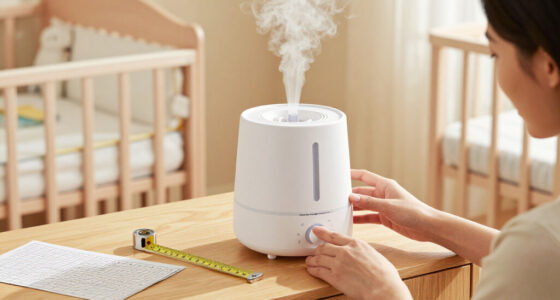
For example, consider a typical nursery measuring 12×12 feet with an 8-foot ceiling, totaling approximately 1,152 cubic feet. To reach five air changes per hour, you need a purifier capable of delivering roughly 96 CFM (cubic feet per minute). Choosing a purifier rated at 120–150 CFM provides a buffer that ensures the room is thoroughly cleaned without overworking the unit. Oversizing slightly offers benefits: it reduces noise levels, extends filter life, and provides a safety margin if outdoor smoke levels spike unexpectedly.
Using the formula below helps you select a purifier that fits your space and protection needs:
| Room Volume (cu ft) | Desired Air Changes Per Hour | CFM Needed |
|---|---|---|
| 1,152 | 5 | ~96 CFM |
| 1,152 | 10 | ~192 CFM |
Prioritize purifiers with high smoke CADR ratings—look for units rated for larger spaces and proven particle removal efficiency. While it might be tempting to opt for smaller, cheaper units, undersized purifiers can struggle to keep up with high pollution levels, leading to inadequate filtration and prolonged exposure. Proper sizing ensures your nursery remains a safe haven from wildfire smoke, even during peak events.
air purifier with high CADR for smoke
As an affiliate, we earn on qualifying purchases.
As an affiliate, we earn on qualifying purchases.
What Filter Features Really Matter for Wildfire Smoke
When wildfire smoke is in the air, the effectiveness of your purifier hinges on its filter’s ability to trap tiny particles. A **genuine HEPA filter** is essential because it captures at least 99.97% of airborne particles as small as 0.3 micrometers, including PM2.5. This level of efficiency is crucial because wildfire smoke particles are extremely small and can penetrate deep into the lungs, causing inflammation and respiratory issues. The smoke CADR rating indicates how quickly the purifier can remove smoke particles—aim for a rating of 120 CFM or higher for serious wildfire conditions.
Activated carbon filters add another layer of protection by adsorbing gases, odors, and some volatile organic compounds (VOCs) that accompany wildfire smoke. While they don’t replace particle filters, they help mitigate the unpleasant smell of smoke and reduce some gaseous pollutants, providing a more comprehensive approach to indoor air quality.
Prioritizing filters that are both high-quality and replaceable ensures ongoing protection. Sealed units with tight-fitting filters prevent unfiltered air from bypassing filtration media, maintaining the purifier’s efficiency. Avoid units with ionizers or ozone generators—these can produce secondary pollutants that irritate delicate infant lungs, defeating the purpose of filtration. Remember, a filter system’s true effectiveness depends on its ability to trap the smallest, most harmful particles without leaks or bypasses, especially critical in a nursery environment where infants are most vulnerable.
As an affiliate, we earn on qualifying purchases.
Frequently Asked Questions
Should the purifier stay on all night during wildfire season?
Yes. Keeping the purifier on continuously at the highest safe setting helps maintain low PM2.5 levels. It’s the most effective way to ensure your nursery stays as smoke-free as possible, especially during severe wildfire days.
Is Auto mode reliable for wildfire smoke?
Not always. Auto mode sensors may react slowly or miss sudden increases in smoke. During active fire events, setting your purifier to a steady medium-high or high speed provides more dependable protection.
Can I use Sleep mode during smoky nights?
Sleep mode can be fine once indoor air quality stabilizes. But when smoke levels are high, Sleep mode often reduces airflow too much. It’s better to run at a higher setting for effective filtration and switch to quiet modes only when the air is clear.
How close should the purifier be to the crib?
Several feet away—enough to prevent drafts or waking your baby—yet close enough to effectively clean the air. Avoid placing it directly next to the crib or inside a crib enclosure.
Will a purifier remove smoke odors?
HEPA filters remove soot and particles that cause smoke smell, but gases and odors often require activated carbon filters. Even then, a purifier doesn’t eliminate all gases like carbon monoxide, so alarms and ventilation are still essential.
As an affiliate, we earn on qualifying purchases.
Conclusion
Wildfire smoke is an invisible threat, but your nursery can stay safer with the right setup. Continuous operation, correct sizing, and thoughtful placement make a real difference—protecting your baby’s tiny lungs from harm.
Remember, a well-tuned purifier is your best frontline defense. Keep it running, keep it clean, and keep your little one breathing easier—even when the smoke is thick outside.
Fall Picks
fall essentials
As an affiliate, we earn on qualifying purchases.