TL;DR

Turn the school run and nap time into listening time
- Thousands of audiobooks, podcasts and originals
- Listen on your phone, tablet or Echo — also offline
- Cancel anytime
A hygrometer measures relative humidity, or how close the air is to saturation at its current temperature. A practical nursery target is about 30–50% RH, though guidance varies; readings around 40–50% are a useful middle ground. Place the device away from heat, windows, sunlight, the crib, and humidifier mist, and investigate persistent readings above 60% or visible dampness.
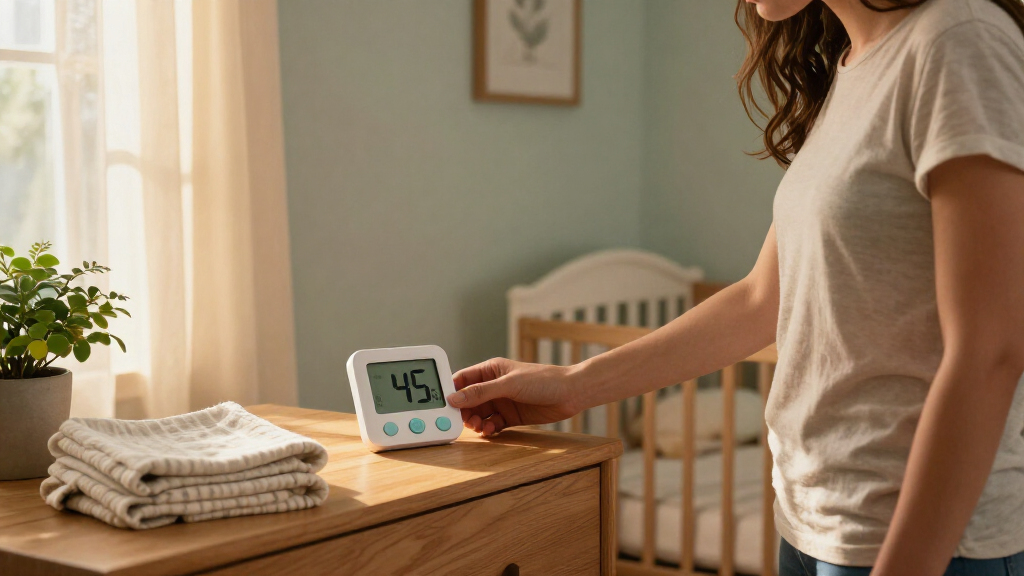
At 3 a.m., a glowing 47% on the nursery wall can feel like one more number you need to solve before you go back to bed. The good news: it is a room reading, not a verdict on your baby’s health.
A hygrometer measures relative humidity (RH), a percentage that tells you how close the air is to saturation at its current temperature. For a nursery, a practical target is generally 30–50% RH; many families use roughly 40–50% as a comfortable middle ground. Guidance varies with climate, season, and the building itself [1][2].
This guide explains what the display can and cannot tell you, where to put the device, and how to respond to readings that stay low or high. You will also learn why a single jump on the screen matters less than a pattern you can verify, and how to use a humidifier without turning the corner by the crib into a damp patch.
A practical nursery target is generally 30–50% RH; roughly 40–50% is a useful middle range, not a medical rule.
Relative humidity changes with temperature, so the same amount of water vapor can produce different readings.
Place the hygrometer away from windows, heaters, sunlight, humidifier mist, exterior walls, and the crib.
Check device accuracy and look for trends instead of reacting to every short-lived fluctuation.
Investigate persistent readings above 60%, condensation, musty odors, or visible mold; address the moisture source.
Nursery guide · Indoor air
Nursery Humidity Levels: Reading the Numbers on Your Hygrometer
A hygrometer reading is room context, not a verdict on your baby’s health. Learn what relative humidity means, where to place the sensor, and when a pattern deserves attention.
What the percentage actually measures
Relative humidity (RH) describes how close the air is to saturation at its current temperature. It is not a direct count of all the water vapor in the room.
Temperature changes RH
Warm air can hold more moisture than cool air. If the nursery cools overnight, the same amount of water vapor can produce a higher RH reading. When the room warms again, the percentage may fall.
One dial among several
A reading of 42% gives useful context, but it cannot tell you whether your baby is too warm or diagnose a stuffy nose. Room temperature, ventilation, clothing, and bedding matter too.
Same moisture. Different temperature. Different RH.
The hygrometer tracks air’s relationship to saturation. Read the percentage alongside room temperature and visible signs such as condensation.
Use guideposts, not a magic number
These bands are practical comfort and moisture guideposts, not medical thresholds. A brief fluctuation matters less than a repeated pattern that matches what you see or smell.
Check placement and device accuracy; consider whether a humidifier suits your situation.
A practical nursery range for many homes. Around 40–50% is a useful middle ground.
Often acceptable, but check windows and surfaces for condensation or persistent damp.
If sustained, check for leaks, ventilation issues, musty odors, and visible mold.
Blue: low · Green: practical target · Amber: dampness watch · Red: extended high readings deserve investigation
Place the hygrometer where it reads the room
A sensor beside a humidifier may report a damp pocket while the rest of the room is drier. A sunny sill or cold exterior wall can skew the reading too.
- Choose an open spot away from drafts, vents, heaters, windows, and direct sunlight.
- Set it around chest height on a stable shelf or wall, safely away from the crib and out of reach.
- Keep it away from humidifier mist and exterior walls, which can create a local reading.
- Wait for a steady reading according to the device instructions, then compare readings over time in the same place.
| Reading | How to interpret it | What to check |
|---|---|---|
| Below 30% | The room may feel dry. | Placement, device accuracy, heating, and whether humidification is appropriate. |
| 30–50% | A commonly used comfort range and reasonable nursery target. | Room comfort and overall conditions. |
| 50–60% | Often acceptable, though damp conditions deserve attention. | Condensation, poor ventilation, and damp surfaces. |
| Above 60% for extended periods | Persistent excess moisture can support mold growth. | Leaks, ventilation, and the source of moisture. |
Let patterns and physical signs guide your next step
A short-lived spike—such as after a steamy bathroom door opens—is different from days of high readings with a musty smell. Verify the sensor, then look for the moisture source.
Check the room first
Confirm placement and accuracy. Dry skin, lips, or nasal passages can have many causes; symptoms alone do not establish that humidity is too low.
Look for dampness
Investigate recurring condensation, musty odors, visible mold, leaks, or poor ventilation. Address the moisture source rather than relying only on a dehumidifier.
Keep it clean and distant
Follow the instructions, clean it regularly, use the recommended water, and keep mist and cords away from the crib. Avoid oils or medicines unless the device and a clinician specifically support their use.
What your hygrometer’s percentage actually measures
Nursery humidity levels on a hygrometer show relative humidity: how close the air is to holding as much water vapor as it can at its current temperature. That is different from a direct measure of the total amount of water in the room. The percentage changes with temperature, even when the amount of vapor does not.
For instance, imagine the nursery cools overnight while the heat is off. The air holds less moisture at the cooler temperature, so the RH percentage can rise even if nobody added water. When the heat comes on in the morning, the room warms and the percentage may fall. The display is tracking a relationship, not counting invisible drops like a tiny rain gauge.
A reading of 42% RH gives you useful context, but it cannot tell you whether your baby is too warm, whether a window seal leaks, or whether a stuffy nose needs medical attention. Think of humidity as one dial on a small dashboard that also includes temperature, ventilation, clothing, and bedding.
Many indoor recommendations fall around 30–60%, while a practical nursery target is often narrower at 30–50% [1][2]. Exact advice varies with the local climate and building. A parent checking the screen after a cold night should read the number alongside the room temperature and any condensation on the glass.
Popular right now

De'Longhi Linea Classic Espresso Machine with Adjustable Milk Frother

KitchenAid Artisan 5-Quart Tilt-Head Stand Mixer, Almond Cream

Breville Barista Pro Espresso Machine with Grinder, Brushed Stainless Steel
As an affiliate, we earn on qualifying purchases.
Find a practical target without chasing every percentage point
Nursery humidity levels around 30–50% RH are a practical target for many homes, with roughly 40–50% offering a middle ground between very dry air and persistent dampness. This is a comfort guide, not a medical threshold, and recommendations can differ by climate and home conditions [1][2].
Why not aim for exactly 45%? Because household hygrometers can vary by several percentage points, and a room’s humidity naturally shifts as heating, ventilation, showers, and outdoor weather change. Chasing a precise number can leave you switching devices on and off all night for no useful gain.
Use the bands below as guideposts. A brief reading outside your target is less informative than a repeated pattern, especially when the display matches signs you can see or smell.
| Reading | How to interpret it | What to check |
|---|---|---|
| Below 30% | The room may feel dry. | Placement, device accuracy, heating, and whether a humidifier suits your situation. |
| 30–50% | A commonly used comfort range and reasonable nursery target. | Look at comfort and the room’s overall condition. |
| 50–60% | Often acceptable, though damp conditions deserve attention. | Condensation, poor ventilation, or damp surfaces. |
| Above 60% for extended periods | Persistent excess moisture can support mold growth. | Leaks, ventilation, and the moisture source [2][3]. |
For example, a screen that briefly reads 62% after a steamy bathroom door opens is a different situation from a nursery that stays above 60% for days and smells musty. Use the number as a prompt to observe, then respond to the pattern.
Place the hygrometer where it can read the room
Nursery humidity levels are only as useful as the hygrometer’s placement. Put the device in the room around breathing or chest height, in a spot that reflects the general air rather than a local hot, cold, or damp pocket. Keep it away from direct sunlight, radiators, exterior walls, windows, the humidifier’s mist, and the baby’s crib.
That sounds like a lot of places to avoid, but the reason is simple: the screen can be technically working and still tell you about the wrong patch of air. For instance, a hygrometer sitting beside a humidifier may show 58% while the middle of the room is much drier. A sunny windowsill can heat the sensor and skew the reading in the other direction.
Try this quick placement check:
- Choose an open spot away from drafts, vents, heaters, and direct sunlight.
- Set it at about chest height on a stable shelf or wall, safely away from the crib and out of reach.
- Wait for a steady reading according to the device instructions before recording it.
- Compare readings over time in the same place before deciding that the room needs a change.
If you move the monitor from a high shelf to a cold outside wall and see a jump, do not assume the whole room changed instantly. Let the device settle and compare it with the room’s actual conditions. Better placement often solves a mystery before you buy anything.
Check the device before you act on a surprising number
A hygrometer reading is an estimate, not a perfect measurement. Low-cost devices may differ by several percentage points, so a single number deserves a little skepticism if it clashes with how the room looks and feels. Check the product’s stated accuracy and follow its manufacturer’s instructions for calibration or maintenance.
Say one monitor reads 28% while another nearby reads 36%, and neither is beside a heater or window. That gap may reflect device error rather than a dramatic change in moisture. If the display seems implausible, compare it with another reliable device, check their placement, and give both time to settle before changing the room.
Smart monitors can record overnight patterns and alert you to swings, which is handy when the nursery door stays closed. Their notifications still depend on the sensor’s accuracy and location. A connected graph is a record of what that device sensed, not proof that the entire room had the same conditions.
Look for a pattern across several readings, ideally at different times of day. If the room repeatedly reads low alongside dry-feeling air, investigate the heating and device placement. If it repeatedly reads high alongside wet windows or a musty smell, take the moisture signs seriously even if a second monitor differs slightly.
Respond to dry air without treating the number as a diagnosis
Nursery humidity levels below 30% may feel dry, but a low reading alone does not diagnose a problem or explain a baby’s symptoms. Dry skin, lips, or nasal passages can have many causes. Check the monitor’s placement and accuracy first, then consider the room’s heat and ventilation before deciding whether to use a humidifier.
For instance, if the radiator runs all night and the hygrometer sits directly above it, the display may not represent the rest of the room. Move the device to a more representative spot and watch the reading over time. If the low pattern remains, you can weigh whether a humidifier is appropriate for your home and your pediatrician’s guidance.
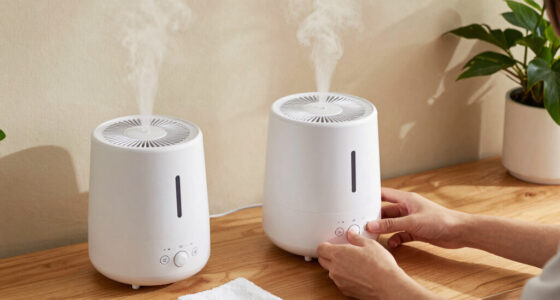
If you use a humidifier, follow its instructions, clean it regularly, and use the water type its manufacturer recommends. Dirty units can spread microorganisms or minerals. Cool-mist models can dampen nearby surfaces when they run too high or sit too close to furniture or bedding, so keep the device and cord away from the crib and never aim mist at the baby.
Skip essential oils or medicines unless the device is designed for them and a clinician recommends their use. A humidifier may ease dryness for some people, but it does not treat a cold or replace medical care. For feeding, breathing, or other health concerns, ask your pediatrician rather than adjusting a dial and hoping for the best.
Treat lasting dampness as a room problem to investigate
Readings that stay above about 60% RH deserve attention, particularly when they come with condensation, visible mold, or a musty odor. Public health guidance commonly advises keeping indoor relative humidity below 60% when possible because excess moisture can support mold growth; many practical recommendations aim lower, often 30–50% [2][3].
A single high number after a wet coat dries in the room does not tell the whole story. But if you see water beading along the nursery window every morning, or the corner behind a dresser smells stale, look for the source. A leak, poor ventilation, or repeated moisture may need attention beyond a dehumidifier.
Check for wet window frames, plumbing leaks, damp walls, and blocked airflow. Ventilate when outdoor conditions allow, and address any leak or building issue you find. A dehumidifier can help in some situations, but it does not repair a roof or stop a pipe from dripping behind the wall.
Humidity is one part of nursery comfort; temperature, ventilation, clothing, and bedding matter too. A heater can change the reading, and a damp corner can stay hidden while the monitor across the room looks fine. If you spot mold or recurring water damage, contact the appropriate property or building professional to find and address the moisture source.
Keep safe sleep separate from humidity adjustments
Humidity does not change the core safe-sleep recommendations. Keep the baby’s sleep space clear and follow current pediatric safe-sleep guidance. Do not add loose bedding, change the baby’s sleep position, or place a humidifier near the crib to compensate for a reading.
At 2 a.m., a cool-looking room and a low humidity number can make an extra blanket seem like a quick fix. It is not a humidity adjustment. If you are unsure how to dress your baby for sleep or have a concern about temperature, ask your pediatrician and follow current safe-sleep guidance.
Keep humidifiers and their cords well away from the crib, and avoid wetting bedding or nearby surfaces. If mist settles on a shelf or the wall feels damp, lower or stop the humidifier and review its position and settings. The monitor should help you notice room conditions without changing the sleep space.
Think of the hygrometer as a weather report for one room: useful for choosing what to check, but not a reason to improvise medical care or sleep arrangements. When breathing difficulty or another concerning symptom appears, contact a medical professional promptly instead of relying on a percentage.
Frequently Asked Questions
What humidity should a baby’s room be?
A practical target is usually 30–50% RH, with roughly 40–50% a useful middle ground. Guidance varies with climate and building conditions, and the number is not a medical threshold. Look at the pattern and the room’s condition as well as the display.
Is 60% humidity too high for a nursery?
One brief reading at 60% does not automatically signal a problem. Repeated readings above about 60%, especially with condensation, a musty smell, or visible mold, call for a closer look at ventilation and moisture sources.
Is 20% or 25% humidity harmful to a baby?
Those readings are below common indoor comfort guidance and may contribute to dryness, but a hygrometer alone cannot diagnose harm. Check placement and accuracy, and ask your pediatrician about persistent symptoms or health concerns.
Where should I put the hygrometer?
Place it in an open part of the room around chest or breathing height, away from windows, heaters, direct sunlight, exterior walls, humidifier mist, and the crib. Give it time to settle after moving it before you compare readings.
Should I use a humidifier when my baby has a cold?
A cool-mist humidifier may ease dryness for some people, but it does not treat an infection. Follow the manufacturer’s cleaning and use instructions, keep the device away from the crib, and ask your pediatrician about symptoms or breathing concerns.
Can a humidifier cause mold?
Yes. If a humidifier raises humidity too high or leaves nearby surfaces damp, it can contribute to moisture problems. Monitor the room and reduce or stop use if condensation or dampness appears.
Conclusion
Use your hygrometer to notice a pattern, not to chase a perfect percentage. Keep it in a representative spot, treat 30–50% RH as a practical guide, and investigate repeated dampness or signs of mold.
Then let the screen go dark. Your nursery should feel like a comfortable room, not a control panel demanding attention all night.