TL;DR

Turn the school run and nap time into listening time
- Thousands of audiobooks, podcasts and originals
- Listen on your phone, tablet or Echo — also offline
- Cancel anytime
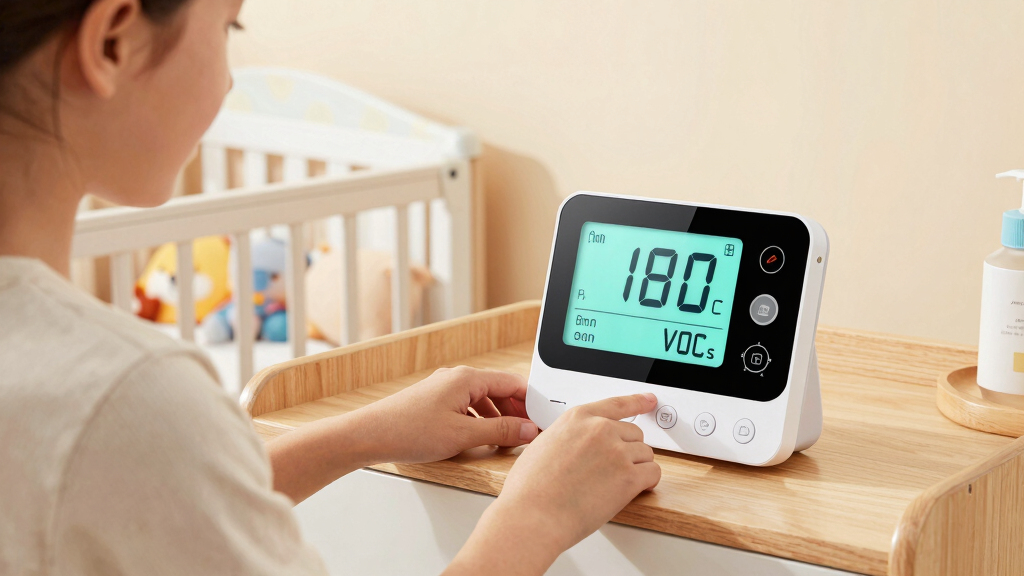
Nursery air quality monitors measure particles, gases, humidity, and temperature to detect pollutants that could harm infants. Knowing what they track helps you maintain a safe nursery environment.
Nursery air quality monitors track PM, VOCs, CO₂, CO, humidity, and temperature—each vital for infant health.
High PM and VOC levels can cause respiratory issues; early detection allows for quick mitigation.
Monitoring CO₂ and CO helps prevent silent, deadly risks from poor ventilation and faulty appliances.
Modern devices connect with smart home systems, making real-time alerts and automation simple.
Regularly checking nursery air quality reduces health risks and creates a safer sleep environment.
Nursery Air Quality Monitors: What They Measure
Invisible particles, gases and moisture can change the room your baby breathes in. A monitor translates those hidden conditions into timely signals—so you can ventilate, remove a source or adjust the nursery before discomfort becomes a health concern.
Think of it as your baby’s environment, translated into numbers.PM, VOCs, CO₂, CO, relative humidity and temperature.
A practical range that helps limit overly dry air, dust mites and mold-friendly moisture.
Cleaning, cooking, closed windows and outdoor pollution can all shift nursery readings.
Fine particles small enough to travel deep into the lungs.
CO₂ in ppm can be an early cue to review ventilation.
A commonly used comfort range for nursery conditions.
Continuous tracking catches short spikes that spot checks miss.
The six signals that build the full picture
No single reading defines healthy air. Particles show what is suspended, gas sensors reveal invisible emissions and ventilation, while humidity and temperature explain the room’s comfort and mold potential.
PM2.5 & PM10
Tracks airborne dust, pollen, pet dander, smoke and outdoor pollution. PM2.5 deserves special attention because its tiny particles can penetrate deeply into developing lungs.
Watch after cooking, smoke events or open-window pollutionVOCs
Detects groups of gases released by paint, cleaners, fragrances, flooring and new furniture. Sudden rises can reveal a product or activity that needs removal or ventilation.
Watch after painting, cleaning or unpacking furnitureCarbon dioxide
CO₂ accumulates as people breathe in a closed room. Rising readings are a useful indicator of stale air and insufficient fresh-air exchange.
Watch overnight with doors and windows closedCarbon monoxide
CO is an odorless combustion gas linked to faulty heaters, fireplaces, attached garages and other fuel-burning sources. Detection demands immediate attention.
Use a certified CO alarm as the primary life-safety deviceRelative humidity
Shows whether the room is overly dry or moisture-heavy. Low humidity can irritate skin and airways; persistent high humidity supports mold and dust mites.
Practical target: approximately 40–60% RHTemperature
Tracks warming and cooling patterns that affect comfort and sleep. Trend data can expose hot spots, drafts and nighttime changes that a thermostat elsewhere may miss.
Common reference range: approximately 68–72°FWhat deserves the fastest response?
Risk depends on concentration, duration and source. Use the monitor to spot change, identify the likely cause and act early—especially when combustion gases or sharp pollutant spikes appear.
Response priority
A practical comparison of how urgently each signal should trigger investigation. Bars communicate relative response priority, not medical limits.
Comfort tracks
Targets help turn measurements into everyday decisions, but trends and manufacturer guidance still matter.
Below the band: consider controlled humidification. Above it: remove moisture and investigate condensation or mold.
Check the baby’s sleep setup and pediatric guidance alongside the room reading; avoid direct drafts and overheating.
Match the sensor to the question
Coverage varies widely. A device labelled “air quality monitor” may estimate only a few parameters, so inspect the sensor list, alert options and calibration requirements before buying.
| Measurement | What it reveals | Nursery priority | Likely first action | Selection check |
|---|---|---|---|---|
| PM2.5 / PM10 | Dust, smoke, dander and outdoor particle infiltration | ✓ Core | Remove source; filter or ventilate when outdoor air is cleaner | ~ Confirm particle sizes reported |
| VOCs | Gaseous emissions from products and materials | ✓ Core | Stop product use; ventilate and watch the trend | ~ Often reported as a combined index |
| CO₂ | Whether occupied-room ventilation is keeping pace | ✓ Core | Increase safe fresh-air exchange | ✓ Prefer a true CO₂ sensor |
| Carbon monoxide | Dangerous combustion gas | ✓ Critical | Follow alarm instructions and leave the area if alerted | ✓ Keep certified alarms installed |
| Humidity | Dry-air irritation or excess moisture conditions | ✓ Core | Humidify or dehumidify carefully | ✓ Look for trend logging |
| Temperature | Comfort, hot spots and overnight drift | ✓ Core | Adjust heating, cooling or airflow | ✓ Check placement sensitivity |
Important: consumer monitors do not detect every pollutant and do not replace certified smoke or carbon-monoxide alarms.
From invisible source to useful action
The number matters most when it leads to a repeatable response. Trends help connect a spike with what happened in the room—and show whether the corrective action worked.
Cleaning, paint, cooking or closed windows
An activity or condition changes the nursery environment.
Particles, gases or moisture rise
The device converts an invisible change into a reading.
Phone notification or room warning
A threshold or unusual pattern prompts attention.
Remove, ventilate, filter or adjust
Choose the response that matches the likely source.
Confirm the reading returns toward normal
The trend validates whether the intervention helped.
From dashboard to automatic response
Newer monitors add pattern analysis, remote alerts and smart-home links. The useful upgrade is not more data—it is a shorter path between detection and action.
Automation examples
Features that matter
Fast notification when a reading changes sharply.
Connect recurring spikes to routines and room conditions.
Highlights unusual behavior and possible corrective actions.
Links compatible purifiers and ventilation controls.
Compact housing, secure placement and nursery-suitable materials.
Choose for clarity, not gadget count
Prioritize trustworthy measurements and alerts you will actually use. Place the monitor away from direct drafts, humidifier mist and the floor, then follow its calibration and maintenance instructions.
The bottom line
A nursery monitor turns what you cannot see into information you can use. Track particles, gases, humidity and temperature; investigate meaningful changes; act on the source; and verify the recovery. Monitoring supports a safer nursery, but it works best alongside good ventilation, source control and certified life-safety alarms.
What Do Nursery Air Quality Monitors Actually Measure? Think of it as your baby’s environment in numbers
Nursery air quality monitors track several key factors that directly influence your child’s health. The most common are particulate matter (PM), VOCs, CO₂, carbon monoxide (CO), humidity, and temperature. These measurements paint a clear picture of the air your baby breathes, helping you spot hazards early.
For example, high PM levels—tiny dust or pollen particles—can trigger allergies or asthma. Elevated VOCs—gases from cleaning sprays or paints—may cause irritation or long-term health issues. Similarly, CO₂ levels indicate how well your nursery is ventilated. Too much CO₂ means stale air, which can make your baby sleepy or cause headaches.
Knowing these parameters is like having a health report for your nursery, so you can react swiftly and keep your little one safe.
Popular right now

Ninja Flip Toaster Oven and Air Fryer, 8-in-1, Stainless Steel, SP151

Bose QuietComfort True Wireless Earbuds with Active Noise Cancellation, Black

De'Longhi Linea Classic Espresso Machine with Adjustable Milk Frother
As an affiliate, we earn on qualifying purchases.
Why Particulate Matter (PM) and VOCs Matter More Than You Think
Particulate matter (PM), especially PM2.5—particles less than 2.5 micrometers—are small enough to penetrate deep into lungs. In nurseries, PM can come from dust, pet dander, or outdoor pollution sneaking inside. Exposure can worsen asthma or cause respiratory infections.
VOCs are gases released from paints, cleaning products, and even new furniture. These invisible toxins can irritate your baby’s eyes, skin, and lungs. For instance, a fresh coat of paint in the nursery can spike VOC levels for days, making a monitor’s real-time alert invaluable.
Monitoring PM and VOCs lets you identify sources and act—like opening windows or switching to VOC-free products—before your baby shows symptoms.
How Carbon Dioxide and Carbon Monoxide Levels Reveal Hidden Dangers
Carbon dioxide (CO₂) is a natural part of indoor air but can become a problem when ventilation is poor. High CO₂ levels—above 800 ppm—can make your baby sleepy, restless, or irritable. A monitor alert helps you air out the nursery before discomfort sets in.
Carbon monoxide (CO), on the other hand, is a silent threat from faulty heaters or nearby traffic. It’s odorless and deadly in high concentrations. A monitor that detects CO acts as a crucial safety net, alerting you to shut off appliances or ventilate immediately.
Both gases are sneaky because you can’t see or smell them, but good monitors provide peace of mind by catching these dangers early.
Humidity and Temperature: Keeping the Nursery Just Right
Proper humidity—ideally between 40-60%—prevents mold, dust mites, and dry skin. Too dry, and your baby’s skin cracks; too humid, and mold can grow, risking respiratory issues. Temperature should stay around 68-72°F for comfort and safety.
A nursery monitor tracks these levels, helping you avoid stuffy, moldy, or cold rooms. For example, if the humidity hits 70%, you might run a dehumidifier. If it dips below 65°F, a small space heater can warm things up without overheating.
Consistent, comfortable conditions mean fewer colds and happier, healthier sleep for your little one.
How Modern Monitors Are Making This Easier Than Ever
Today’s nursery monitors do more than just measure—they connect to your phone, analyze trends, and even predict problems. Some include AI that recognizes patterns, like a spike in VOCs after cleaning, alerting you to ventilate or switch products.
Many integrate seamlessly with smart home systems, so an increase in PM triggers your air purifier to kick on. Compact and stylish, these devices fit discreetly into your nursery without cluttering the space.
For example, a monitor might alert you at 2 a.m. that CO₂ levels are rising because you left the window closed—prompting you to open it before your baby wakes up stuffy.
The Bottom Line: What You Need to Know About Nursery Air Monitoring
Nursery air quality monitors measure particles, gases, humidity, and temperature—each playing a role in your baby’s health. Advances in sensor tech and smart integrations make it easier to keep an eye on these factors in real time.
Remember, high-quality monitoring isn’t just a gadget—it’s a safeguard for your child’s developing lungs and immune system. Regular checks and quick reactions can prevent many illnesses and discomfort.
Choosing the right monitor means understanding what it measures and how those measurements influence your environment. Stay vigilant, stay educated, and breathe easier knowing your nursery is as safe as possible.