TL;DR

Turn the school run and nap time into listening time
- Thousands of audiobooks, podcasts and originals
- Listen on your phone, tablet or Echo — also offline
- Cancel anytime
Modern digital baby monitors with encryption are highly resistant to interception, but older analog models can be easily picked up by neighbors. Securing your device through updates, strong passwords, and smart placement is essential to keep your baby’s privacy safe.
Imagine settling your baby down for a nap, only to worry someone across the street might be listening or watching. It’s unsettling, but it’s a real concern with certain baby monitors. The good news? Most modern models are designed with security in mind. But understanding what makes a signal safe—or risky—can save you from surprises in your own home.
In this guide, you’ll learn exactly how your baby monitor signals work, whether neighbors can pick them up, and what steps you can take to keep your baby’s world private. Getting a grip on these tech details now can give you peace of mind at 3 a.m. when all you hear is silence—or worse, an unexpected voice.
Older analog baby monitors are vulnerable because they broadcast on fixed, unencrypted channels accessible to anyone with a scanner.
Modern digital monitors with AES encryption and frequency hopping drastically reduce interception risks, but security depends on user practices like changing d…
Always update your device’s firmware and avoid using default passwords to keep your baby’s feed safe from neighbors or hackers.
Wi-Fi monitors can be secure if configured properly—use strong passwords and separate networks, but beware of weak security settings.
Look for signs of interference, like static or strange noises, which could indicate someone is listening in.
How Baby Monitor Signals Actually Work — And What Makes Them Vulnerable
Baby monitors operate on different frequencies, mainly analog or digital. Analog models, often on 900 MHz or 2.4 GHz, send unencrypted signals that anyone with a compatible radio can sometimes pick up. This means that anyone with a scanner tuned to that frequency can eavesdrop without much effort, turning your private moments into open broadcasts. The implications are significant: if your monitor is unencrypted, your child’s activities could be exposed to neighbors or malicious actors, risking privacy breaches or even unauthorized surveillance.
Digital monitors use encryption—a secret code that scrambles the feed, making it unintelligible to outsiders. Many now hop frequency channels constantly (called frequency hopping), which prevents easy interception, and encrypt the data to protect against eavesdropping. However, if the encryption is outdated, weak, or if the default passwords are not changed, vulnerabilities remain. These weaknesses can be exploited, allowing hackers or neighbors with the right tools to listen in, potentially gaining access to sensitive moments or even controlling the device remotely.
For example, in 2019, a widely used analog monitor was found vulnerable because it broadcasted on a fixed frequency with no encryption, making it easy for anyone with a scanner to listen in from across the street. Such vulnerabilities highlight why understanding the type of monitor you have matters—because the security tradeoff between convenience and privacy can be significant.
As an affiliate, we earn on qualifying purchases.
Can Neighbors Actually Intercept Your Baby Monitor? Here’s When It’s Possible
The short answer? Yes, but only if your monitor isn’t secure. Older analog models, especially those operating on 900 MHz or 2.4 GHz without encryption, are like open radio channels—anyone with the right scanner can pick up the feed from a few houses away. This means that if your neighbor owns a scanner and your monitor is unencrypted, they could listen to your baby’s sounds or view the video feed without your knowledge, which can be a serious invasion of privacy.
Modern digital monitors, especially those with AES encryption and frequency hopping, offer much stronger protection. These features scramble the signal and frequently change transmission channels, making interception by neighbors or outsiders significantly more difficult. However, vulnerabilities can still exist if the device has security flaws, such as outdated firmware, or if you haven’t changed default passwords. This creates a window of opportunity for malicious actors or curious neighbors to access your feed.
Picture this: You’re in your backyard, and a neighbor across the street, with a basic radio scanner, could eavesdrop if your monitor is unencrypted. Conversely, if you have a newer, encrypted model with strong security practices, the likelihood of interception drops dramatically. The key takeaway is that security measures directly influence whether your monitor’s signals are accessible to outsiders, emphasizing the importance of choosing and maintaining a secure device.
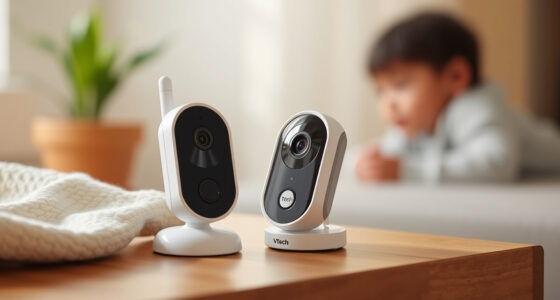
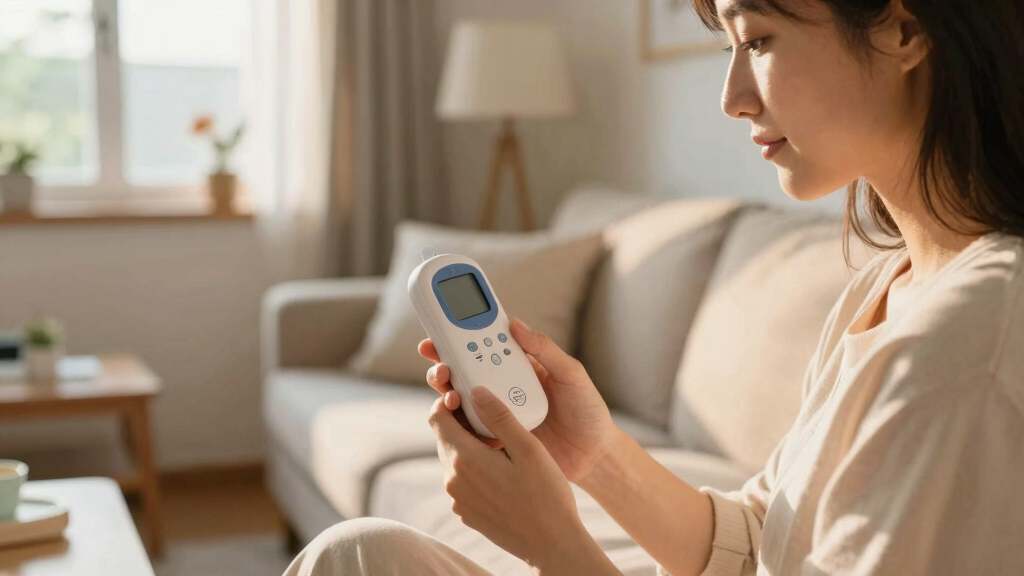
analog baby monitor with no encryption
As an affiliate, we earn on qualifying purchases.
As an affiliate, we earn on qualifying purchases.
Security Upgrades That Keep Your Baby’s Privacy Off the Street
Upgrading your baby monitor isn’t just about buying the latest gadget. It’s about knowing which features actually protect your privacy and understanding the tradeoffs involved. For instance, monitors with encryption like AES act as a digital safe, preventing outsiders from decoding your feed. Frequency hopping adds an extra layer of security by constantly changing the transmission channel, making it difficult for eavesdroppers to lock onto your signal. Using password protection and changing default passwords immediately is critical, as many devices come with common or predictable credentials that hackers can exploit. Additionally, regularly updating your device’s firmware patches known security vulnerabilities, closing potential entry points for hackers.
Choosing a monitor with these features involves balancing convenience and security. For example, switching from an outdated analog model to a Wi-Fi monitor with robust encryption and changing the default password on setup can significantly reduce the risk of unauthorized access. But it also requires some familiarity with network settings and security practices. The tradeoff is worth it: peace of mind knowing your baby’s private moments are shielded from prying eyes.
Imagine a quiet evening, knowing your monitor’s encrypted signal is like a secret code only you can unlock. This proactive approach to security ensures that your child’s privacy remains intact, even in a world filled with digital vulnerabilities.
As an affiliate, we earn on qualifying purchases.
How To Recognize If Your Baby Monitor Has Been Intercepted
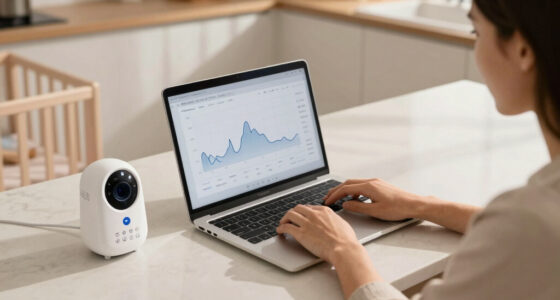
Wondering if someone is listening in? Recognizing signs of interception requires attention to subtle clues. Unexpected static, strange noises, or faint echoes can indicate interference or eavesdropping. If your monitor’s video feed flickers or displays strange artifacts, it might be a sign that someone is hacking or intercepting your signal. Additionally, unusual activity on your Wi-Fi network—such as unknown devices connecting—can be a red flag that your network security has been compromised, potentially allowing unauthorized access to your monitor.
For example, you might hear snippets of conversations or notice your monitor producing static at odd times, which could signal that someone is trying to listen in or jam the signal. Keeping your firmware updated and regularly checking your network logs can help detect these issues early. Think of it as giving your home a security checkup, but focusing on the digital layer that protects your privacy. Recognizing these signs early can prevent ongoing breaches and help you take quick corrective action.
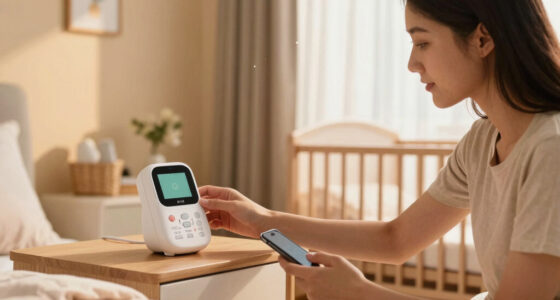
Wi-Fi baby monitor with strong security
As an affiliate, we earn on qualifying purchases.
As an affiliate, we earn on qualifying purchases.
What’s Better: Wired, Analog, or Wi-Fi Baby Monitors?
| Type | Security Level | Ease of Use | Vulnerability |
|---|---|---|---|
| Wired | Very high | Less flexible, requires cables | Minimal — difficult to hack physically, since there are no wireless signals that can be intercepted remotely |
| Analog | Low | Very easy to set up | High — broadcasts on fixed frequencies, making it easy for anyone with a scanner to intercept and listen in, especially if no encryption is used |
| Wi-Fi | Variable, depends on security settings | Most flexible, remote access | Potentially vulnerable if not secured properly, especially if default passwords are used or firmware is outdated |
Wired monitors are the safest but least convenient, offering the highest security because they don’t broadcast wirelessly. Analog models are inexpensive but pose significant risks due to their unencrypted, fixed channels. Wi-Fi monitors provide the most features and convenience but require diligent security practices—like strong passwords and regular updates—to prevent hacking. Your choice should consider your comfort level with managing security and your priority on convenience versus privacy.
Frequently Asked Questions
Can my neighbors really listen to my baby through the monitor?
It’s possible if your monitor uses unsecured analog signals or has security flaws. Digital, encrypted monitors are much harder to intercept, but security depends on how you set them up.How do I know if my baby monitor is secure?
Check for encryption features, ensure the device has frequency hopping, and verify that firmware is up to date. Avoid models with default passwords or known vulnerabilities.What steps can I take now to protect my monitor’s signal?
Change default passwords, keep firmware updated, use a secure Wi-Fi network, and consider placing the monitor in a location that minimizes signal leakage.Are Wi-Fi baby monitors safer than traditional ones?
They can be, if set up correctly—using strong passwords and secure networks. But they also require ongoing security practices to prevent hacking.What should I do if I suspect my monitor has been hacked?
Look for strange noises, static, or unexpected activity on your Wi-Fi. Reset your device, update passwords, and run security checks on your network immediately.Conclusion
In the end, your baby’s privacy hinges on the type of monitor you choose and how well you secure it. Modern digital models with encryption are a strong defense, but they’re only as good as your security habits. Regular updates, strong passwords, and smart placement are your best tools.
Think of your baby monitor as a tiny, high-tech safe—guard it like one. With a little awareness, you can keep your child’s quiet moments truly private, no matter what’s going on across the street.
Fall Picks
fall essentials
As an affiliate, we earn on qualifying purchases.