TL;DR

Turn the school run and nap time into listening time
- Thousands of audiobooks, podcasts and originals
- Listen on your phone, tablet or Echo — also offline
- Cancel anytime
Baby monitor ranges vary widely, from 300 to over 1,000 feet, depending on technology and environment. Obstacles and interference often reduce effective distance, so understanding your specific setup is key for reliable monitoring.
Ever wonder if your baby monitor can really reach across your entire house? Or if those fancy claims of 1,000-foot ranges hold up in your cozy living room? The truth is, the actual distance your monitor’s signal can cover isn’t just about the tech specifications. It depends on walls, interference, and even how you position the device. Understanding what affects your monitor’s range helps you stay connected when it matters most — especially during late-night checks or outdoor play.
In this guide, you’ll learn what impacts your baby monitor’s reach, the latest tech trends, and practical tips to get the most reliable signal. Whether you’re in a small apartment or a sprawling rural property, knowing these details helps you choose and set up your monitor for peace of mind.
Most baby monitors have a real-world effective range of 100–300 feet indoors, less than advertised due to walls and interference.
Digital RF monitors (DECT, FHSS) offer better reliability and longer ranges than analog models, especially in complex environments.
Position your monitor high and away from electronic clutter to maximize its effective distance.
Wi-Fi monitors depend on your home network; a strong, well-placed router extends coverage beyond the nursery.
Reducing interference sources and testing different spots can significantly improve your monitor’s clarity and range.
What’s the Real Range of Baby Monitors? Expect 300 to 1,000 Feet in Open Space
Most baby monitors list impressive ranges, but in real life, your experience varies. Audio-only models often reach up to 1,000 feet in open, obstacle-free space. Video monitors typically cover between 300 and 900 feet. Wi-Fi monitors, on the other hand, depend on your home Wi-Fi coverage rather than the device itself.
Understanding these ranges is crucial because it directly impacts your ability to monitor your baby effectively. For example, a monitor that claims 900 feet might seem sufficient, but if your walls or furniture cut that range in half inside your home, you might be caught off guard during late-night checks. Similarly, in outdoor spaces, open areas can truly leverage the maximum range of your device, but cluttered environments will always limit it. Recognizing these differences helps set realistic expectations and prevents reliance on overstated capabilities.
Key takeaway: Expect less than the advertised range in most typical home environments. Outdoor open spaces give the best shot at maximum distance.
As an affiliate, we earn on qualifying purchases.
How Obstacles and Interference Shrink Your Baby Monitor’s Range
Obstacles like thick walls, metal doors, or furniture can cut your monitor’s effective distance in half or more. For example, a monitor with a 600-foot range in open space might only work reliably within 100 feet inside a brick house. This isn’t just a minor inconvenience—it’s a significant factor that can compromise your ability to monitor your baby when you need to rely on the device most. When walls and furniture block signals, they create barriers that absorb or reflect the radio waves, leading to dead zones or static. This means that even if your monitor claims a long range, the actual usable distance can be drastically shorter, especially in complex layouts.
Electronic interference is another culprit. Wi-Fi routers, cordless phones, and microwaves compete for the same airwaves. This often causes static, dropouts, or reduced distance. A classic example: your monitor signals weaken when your microwave runs or when your Wi-Fi router is busy, even if you’re just a few rooms apart. These interferences are dynamic and unpredictable, making it essential to understand that your environment can change the effective range at any time.
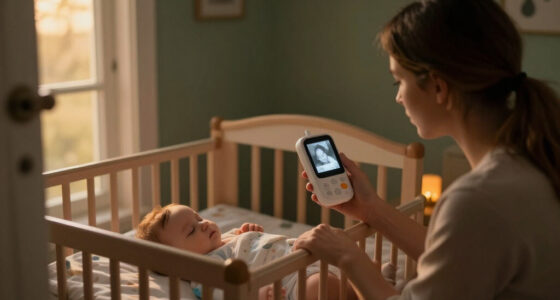
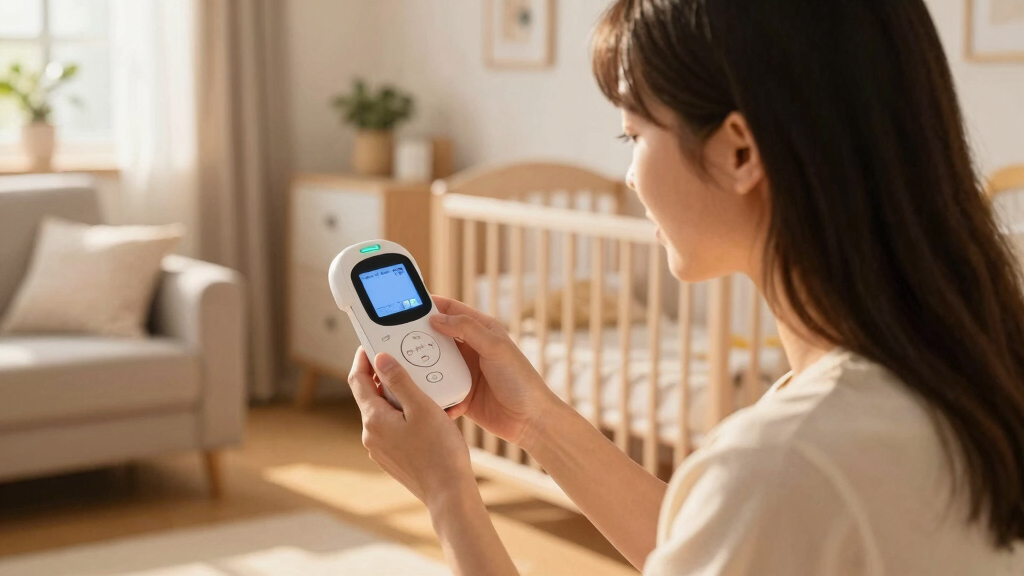
Tip: Place your monitor’s receiver as high as possible, and avoid lining it up with thick walls or electronic clutter. Sometimes, moving the router to a different spot boosts your monitor’s range. Think of it as tuning a radio—small adjustments can significantly improve clarity and distance. Testing different positions helps identify the best spots for reliable monitoring, especially in challenging environments.
Real-world scenario: A parent found that placing the monitor on a windowsill, away from metal filing cabinets and near the router, improved clarity and doubled the usable distance. These subtle changes can make a tangible difference in ensuring your monitor works when you need it most.
As an affiliate, we earn on qualifying purchases.
Comparison Table: RF, DECT, Wi-Fi — Which Baby Monitor Has the Longest Reach?
| Technology Type | Typical Range | Interference Susceptibility | Best For |
|---|---|---|---|
| Analog RF | Up to 600-1000 ft in open space | High, easily disrupted by other wireless devices | Large outdoor spaces or long-range needs |
| Digital FHSS or DECT | 300-1000 ft, more reliable indoors | Lower, channels automatically switch to avoid interference | Most indoor use, moderate outdoor |
| Wi-Fi | Limited by Wi-Fi coverage | Variable, depends on router placement | Remote access, mobile viewing |
While RF models in open space can reach over 1,000 feet, walls and interference cut that down. Wi-Fi monitors depend entirely on your home network’s strength.
Choosing the right technology isn’t just about maximum distance; it’s about matching your environment and monitoring needs. RF models excel outdoors but struggle indoors with obstacles. DECT and FHSS provide a good balance for indoor reliability, especially in homes with many walls. Wi-Fi offers flexibility and remote access but is highly dependent on your network quality. Understanding these tradeoffs helps you select the best monitor for your specific situation, ensuring peace of mind whether you’re inside or outside.
Wi-Fi baby monitor with extended coverage
As an affiliate, we earn on qualifying purchases.
As an affiliate, we earn on qualifying purchases.
Tips to Maximize Your Baby Monitor’s Effective Distance
- Upgrade to a digital DECT or FHSS model for better reliability.
- Position the monitor high and central, away from metal or electronics.
- Reduce interference sources — turn off nearby Wi-Fi devices or microwave when listening for your baby.
- Use Wi-Fi monitors with strong routers in open areas for extended coverage.
- Test your setup in different parts of your home to find the sweet spot where the signal remains clear.
Imagine you’re trying to listen for your baby during nap time. Moving the monitor to a bookshelf near the window, away from the TV and microwave, can make a big difference. Sometimes, a simple repositioning extends your effective range by dozens of feet. These adjustments matter because they directly influence how reliably you can monitor your child, especially in environments with many potential obstacles or interference sources. Taking the time to optimize your setup ensures you’re not just relying on the monitor’s advertised range but achieving the maximum practical coverage for your home.
baby monitor signal range extender
As an affiliate, we earn on qualifying purchases.
As an affiliate, we earn on qualifying purchases.
What to Do When Your Baby Monitor Loses Signal
If your monitor keeps cutting out, don’t panic. First, check for interference sources — unplug or move other wireless devices. Next, reposition the monitor or its antennas for a clearer line of sight. Upgrading to a model with a stronger antenna or better technology can also help. Recognizing that environmental factors cause fluctuations in signal strength helps you adapt your setup proactively rather than reactively. Sometimes, small changes—like elevating the device or switching channels—can restore a stable connection. These adjustments are critical because they directly affect your ability to monitor your baby reliably, especially during critical times like nighttime or outdoor activities.
For Wi-Fi monitors, ensure your network covers the entire area where you need to monitor. Sometimes, adding a Wi-Fi extender or mesh network improves coverage. Remember, a signal is only as good as the environment allows. Being aware of and addressing these issues in advance can save you from stressful moments when you most need consistent monitoring.
Example: A parent installed a Wi-Fi extender outside their nursery, which boosted the connection and allowed reliable monitoring during outdoor play. This highlights how thoughtful setup adjustments can significantly enhance your monitoring experience, giving you peace of mind regardless of environment.
Frequently Asked Questions
How can I increase the distance my baby monitor reaches?
Choose a digital DECT or FHSS model, reposition the monitor higher and away from obstacles, and reduce interference from other electronics. Upgrading your Wi-Fi router or adding extenders can also help extend coverage.
Is a Wi-Fi baby monitor safer than RF models?
Both have safety considerations. Wi-Fi monitors are vulnerable to hacking if not secured properly, whereas RF models operate on dedicated frequencies but may have shorter ranges. Always secure your network and choose reputable brands.
What should I do if my monitor keeps losing signal?
Check for interference sources, reposition the device, or elevate the antenna. For Wi-Fi, ensure your network covers the entire area and consider adding extenders or mesh systems for better coverage.
Can I use a baby monitor outdoors?
Some long-range models are designed for outdoor use, but most are optimized for indoor environments. Wi-Fi monitors can work outside if your Wi-Fi signal reaches that area, but check your device specs first.
How does my home environment affect signal quality?
Thick walls, metal objects, and electronic devices weaken signals. Open outdoor spaces offer the best conditions, while cluttered or obstructed indoor layouts reduce effective range.
Conclusion
Knowing the actual reach of your baby monitor helps prevent surprises during late-night checks or outdoor adventures. While technology has advanced, real-world factors like walls and interference still shape how far your signal travels. A few simple tweaks—like repositioning or upgrading—can make all the difference in keeping your baby within sight and sound.
Remember, your monitor’s true range depends on your home’s layout and environment. Think of it as a tool that needs a clear line of sight, just like any other wireless device. Keep your setup optimized, and you’ll always hear that gentle coo or whimper — no matter where you are.
Cold & flu season Picks
humidifiers
As an affiliate, we earn on qualifying purchases.