TL;DR

Turn the school run and nap time into listening time
- Thousands of audiobooks, podcasts and originals
- Listen on your phone, tablet or Echo — also offline
- Cancel anytime
Formula makers for combo feeders can save time and provide consistent feedings, especially at night. Their worth depends on your schedule, formula type, and budget. Recent tech advances make them safer and more portable, but not all are compatible with every formula or feeding style.
Imagine this: it’s 3 a.m., your baby wakes up hungry, and you’re already half-asleep. You reach for a bottle, but it’s cold, or maybe you’re fumbling with powder and water. That’s where formula makers for combo feeders step in. They promise to cut down the chaos, making nighttime feedings smoother and faster. But are they worth the investment, or just another gadget that ends up collecting dust?
In this guide, you’ll learn how these devices work, what benefits they actually bring, and whether they fit into your unique feeding routine. We’ll explore recent tech upgrades, safety considerations, and real-world scenarios so you can decide if a formula maker makes sense for your family.
Formula makers save significant time during night feedings by providing quick, consistent bottles at the push of a button.
Compatibility varies; measure your bottles and routines before choosing a device to avoid surprises.
Cost-benefit depends heavily on your feeding schedule—more frequent feeders tend to get more value.
Cleaning and maintenance are straightforward with modern models, but hygiene remains key.
Safety depends on proper use and regular checks for recalls—always sterilize and follow instructions.
Are Formula Makers Worth It for Combo Feeders?
They can turn a half-awake bottle routine into a fast, repeatable process. The real value depends on how often you use formula, whether the machine fits your bottles and formula, and how much convenience is worth to your household.
Compared with roughly 10 minutes of measuring, mixing and warming in one parent’s routine.
From manual or semi-automatic tools to connected, programmable systems.
More formula bottles usually mean a stronger convenience payoff.
01 / What it changes
Convenience with conditions
A formula maker automates some or all of the measuring, mixing, dispensing and warming process. For combo feeders, it is most useful when formula bottles are frequent enough to make repeated setup genuinely burdensome.
Faster night feeds
A prepared bottle in seconds can reduce fumbling, mess and mental load when both parent and baby are tired.
Repeatable portions
Automated dispensing can improve consistency, provided the machine is correctly configured, calibrated and maintained.
Less switching friction
For families alternating between breastfeeding and formula, a predictable bottle process can make supplementation easier to manage.
02 / The 3 a.m. sequence
From wake-up to wind-down
The strongest argument is not simply speed. It is reducing the number of decisions, measurements and cleanup steps required during a disrupted night.
Set up
Fill, clean and configure the machine before the nighttime routine begins.
Select
Choose the correct volume and approved temperature or preparation setting.
Dispense
The machine measures and mixes into a compatible bottle.
Verify
Check temperature, consistency and volume before offering the bottle.
According to the supplied BabyUI figure, nearly four in five formula-maker users report a significant reduction in nighttime feeding stress. The result describes parent experience, not a guarantee for every household.
03 / Compatibility check
Fit comes before features
A premium machine can still be a poor buy if it conflicts with your formula, bottle neck, feeding volume or cleaning routine. Check the entire system—not just the appliance.
| Compatibility factor | Manual prep | Automated maker | What to verify |
|---|---|---|---|
| Standard powdered formula | ✓ Broad fit | ✓ Commonly supported | Use the exact manufacturer setting for the formula. |
| Thickened or specialty formula | ~ Follow instructions | ✗ Often limited | Confirm written approval before purchase or use. |
| Wide-neck bottles | ✓ No machine fit | ~ Model dependent | Measure bottle height, neck width and platform clearance. |
| Pump-system bottles | ✓ Flexible | ~ Adapter possible | Check for stable placement, leaks and approved adapters. |
| Travel use | ~ More supplies | ~ Select models | Review battery, water storage and cleaning requirements. |
| Expressed breast milk | ✓ Separate handling | ✗ Not for mixing | Use the maker only for its approved formula function. |
04 / Cost versus convenience
Value rises with repetition
The purchase price is easy to see. The hidden side of the calculation is cumulative time, sleep disruption, counter space, replacement parts and the months during which the device will actually be used.
$50–$300+
Basic tools sit at the lower end; programmable, app-connected and highly automated models command the upper end.
05 / Make the call
Who gets the payoff?
The device is most compelling when it solves a recurring bottleneck. If formula is only an occasional supplement, a simpler preparation station may deliver most of the benefit at far lower cost.
Your routine is high-frequency
- You prepare multiple formula bottles every day or night.
- Two or more caregivers need a consistent process.
- Fast nighttime preparation would materially reduce stress.
- Your bottles and formula are explicitly compatible.
- You can maintain the cleaning and calibration schedule.
Your use is occasional
- Breastfeeding is primary and formula bottles are infrequent.
- You use thickened or specialty formula with limited support.
- Counter space, portability or budget matters more than automation.
- You already have a fast, reliable preparation routine.
- Extra machine parts would add unwanted maintenance.
Useful tool, not universal essential.
For combo feeders preparing several formula bottles—especially overnight—a compatible formula maker can be worth the investment for its speed and consistency. For occasional supplementation, manual preparation usually preserves flexibility and keeps costs lower.
Follow the formula and device manufacturers’ instructions exactly. Clean and sterilize required parts, use the correct formula setting, verify bottle temperature and output, inspect for buildup or dispensing errors, and check official recall notices. Seek guidance from your pediatric clinician for premature babies, medical feeding needs or specialty formulas.
What Exactly Are Formula Makers for Combo Feeders and Why Do Parents Use Them?
Formula makers are devices designed to automate the process of mixing and dispensing formula. They connect with bottles or feeding systems, creating a quick, consistent mixture at the push of a button. Parents use them to save time, especially during late-night feedings when every minute counts.
For example, a parent might set a machine to prepare a 6-ounce bottle with perfectly measured water and formula powder. The result? No more shaking or measuring in the dark, and fewer messes on your changing table or countertop. They’re especially popular among parents balancing multiple children or those who want to cut down on the fuss during those exhausting early months.
As an affiliate, we earn on qualifying purchases.
How Do Formula Makers Help Combo Feeders – The Real Benefits
Using a formula maker can transform your feeding routine. The biggest wins? Time savings and accuracy. Instead of manually measuring, mixing, and heating, you press a button, and a bottle is ready in seconds. This efficiency can significantly reduce the stress of night feedings, especially when you’re already exhausted. Over time, this convenience can lead to better sleep routines and less frustration, helping parents feel more in control during those hectic months.
Take Sarah, a mom of two, who swears her $200 device cuts her nighttime prep from 10 minutes to under 2. This reduction isn’t just about saving minutes; it’s about the implications for a parent’s well-being. Less time spent fiddling with bottles means more opportunity for rest, which is crucial for mental health and overall patience. Additionally, many models maintain the formula at the right temperature, which isn’t just a comfort feature—it’s a safety measure. Cold bottles can wake babies or cause discomfort, potentially leading to feeding issues or fussiness, which can cascade into sleep disruptions and increased stress for the entire family.
Another key advantage is consistency. Manual preparation often introduces variability—too much powder, too little water, inconsistent temperature—which can cause digestive discomfort or feeding problems for sensitive babies. Formula makers dispense precise amounts, reducing these risks. This precision isn’t just about convenience; it’s about safeguarding your baby’s health. For babies with delicate stomachs or specific dietary needs, consistent, accurate feeding reduces the likelihood of issues like gas, colic, or allergies, ensuring they get the right nutrition every time. The tradeoff? While the device simplifies and standardizes feeding, it requires regular maintenance and calibration, which if neglected, can compromise these benefits.
As an affiliate, we earn on qualifying purchases.
Are Formula Makers Compatibility with All Combo Feeding Systems? Here’s What to Watch For
Compatibility isn’t just a technical detail; it’s a critical factor that affects how seamlessly a device integrates into your feeding routine and how much convenience it truly offers. If a formula maker isn’t compatible with your bottles or feeding setup, it can lead to frustration, delays, and additional costs, which may negate its benefits. For example, a device designed solely for narrow-neck bottles might require you to buy new bottles or adapters, adding expense and complexity. This can lead to a situation where the device becomes more of a hassle than a help, especially if you already invested in specific bottles or feeding accessories.
Further, if your routine includes breastfeeding pumps, it’s essential to verify whether the formula maker can work with the bottles you already use. Mismatched compatibility can cause leaks, improper mixing, or even damage to your existing equipment, which can introduce new frustrations or safety concerns. These issues can lead to inconsistent feeding, which might upset your baby or create extra cleaning and sterilizing tasks.
Consider these factors: choosing a device that fits your existing bottles and routine minimizes disruptions. For example, adjustable fittings or universal adapters can offer flexibility, but they may come with a higher initial cost. The tradeoff is that a well-matched device reduces the risk of leaks or improper mixing, ensuring a smoother, safer feeding process. The implications are significant: compatibility affects not only convenience but also safety and reliability. Investing in a device that aligns with your routine can save you time and stress, whereas incompatible equipment might lead to repeated purchases, delays, or compromised hygiene.
baby formula dispenser for night feedings
As an affiliate, we earn on qualifying purchases.
As an affiliate, we earn on qualifying purchases.
Cost vs. Convenience: Is a Formula Maker Worth the Price Tag?
Prices range from around $50 for basic manual or semi-automatic models to over $300 for sophisticated, app-controlled systems that can be programmed remotely. But price isn’t just a number—it reflects the level of convenience, automation, and additional features you receive. When evaluating whether a device is worth the cost, consider the implications of your routine. For instance, if you’re feeding every 2-3 hours during the night, the cumulative time saved and stress reduction can be substantial. This can translate into better sleep for both parents and baby, which has long-term health and emotional benefits. The convenience of having a bottle ready instantly reduces the mental load and physical effort, especially during the exhaustion of early months.
Conversely, if your feeding routine is less frequent—say, only a few bottles a day—or if you primarily breastfeed, the expense might not justify the benefits. Manual preparation, while more time-consuming, involves minimal cost and effort, and some parents find it sufficient for their needs. The key is to weigh the financial investment against the tangible benefits. For example, if a $200 device saves you 10 minutes of nighttime disturbance each night, over a year, that’s a significant time and energy saving—roughly translating to a dollar value of about $0.30 per minute saved, plus the intangible gains of reduced stress and improved sleep quality. This tradeoff can be worthwhile for some, but for others, the expense may outweigh the actual benefits. The decision hinges on your priorities: convenience, peace of mind, and long-term health versus cost and simplicity.
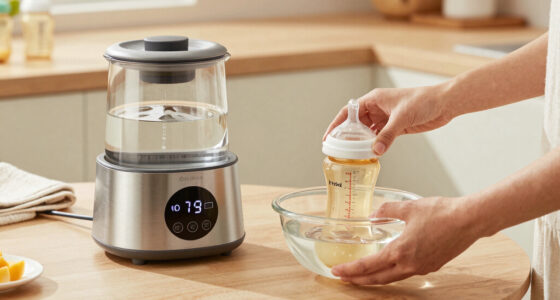
baby bottle warmer and formula mixer
As an affiliate, we earn on qualifying purchases.
As an affiliate, we earn on qualifying purchases.
How Easy Is It to Clean and Maintain a Formula Maker?
Ease of cleaning and maintenance isn’t just about convenience—it’s about safeguarding your baby’s health. Devices that are difficult to disassemble or require special tools can become breeding grounds for bacteria if not properly maintained, posing health risks. Modern models often feature removable parts designed for quick rinsing or dishwasher cleaning, which significantly reduces the effort involved. For instance, some units have components that can be sterilized in just a few minutes, making daily hygiene practices more manageable and less burdensome. This ease of cleaning encourages consistent sterilization, which is crucial in the first months of your baby’s life when their immune system is still developing and vulnerable to infections.
Proper sterilization—by boiling, steaming, or using sterilizing solutions—is essential to prevent bacterial growth, mold, or residue buildup. Neglecting this can lead to contamination that causes illness or feeding problems. One parent reported that her device takes only 2 minutes to disassemble, rinse, and sterilize nightly, which she finds far easier than manual mixing and critical for peace of mind. The implication? Investing in a device with straightforward cleaning features not only saves time but also ensures ongoing safety. Regular maintenance is a small price to pay for the health and safety of your baby, and choosing a model designed with hygiene in mind can make this routine more sustainable.
Safety First: Are Formula Makers Safe for Babies? What to Check
Safety isn’t just a feature—it’s paramount. When used properly and maintained regularly, most formula makers are safe. They incorporate leak-proof mechanisms, safety locks, and contamination prevention features. However, lapses in maintenance or manufacturing defects can introduce risks. For example, in 2021, some brands faced recalls because faulty valves led to leaks or mold buildup—highlighting the importance of staying vigilant about product safety. This underscores the need for ongoing awareness and proactive safety checks.
Staying informed about recalls from agencies like the Consumer Product Safety Commission (CPSC) is essential. Regularly checking for updates helps you avoid unsafe products and ensures your device remains in good working order. Proper sterilization and following manufacturer instructions are critical; improper cleaning can allow bacteria to grow, which can cause illness or discomfort. Using the device only with approved formulas and adhering to storage guidelines further reduces risk. Many parents find that when they follow these protocols diligently, their devices are reliable and safe, providing peace of mind. The key is consistent maintenance, staying informed, and responsibly operating the device—these practices collectively safeguard your baby’s health and well-being.
Should You Buy a Formula Maker? The Practical Verdict
Deciding whether a formula maker is worth it hinges on your specific routine, priorities, and values. For parents juggling multiple children, working overnight shifts, or simply disliking manual mixing, a formula maker can be transformative—saving time, reducing stress, and helping establish a smoother sleep routine. It can also provide a sense of control during those exhausting early months, making late-night feedings less disruptive. The implications are clear: it can improve overall family well-being by freeing up mental and physical energy that would otherwise be spent on manual prep.
On the other hand, if you only occasionally prepare bottles or primarily breastfeed, the expense might outweigh the benefits. Manual preparation involves minimal equipment and cost but offers less convenience, which may be acceptable if your routine isn’t demanding. It’s important to consider whether the device’s benefits justify the investment based on your actual needs.
Ultimately, a formula maker isn’t an absolute necessity but can be a valuable tool for many. It’s about assessing whether the convenience, time savings, and peace of mind align with your lifestyle and budget. Reflect on your typical feeding schedule, your comfort with manual prep, and how much you value reducing nighttime disruptions. The right choice is the one that eases your routine and supports your baby’s needs, whether that’s a high-tech device or traditional methods. Think of it as an investment in your family’s peace of mind—one that should fit seamlessly into your daily life rather than complicate it.
Take a moment to reflect on your routines and priorities. The decision should enhance your family’s well-being without adding unnecessary complexity or expense, ultimately supporting a happier, healthier start for your little one.
Frequently Asked Questions
Are formula makers safe for my baby?
Yes, when used correctly and cleaned regularly, they are generally safe. Always follow manufacturer instructions and check for recalls to ensure safety.Do formula makers work with all types of formula?
Most work with standard powdered formulas, but some may have limitations with thickened or specialized formulas. Check compatibility before purchasing.Are they worth the cost?
It depends on your feeding schedule and lifestyle. Parents who feed frequently or need nighttime convenience often find the value outweighs the expense.How easy are they to clean?
Modern models are designed for easy cleaning, often with removable, dishwasher-safe parts. Regular sterilization helps keep everything hygienic.Can they be used with expressed breast milk?
Primarily for formula, but some parents use them to prepare bottles with expressed milk or for supplementing, depending on the device’s features.Conclusion
For busy parents, a formula maker can be a gentle helper during those early, sleep-deprived months. It’s not a must-have, but when it fits your routine, it offers undeniable convenience and peace of mind. Think about your needs, your budget, and how much time you want to save.
In the end, the right choice is the one that makes your life easier—and keeps your little one happily fed. Because sometimes, a simple push of a button is exactly what you need to get through the night.
Halloween Picks
halloween
As an affiliate, we earn on qualifying purchases.