
TL;DR

Turn the school run and nap time into listening time
- Thousands of audiobooks, podcasts and originals
- Listen on your phone, tablet or Echo — also offline
- Cancel anytime
Travel bottle warmers heat bottles quickly and safely, often in under 15 minutes, using electric elements, insulation, or chemical packs. Recent advances include smart controls and eco-friendly materials, ensuring convenience for busy parents on the move.
Imagine this: You’re rushing out the door, your baby fussing for a feed, and there’s no microwave or stove in sight. That’s where a good travel bottle warmer becomes your secret weapon. It’s not just about convenience; it’s about ensuring your baby gets a warm, safe bottle no matter where you are.
In this guide, you’ll learn exactly how these devices work, the different types available, and recent tech upgrades that make them smarter and more reliable. If you’ve ever wondered what makes a travel bottle warmer tick, or how to pick the right one, this will give you the clear, practical info you need.
Most travel bottle warmers aim to heat milk to around 98°F to 104°F, matching natural body temperature for safety.
Electric warmers heat bottles quickly in under 10 minutes, ideal for frequent travel; thermal and chemical options are lighter but slower or temporary.
Recent tech upgrades include Bluetooth controls, faster heating times, and eco-friendly materials, making warmers more convenient and safer.
Always check safety features, compatibility with your bottles, and recall history before buying a travel warmer.
A good travel warmer keeps feeding routines consistent, making busy days easier—know what features matter most for your lifestyle.
Travel Bottle Warmers: How They Work
Portable heat, precisely delivered. Travel warmers use electric elements, retained heat, or chemical reactions to bring milk or formula toward a comfortable feeding temperature—wherever the day takes you.
Most warmers target a range close to body temperature. Always test the milk before feeding and follow the device instructions.
Minutes, depending on device and starting temperature.
Advanced elements can reduce the wait during travel.
Electric heat, thermal insulation, and chemical packs.
Consistent warmth without overheating the bottle.
From energy source to evenly warmed milk
The core principle is heat transfer: generate or retain heat, move it through the bottle wall, then control the process before the milk becomes too hot.
Supply energy
Connect a battery, car adapter, power bank, preheated reservoir, or activated chemical pack.
Create or retain heat
An element converts electricity to heat, insulation slows heat loss, or an exothermic reaction releases warmth.
Warm the bottle
Heat passes through a water bath, warming sleeve, plate, or wrap and into the bottle contents.
Stop at target
A thermostat, timer, or manual check ends warming near the desired feeding temperature.
Electric, thermal, or chemical?
Each mechanism trades precision, portability, speed, and independence from power. The best choice follows your usual journey—not merely the smallest price tag.
Electric warmer
An internal element heats the bottle while a thermostat or sensor manages temperature. Power may come from a rechargeable battery, wall outlet, or 12V/24V car adapter.
Thermal insulation
Insulated walls slow heat loss from a bottle warmed in advance. It preserves temperature rather than reliably heating a cold feed from scratch.
Chemical pack
Breaking, pressing, or shaking a pack starts an exothermic reaction. The activated pack wraps around the bottle and releases temporary heat without electricity.
Choose around the journey
Electric models lead on speed and control. Thermal and chemical options gain portability by accepting more variable temperatures or shorter useful durations.
| Type | How it works | Speed | Temperature control | Needs power? | Ideal use |
|---|---|---|---|---|---|
| Electric | Thermostat-managed heating element | ✓ Fast | ✓ High | ~ Yes | Long trips and regular use |
| Thermal | Insulation retains pre-existing warmth | ~ Holds | ✗ Low | ✓ No | Short outings with advance prep |
| Chemical | Exothermic pack releases temporary heat | ~ Varies | ✗ Low | ✓ No | Emergency or occasional backup |
Speed matters. Control matters more.
Actual performance changes with bottle volume, material, starting temperature, ambient conditions, battery charge, and the warmer’s heating method.
Typical warming window
Smarter, faster, more portable
Newer designs reduce guesswork and dependence on outlets while expanding what a single travel device can do.
Bluetooth control
Phone monitoring, temperature adjustment, and ready alerts on compatible models.
Faster elements
Improved heating and insulation can bring warming below ten minutes.
Better batteries
Longer rechargeable operation increases flexibility away from fixed power.
Multi-function use
Selected devices also warm food or support bottle sterilizing functions.
Eco materials
BPA-free plastics and lower-impact heat packs combine safety with sustainability.
The safe-feed chain
Six checks that prevent surprises
Compatibility and safety history are just as important as headline speed. Match the device to the bottles, journeys, and power sources you actually use.
Shut-off and control
Prioritize dependable temperature regulation, overheat protection, and clear status indicators.
Bottle compatibility
Confirm supported bottle width, height, shape, material, and capacity before purchase.
Real warming speed
Compare stated times at the bottle volume and starting temperature you expect to use.
Power and battery life
Check charging time, cycles per charge, car compatibility, and power-bank requirements.
Cleaning method
Look for wipe-clean surfaces and removable parts; never submerge electronic components.
Recall history
Review manufacturer instructions, current safety notices, warranty coverage, and product recalls.
Electric warmers offer the best speed and precision; thermal cases suit short prepared outings, while chemical packs work best as backups. Whatever the mechanism, verify bottle fit, use safety controls, swirl the contents, and test the temperature before every feed.
What Are Travel Bottle Warmers and Why Do They Matter?
Travel bottle warmers are devices designed to heat baby bottles when you’re away from home. They keep milk or formula at a safe, comfortable temperature—think of them as portable little kitchens for your baby’s feeding needs.
Picture this: You’re on a long car trip, and your baby’s bottle has cooled down in the backseat. A travel warmer quickly restores the right heat, avoiding the need to wait or reuse cold milk. They’re a game-changer for busy parents juggling schedules and travel.
Most are safe, compact, and easy to use, but understanding how they operate helps you pick the right one and use it confidently.
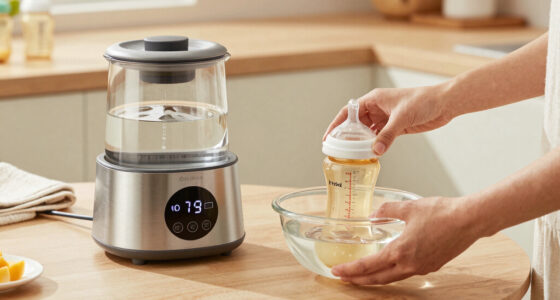
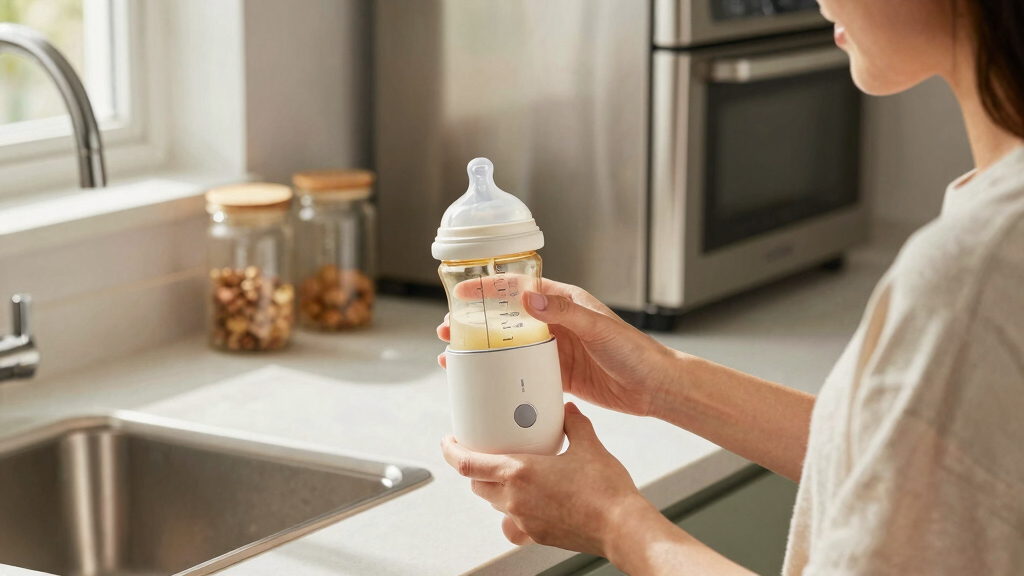
electric baby bottle warmer for travel
As an affiliate, we earn on qualifying purchases.
As an affiliate, we earn on qualifying purchases.
How Do Travel Bottle Warmers Actually Heat Bottles?
Travel bottle warmers work by transferring heat to your baby’s bottle, raising the milk’s temperature to a safe, warm level. The method varies, but the core idea is simple: generate heat, then use it to warm the milk without risking overheating.
Electric warmers use internal heating elements controlled by thermostats, much like your home kettle but smaller. This precise control ensures the milk reaches the ideal temperature without overshooting, which is crucial for safety. Thermal insulators trap heat, maintaining warmth for longer, but they depend on pre-warming or ambient heat, which can be less consistent. Chemical heat packs rely on exothermic reactions—shaking or breaking them activates heat, which you then wrap around the bottle. This method is simple but offers limited control over temperature and duration.
Understanding these mechanisms is vital because each has tradeoffs. Electric warmers offer the most precise and consistent heating, which minimizes the risk of overheating and nutrient destruction. However, they require power sources, which might limit use in certain environments. Thermal insulators are more portable and don’t need power, but they depend heavily on pre-warming and ambient conditions, which can lead to inconsistent results—sometimes leaving your baby with a lukewarm or unevenly warmed bottle. Chemical packs are extremely portable and quick but offer only short-term warmth and less control, making them suitable for emergencies rather than regular use. Recognizing these differences helps you weigh safety, convenience, and reliability based on your typical travel situations.
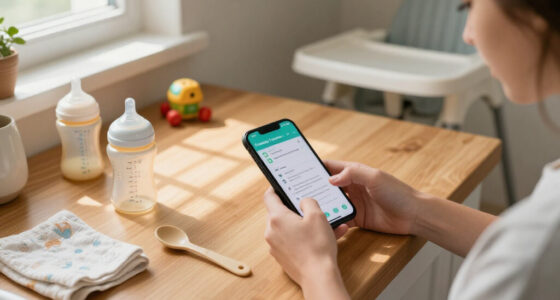
portable baby bottle warmer with Bluetooth control
As an affiliate, we earn on qualifying purchases.
As an affiliate, we earn on qualifying purchases.
Electric, Thermal, or Chemical? Which Travel Warmer Suits You?
| Type | How It Works | Best For | Pros | Cons |
|---|---|---|---|---|
| Electric | Internal heating element powered by car adapters or rechargeable batteries | Frequent travel, long trips | Fast, consistent warming; precise temperature control | Requires power source; slightly heavier |
| Thermal Insulation | Keeps pre-warmed bottles at temperature through insulation | Brief outings, short trips | Lightweight; no power needed | Limited warming capacity; depends on pre-warming |
| Chemical Heat Packs | Exothermic reaction activated by shaking or breaking | Emergency use, minimal trips | Compact; no power needed | Temporary heat; not for prolonged warming |
Choosing the right type of warmer depends heavily on your travel patterns and priorities. Electric options provide the most control and rapid heating, making them ideal for parents who travel frequently or need reliable, quick warming. However, they require power sources, which may limit their use in certain situations. Thermal insulators are excellent for short trips or quick stops, offering a lightweight, power-free solution that preserves warmth temporarily, but their effectiveness depends on pre-warming and ambient conditions—meaning they can sometimes leave you with a cooler bottle if not prepared properly. Chemical heat packs are extremely portable and convenient for emergencies or very short trips, but their limited duration and lack of precise temperature control mean they’re best used as a backup rather than a primary warming method. Understanding these tradeoffs allows you to select a device that aligns with your safety standards, convenience needs, and travel frequency—helping you avoid unexpected surprises and ensuring your baby’s feeding routine remains safe and effective.
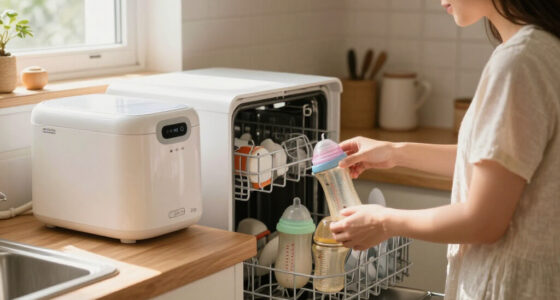
compact travel bottle warmer for infants
As an affiliate, we earn on qualifying purchases.
As an affiliate, we earn on qualifying purchases.
Recent Tech Gadgets Making Travel Warmers Smarter and Safer
Technology has boosted travel bottle warmers in exciting ways. Some now connect via Bluetooth, letting you monitor or adjust temperature from your phone, adding a layer of convenience and precision that was previously unavailable. Others heat faster, often in under 10 minutes, thanks to advanced heating elements and better insulation—reducing waiting time, which is critical during busy mornings or late-night feeds. Rechargeable batteries have improved, giving you longer use without plugging in, making the device more versatile and portable. Eco-friendly materials—like BPA-free plastics and biodegradable heat packs—are becoming standard, aligning safety with sustainability.
These technological advancements are significant because they directly impact safety and convenience. Bluetooth-enabled warmers can alert you when the bottle reaches the optimal temperature, reducing guesswork and preventing overheating—an essential safety concern. Faster heating times mean less waiting and less risk of feeding your baby with milk that’s either too cold or too hot, which could cause discomfort or safety issues. Rechargeable batteries eliminate the need for constant power sources, making travel more flexible and reducing the chance of power-related failures. Eco-friendly materials ensure that safety isn’t compromised by harmful chemicals, aligning with modern safety standards and environmental awareness. These innovations collectively mean that parents can rely on smarter, safer devices that adapt to their busy lifestyles, enhancing both safety and ease of use during travel.
As an affiliate, we earn on qualifying purchases.
What Do You Need to Know Before Buying One?
Choosing a travel bottle warmer isn’t just about price or size. Safety features matter most—look for automatic shut-offs, BPA-free materials, and reliable temperature controls to prevent overheating and ensure your baby’s safety. Check how fast it heats (most in 5-15 minutes), and ensure it’s compatible with your bottles—some warmers are designed for specific sizes or shapes, which can affect their effectiveness and safety. Battery life is key if you’re often on the move, especially for models that rely on rechargeable power sources. Some devices also double as sterilizers or food warmers, adding extra value but potentially increasing complexity.
Beyond safety, consider how well the warmer fits into your daily routine. For example, if you travel mainly by car, a warmer with a 12V adapter that heats quickly can be a game-changer, ensuring your baby’s bottle is ready when you need it. If you’re often out for short periods, a thermal case with a chemical pack might suffice, but always prioritize safety features and compatibility to prevent accidents. Reading reviews and verifying safety recalls from reputable sources like the CPSC can save you from purchasing unsafe products. A well-chosen warmer should align with your travel habits, safety standards, and ease of use, providing peace of mind that your baby’s feeding routine remains consistent and safe, no matter where you are.
What’s Next? Making Travel Feeding Safer and Simpler
Travel bottle warmers are no longer just simple gadgets—they’re evolving into smart, safe, and adaptable devices that significantly improve on-the-go feeding. The trend points toward faster heating, better safety controls, and eco-conscious materials, which together reduce risks and enhance convenience. As technology advances, these devices will become even easier to operate, offering features like app controls, real-time temperature monitoring, and automatic shut-offs—further reducing user errors and safety concerns. This evolution reflects a broader shift toward more intelligent baby gear that adapts to busy parents’ needs, making feeding routines safer, more reliable, and less stressful.
Always prioritize safety by following manufacturer instructions, checking for recalls, and testing your device at home before travel. With the right warmer, your baby’s feeding routine can stay consistent and safe, no matter where life takes you. Imagine pulling out a sleek, Bluetooth-connected warmer at the park, and within minutes, your baby’s bottle is perfectly warm and ready. That’s the future of on-the-go feeding—simple, safe, and reliable, designed to fit seamlessly into your busy life.
Frequently Asked Questions
Are travel bottle warmers safe for my baby?
Yes, when used correctly and according to the manufacturer’s instructions, travel bottle warmers are designed with safety features like auto shut-off and temperature controls. Always verify the device’s safety certifications and avoid overheating the milk.
How long does it take to warm a bottle with a travel warmer?
Most travel bottle warmers heat bottles within 5 to 15 minutes, depending on the device and starting temperature. Electric models tend to be faster, often under 10 minutes, while thermal or chemical options may take longer or only serve as temporary insulators.
Can I use a travel bottle warmer with any bottle?
Most warmers are compatible with standard baby bottles, but it’s best to check the product specifications. Some devices work better with specific sizes or shapes, so matching your bottles to the warmer’s guidelines ensures safety and efficiency.
Are chemical heat packs safe for babies?
When used as directed, chemical heat packs are safe for temporary warming. They are not meant for prolonged heating or sterilization. Always follow instructions and avoid direct contact with your baby’s skin or mouth.
How do I clean and maintain my travel bottle warmer?
Follow the manufacturer’s cleaning instructions—many can be wiped with a damp cloth, but avoid submerging electronic parts. Regularly inspect for damage or recalls and keep the device dry and free of dust to maintain safety and longevity.
Conclusion
Travel bottle warmers have come a long way, blending safety, speed, and smart tech to make feeding on the go less stressful. The right device can turn a hectic trip into a quick, safe routine—giving you peace of mind and your baby a warm, comforting bottle, wherever life takes you.
Remember, safety and reliability are key. Choose wisely, follow instructions, and your travel feeding experience will be smoother than ever.
Halloween Picks
halloween
As an affiliate, we earn on qualifying purchases.