TL;DR

Turn the school run and nap time into listening time
- Thousands of audiobooks, podcasts and originals
- Listen on your phone, tablet or Echo — also offline
- Cancel anytime
The Royal Society for the Prevention of Accidents (RoSPA) has issued Halloween safety advice for UK families, covering costumes, button batteries, pumpkin carving and trick-or-treating after dark. The guidance includes a 2024 finding that more than 80% of costumes tested for children under seven failed basic safety checks; it does not mean every costume on sale is unsafe.
The Royal Society for the Prevention of Accidents (RoSPA) has issued Halloween safety advice for families in the UK, asking parents to check children’s costumes, decorations, pumpkin-carving plans and visibility before trick-or-treating. The guidance comes alongside a reported 2024 finding that more than 80% of costumes tested for children under seven failed basic safety checks, including checks involving flammability and strangulation.
RoSPA advises parents to buy costumes from reputable retailers, especially when shopping online, and to read product labels and safety warnings. Check for applicable UKCA or CE markings and clear manufacturer details. Parents should also look for long cords or drawstrings, loose accessories, small parts that could pose a choking hazard to younger children, and masks that restrict a child’s vision. The source does not say that every item without a particular mark is unsafe; its advice is to check the product information carefully.
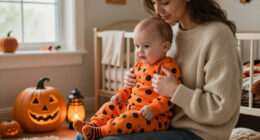
The costume advice reflects findings from the Office for Product Safety and Standards (OPSS). Its 2024 research found that more than 80% of costumes aimed at children under seven failed basic safety tests, including tests for flammability and strangulation. RoSPA also warns that homemade costumes, or outfits not tested to recognised flammability standards, may ignite more easily and burn more quickly. Keep costumes, wigs and accessories away from candles, open fires, heaters and other heat sources; battery-operated candles are suggested as a safer alternative to open flames in pumpkins and around the home.
Families are also urged to check light-up toys and decorations for button batteries. RoSPA says battery compartments should be secure and products containing button batteries, as well as spare and used batteries, kept out of reach of young children. The source attributes to the Institute of Health Visiting the figure that two children die each year as a result of button-battery incidents. If a parent suspects a child has swallowed one, the advice is to seek urgent medical attention without waiting for symptoms.
For pumpkin carving, RoSPA recommends using tools made for the activity where possible, working on a stable surface in a well-lit area, and keeping hands, tools and pumpkins dry. Cut away from the body and keep fingers clear of blades. Children should be closely supervised and use only age-appropriate tools; parents of younger children can choose decorating with paint, stickers or pens instead.
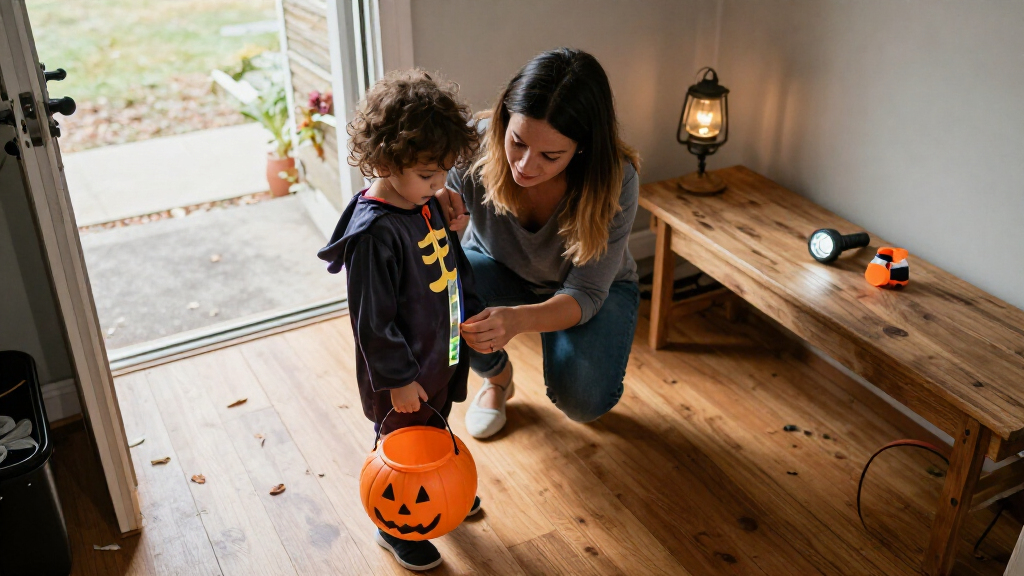
For evening outings, RoSPA recommends carrying a torch, adding reflective material to costumes, using pavements and designated crossings where available, and keeping children close to a responsible adult. The advice also asks drivers to slow down and stay alert in residential areas, particularly around parked cars, junctions and crossing points.
Safer Costumes and Darker Streets
Halloween combines several hazards in one outing: children may wear costumes that affect visibility or movement, handle decorations with small batteries, and walk near traffic after sunset. A few checks before leaving can help parents spot risks that are not obvious during costume shopping or party preparations. The OPSS result is a reason to examine labels and construction rather than assume a costume is safe because it is sold as fancy dress.
The road-safety advice matters beyond the children in a family group. Drivers may have difficulty seeing children in dark clothing, especially on poorly lit streets or in bad weather. Torches, reflective details, adult supervision and slower driving in residential areas are practical measures identified by RoSPA, not guarantees that an incident cannot happen.
Popular right now

Sony BRAVIA 5 85-Inch Mini LED 4K HDR Smart TV (K-85XR50)

Apple AirPods Pro 3 Wireless Earbuds with Active Noise Cancellation

Dyson Cyclone V10 Origin Cordless Vacuum
As an affiliate, we earn on qualifying purchases.
The Advice Behind Five Checks
The source report by MadeForMums presents RoSPA’s guidance ahead of Halloween and draws on findings and advice from several organisations. The costume testing figure is attributed to the OPSS’s 2024 research on outfits aimed at children under seven. The button-battery death figure is attributed to the Institute of Health Visiting. These figures refer to separate issues and should not be read as measurements of Halloween-specific injuries.
The report also cites Department for Transport data stating that nearly 2,500 people were killed or seriously injured on Great Britain’s roads in October 2025. That is a monthly road casualty figure, not a count of Halloween incidents or child pedestrian injuries. The source provides no Halloween-specific comparison or breakdown, so it supports general caution around roads rather than a claim about the precise risk of trick-or-treating.
The five practical checks are: inspect the costume; secure and store button batteries safely; choose a safer pumpkin-decorating or carving setup; make children visible and supervise road crossings; and remind drivers to take extra care in residential streets. The recommendations are precautionary guidance from RoSPA, not a report of a particular accident or a new product recall.
“A moment’s extra care could prevent a serious injury.”
— RoSPA, in advice quoted by MadeForMums
What the Safety Figures Show
The source does not identify the year for its reference to Halloween on Saturday, 31 October, and its opening wording that Halloween is two days away cannot be independently dated from the material provided. The report also does not give the sample size, testing methods or full results behind the more-than-80% costume figure. It should be understood as a finding about costumes tested for children under seven in 2024, not a rate for every costume sold or worn.
The Department for Transport figure cited is for all people killed or seriously injured on Great Britain’s roads during October 2025; the report gives no Halloween-specific total, child-only breakdown or comparison with other months. The source also does not name particular products or announce a recall. Families with questions about a specific product should consult its manufacturer and relevant product-safety information rather than infer that the general advice identifies that item as faulty.
Checks Before Families Head Out
RoSPA’s advice is for parents and carers to use before Halloween activities begin: review costume labels and fit, secure batteries, prepare carving safely or choose decoration instead, and plan how children will stay visible and supervised outdoors. Drivers are asked to reduce speed and watch for children in residential areas. The source describes general precautions and does not set out a scheduled follow-up announcement or enforcement action.
If a child may have swallowed a button battery, the report says to seek urgent medical attention immediately and not wait for symptoms. For other concerns about a costume, decoration or tool, parents can check the product’s instructions and safety warnings and contact the retailer or manufacturer for information specific to that item.
Key Questions
What should parents check on a Halloween costume?
Check product labels and safety warnings, look for applicable UKCA or CE markings and manufacturer information, and inspect for long cords, loose accessories and small parts. Make sure a mask does not obstruct the child’s vision.
What did the 2024 costume safety research find?
The source report says OPSS research found that more than 80% of costumes aimed at children under seven failed basic safety tests, including tests for flammability and strangulation. The reported figure applies to the costumes tested; the source does not provide the sample size or testing details.
The advice in the report is to seek urgent medical attention immediately and not wait for symptoms. Keep spare and used button batteries and products containing them out of reach of young children.
How can children be more visible while trick-or-treating?
RoSPA recommends carrying a torch, adding reflective material to costumes, using pavements and designated crossings where available, and keeping children close to a responsible adult. Drivers are asked to slow down and stay alert in residential areas.
Is pumpkin carving suitable for every child?
The report does not set a universal age rule. RoSPA advises close supervision and age-appropriate tools; for younger children, decorating a pumpkin with paint, stickers or pens is an alternative to carving.
Source: madeformums.com