
TL;DR

Turn the school run and nap time into listening time
- Thousands of audiobooks, podcasts and originals
- Listen on your phone, tablet or Echo — also offline
- Cancel anytime
A nursery humidifier adds moisture to indoor air and may ease discomfort when heated air feels dry, but it does not cure a cold or prevent illness. Choose a cool-mist model, keep relative humidity around 30–50%, and follow the manual for cleaning, water, and safe placement. If your baby has concerning symptoms, contact a pediatric clinician.
A nursery humidifier may ease discomfort from dry air, but it does not cure a cold or prevent infection.
Cool mist avoids the hot-water and steam burn hazard associated with warm-mist models.
Use a hygrometer to keep relative humidity around 30–50%, and reduce output if you see condensation or dampness.
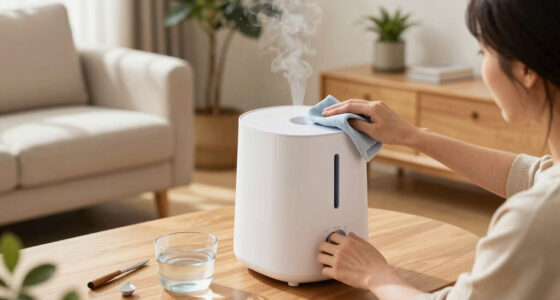
Follow the model’s cleaning and water instructions; ultrasonic units may leave white mineral dust when used with tap water.
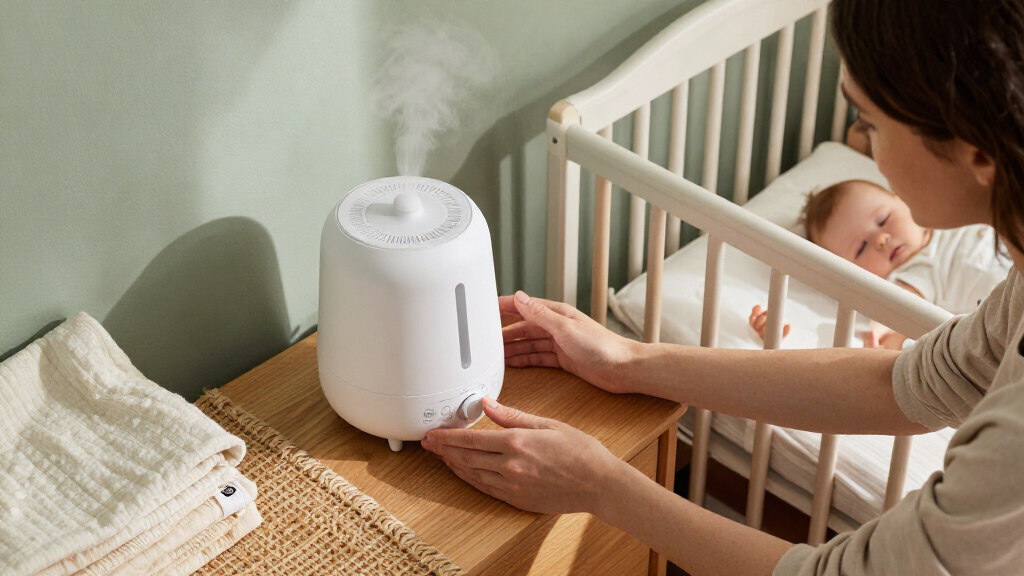
Keep the unit stable, out of reach, and directed away from the crib; check CPSC recalls and ask a pediatrician about concerning symptoms.
What a Nursery Humidifier Can—and Cannot—Do for Your Baby
A nursery humidifier adds moisture to indoor air, which may ease discomfort when heated indoor air feels dry. It can make a dry room feel less irritating for some families, but it does not treat the cause of an illness, shorten a cold reliably, or prevent infections. That distinction matters at 3 a.m., when a little relief can feel like a cure because everyone is tired. If your baby sounds stuffy during a dry winter night, a humidifier may help with dryness while you follow pediatric advice about symptoms. It cannot tell you whether congestion needs medical attention. Contact a clinician for concerns, and seek prompt care for trouble breathing, dehydration, unusual sleepiness, or a fever in a very young infant; follow local pediatric guidance for age-specific fever thresholds. Think of the machine as a room-comfort tool, like adjusting a scratchy thermostat setting—not a medicine cabinet with a plug. Families often consider one when the heater runs for hours and the room feels parched, but a comfortable-feeling room does not prove the air is dry. A hygrometer gives you a number to work with, instead of asking your nose to guess.Popular right now

LG 85-Inch QNED84B Mini LED 4K Smart TV (2026)

De'Longhi Magnifica Duo Fully Automatic Espresso Machine with Milk Frother, Silver

Ninja Crispi Glass Air Fryer (Stone) – 4‑in‑1
As an affiliate, we earn on qualifying purchases.
Choose Cool Mist to Avoid a Hot-Water Burn Hazard
For a nursery, a cool-mist humidifier is generally the safer choice because it does not hold hot water or send hot steam into a child’s space. Warm-mist models heat water, creating a burn hazard if a curious toddler tips or touches the unit. Both kinds add moisture; the difference is the heat risk and the care each model requires. | Feature | Cool mist | Warm mist | |—|—|—| | How it works | Releases cool moisture | Heats water and releases warm vapor | | Main nursery safety point | No hot-water reservoir | Hot water or steam can burn | | What to check | Tank cleaning, water guidance, mist direction | Tip resistance, hot surfaces, placement well out of reach | Imagine your toddler reaching toward the nightstand after waking. A cool-mist unit removes the specific hazard of a hot-water spill, though it still needs a stable surface and inaccessible cord. Before buying, check the model’s age-appropriateness, read the instructions, and check the CPSC recall database for the product name or model number. An automatic shutoff or app control can be handy, but it does not replace safe placement or routine cleaning.Keep Nursery Humidity Near 30–50%—and Watch the Windows
A commonly used indoor target is about 30–50% relative humidity, measured with a hygrometer. That range helps you avoid guessing: dry air may feel uncomfortable, while excess moisture can encourage mold and dust mites. A humidifier is not a “more is better” appliance; extra mist can create a new problem in the same room you hoped to make more comfortable. For example, you turn on the unit during a cold snap and notice beads of water on the bedroom window each morning. That condensation is a practical signal to reduce output or switch the humidifier off, then check the room’s humidity and nearby surfaces. Damp patches near the wall or a clammy smell also mean the room needs less moisture, not a stronger setting. A hygrometer is useful because comfort and humidity do not always line up. Put it where it can give a representative room reading, away from the direct mist plume, and check it as conditions change. If the reading climbs above the target range or surfaces become wet, turn the unit down. If your home has a persistent dampness or mold problem, ask an appropriate professional for help with the underlying moisture source.Use This Five-Step Routine to Set Up the Humidifier Safely
Set up a nursery humidifier by checking the manual, measuring humidity, choosing a safe spot, filling it as directed, and watching for dampness after it runs. This short routine makes the device easier to manage when you’re tired and the room is dark.- Read the model instructions. Confirm the approved water type, cleaning schedule, and whether overnight use is permitted.
- Check the room reading. Use a hygrometer to see whether humidity is below the commonly used 30–50% range before adding moisture.
- Place it securely. Set the unit on a stable, water-resistant surface beyond your child’s reach. Direct mist away from the crib, bedding, walls, and electronics; keep the cord inaccessible.
- Fill with fresh water as directed. Do not add oils, fragrance, or vapor rub to the tank unless the model is designed for that use and a clinician says the exposure is appropriate.
- Recheck the room. Look at the hygrometer and inspect windows and nearby surfaces. Turn the unit down or off if humidity rises too high or anything gets damp.