TL;DR

Turn the school run and nap time into listening time
- Thousands of audiobooks, podcasts and originals
- Listen on your phone, tablet or Echo — also offline
- Cancel anytime
Radiator heat lowers indoor humidity in winter, making nurseries feel dry. Using a hygrometer, appropriate humidifiers, and good ventilation helps maintain 30–50% humidity, balancing comfort and mold prevention. Always measure first — avoid automatic or continuous humidification without checking conditions.
Winter’s chill can turn your nursery into a desert for your baby’s skin and airways. Radiator heat doesn’t add moisture; it simply warms the air, which lowers its relative humidity. That dry atmosphere can lead to dry skin, irritated noses, and static shocks—especially if your little one has sensitive skin or breathing issues.
In this guide, you’ll learn how to keep moisture levels balanced, how to pick the right humidifier, and simple steps to prevent mold and condensation. Because a cozy, well-humidified nursery isn’t just more comfortable — it’s safer for your baby’s developing lungs.
Use a reliable hygrometer to measure humidity before adjusting moisture levels.
Aim for 30–50% relative humidity; avoid going above 60% to prevent mold and dust mites.
Choose a humidifier with automatic controls, and clean it regularly to prevent germs.
Lower radiator heat and good ventilation are simple, effective ways to control dryness.
Watch for signs of condensation or mold, especially on windows and walls.
Radiator Heat & Dry Winter Nurseries
Radiators warm air without adding water. As temperature rises, relative humidity falls—leaving skin, noses and throats feeling dry. The safest response is a measured one: check humidity first, adjust gently and watch for condensation.
Why warm air feels dry
A radiator usually does not remove water from the room. It increases the air’s capacity to hold moisture, so the same amount of water represents a smaller percentage of saturation.
Cold air enters
Winter outdoor air contains relatively little water vapor.
Radiator warms it
Temperature rises, but no meaningful moisture is added.
Relative humidity falls
The unchanged water content becomes a smaller percentage.
Dryness appears
Skin, lips and nasal passages lose moisture more readily.
Find the safe middle
A digital hygrometer turns moisture control into a feedback loop. Check the reading, make one small adjustment, then allow conditions to stabilize before changing anything else.
Measure where baby breathes
Place the sensor near cot height, while keeping it outside the cot and safely out of reach.
- Away from the radiator and exposed pipes
- Away from windows and direct sunlight
- Outside the humidifier’s direct mist plume
Correct gradually
Below 30%, reduce excess heat and consider controlled humidification. At 30–50%, maintain and monitor. Above 50–60%, stop adding moisture and ventilate. Condensation means conditions are already too wet somewhere in the room.
Humidifier comparison
No design is maintenance-free. For nurseries, automatic humidity control, automatic shutoff, stable placement and child-safe access are baseline requirements.
| Type | Nursery fit | Advantages | Watch-outs | Water & upkeep |
|---|---|---|---|---|
| Evaporative | ✓Strong option | Naturally slows output as humidity rises; usually fewer airborne minerals. | Fan noise; replacement wicks or filters. | Fresh water, tank cleaning and timely filter changes. |
| Ultrasonic | ~Good with care | Quiet, efficient and widely available with humidistats. | Hard water can create white mineral dust; mist can carry microorganisms. | Prefer distilled or demineralized water; clean meticulously. |
| Warm mist / steam | ✗Higher risk | Heating can reduce some contamination inside the unit. | Hot water and steam create a serious scald hazard. | Descale regularly and keep completely inaccessible to children. |
Placement rule: Use a stable, water-resistant surface. Keep mist away from the cot, mattress, walls, books, curtains, furniture, cords, outlets and electrical equipment.
Clean mist starts with a clean tank
A neglected humidifier can spread bacteria, mold or mineral particles into the nursery. Treat maintenance as part of the safety system, not as an optional chore.
Empty & dry
During regular use, empty stale water and dry the tank—ideally every day. Refill with fresh water instead of topping up yesterday’s supply.
Clean & descale
Follow the manufacturer’s exact schedule and approved method. Keep cleaning products out of the nursery while the appliance operates.
Replace on time
Change filters and wicks when specified. Worn components can harbor buildup and reduce controlled evaporation.
Improve comfort without overdoing moisture
Not every dry-feeling room needs a machine. Temperature control, short ventilation and skin or nasal care can address discomfort without pushing humidity too high.
Turn the radiator down
Use a thermostatic radiator valve and a room thermometer. Avoid overheating, and follow local infant safe-sleep guidance for temperature.
Ventilate briefly
Short, effective airing removes excess moisture and indoor pollutants without cooling walls as much as leaving a window cracked for hours.
Support skin & nose
Consider fragrance-free moisturizer for dry skin and infant-appropriate saline drops only as directed. Humidification does not cure illness.
Uncontrolled moisture and scented additives
Bowls of water on radiators provide limited, poorly controlled humidification and can spill. Never add essential oils, vapor rubs, fragrances or disinfectants unless the device is specifically designed for them and their use is appropriate around infants.
A balanced nursery, at a glance
Comfort comes from managing heat, humidity, hygiene and airflow together. A hygrometer guides the decisions; the windows and walls confirm whether the balance is working.
Use reliable data
Check both temperature and relative humidity near cot height before adding moisture.
Stay moderate
Aim for roughly 30–50% RH and avoid sustained readings near or above 60%.
Watch cold surfaces
Window moisture, damp corners or musty odors indicate excess humidity or inadequate ventilation.
Keep the cot clear
Maintain safe distance from radiators, hot pipes, guards, cords, curtains and humidifier mist.
Know when to seek help
Breathing difficulty, poor feeding, dehydration, fever or worsening eczema requires medical advice—not more mist.
Comfort without condensation
Use the lowest intervention that keeps the room comfortable, measurable and visibly dry on walls and windows.
Why radiator heat makes your nursery feel dry — and what that really means
Radiator heat warms the air, but it doesn’t add water. When cold outdoor air enters your home, it’s low in moisture. Heating that air causes its relative humidity to plummet, sometimes below 20%. That creates a sensation of dry air—think chapped lips and scratchy throats. For your baby, this means skin cracks, nasal dryness, and irritability.
Understanding this is crucial because it highlights the importance of moisture management. Without intervention, the dry environment can compromise your baby’s skin barrier and respiratory health, making them more susceptible to colds, congestion, and skin irritation. The tradeoff is that while heating keeps the nursery warm, it inadvertently dries out the air, so you must actively add moisture to counterbalance this effect. Failing to do so can lead to discomfort, increased risk of respiratory infections, and even sleep disturbances for your baby.
For example, if your room measures 20°C (68°F) with 30% humidity, heating it to 22°C (72°F) without adding moisture can drop humidity to around 25%. This not only makes the room feel stuffy and uncomfortable but can also dry out your baby’s skin and mucous membranes, increasing the likelihood of irritation and illness. Recognizing these implications underscores why passive heating isn’t enough—moisture control is essential.
As an affiliate, we earn on qualifying purchases.
How to measure and understand humidity — the first step to comfort
Before adding moisture, measure your nursery’s humidity with a reliable digital hygrometer. Place it away from the radiator, windows, or direct sunlight—near the crib, at baby’s eye level. Typical indoor humidity should hover between 30% and 50%. This range is important because it balances comfort with safety; too low and your baby’s skin and airways dry out, too high and mold or dust mites can thrive, posing health risks.
For instance, if your hygrometer reads 25%, it indicates that the environment is too dry, and you should increase moisture. Conversely, readings above 55% suggest over-humidification, which can promote mold growth and dust mites, aggravating allergies or respiratory issues. Tracking these numbers helps you fine-tune your environment, ensuring your baby’s comfort and health. Ignoring precise measurements often leads to over- or under-correction, which can either cause mold problems or leave your baby uncomfortably dry. Think of it as a vital feedback loop—accurate data guides effective action.
Using a hygrometer is like having a thermometer for comfort—precise, simple, and vital. It’s the foundation for making informed decisions about when and how much to humidify, preventing guesswork that can backfire and cause more harm than good.
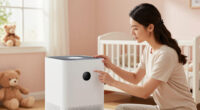
automatic humidifier for baby's room
As an affiliate, we earn on qualifying purchases.
As an affiliate, we earn on qualifying purchases.
Choosing the right humidifier — which type keeps your nursery safe and comfortable
Humidifiers come in three main types: evaporative, ultrasonic, and warm-mist. Each has pros and cons, especially for nurseries, but understanding these helps you weigh safety, efficiency, and maintenance requirements. For example, evaporative models naturally limit humidity to a safe level because they rely on evaporation, making them less likely to over-humidify. Ultrasonic units are quiet and energy-efficient but can produce white dust if hard tap water is used, which may settle on your baby’s skin or furniture, potentially causing irritation. Warm-mist or steam humidifiers heat water to produce vapor, which can reduce bacteria buildup inside the device, but they carry a burn risk if not properly secured or if the child can access them. The tradeoff is between safety and maintenance—warm-mist units require careful handling, while ultrasonic models need regular cleaning and distilled water to prevent mineral dust.
For nursery safety, pick models with automatic shutoff and humidity controls to prevent over-humidification. Place them on a water-resistant surface, away from the crib, curtains, and electrical outlets. Thoughtful placement and choosing a model with built-in safety features help ensure consistent, safe humidity levels. For example, ultrasonic models are popular but require distilled water to avoid white dust, which can irritate your baby’s lungs and skin. Balancing these factors helps you select a humidifier that supports a safe, comfortable environment without adding unnecessary risks or maintenance burdens.
As an affiliate, we earn on qualifying purchases.
How to keep your humidifier clean — because dirty humidifiers spread germs
A humidifier is only safe if it’s clean. Bacteria, mold, and mineral deposits can breed inside tanks and filters if not maintained properly. Regular cleaning is a crucial step because unclean units can aerosolize germs or irritants that compromise your baby’s respiratory health. For example, if bacteria or mold accumulate, every mist emitted can introduce pathogens into the nursery air, increasing your baby’s risk of respiratory infections or allergic reactions. Proper cleaning, therefore, isn’t just about maintenance—it’s about safeguarding your child’s health. Using distilled water reduces mineral buildup, but regular scrubbing with vinegar or descaling solutions is essential to prevent mold and bacteria growth. Never add essential oils or fragrances unless the device specifically allows it—many can be irritating or toxic for babies. Follow the manufacturer’s cleaning schedule diligently, and replace filters or wicks on time. If you see slime, bad odor, or deposits, stop using the unit until it’s cleaned thoroughly. Neglecting this can turn a helpful device into a health hazard, making regular cleaning non-negotiable for safe, effective humidification.
baby-safe humidifier with auto shut-off
As an affiliate, we earn on qualifying purchases.
As an affiliate, we earn on qualifying purchases.
Simple, low-tech ways to boost moisture without a humidifier
Not every nursery needs a humidifier. Small, strategic changes can significantly improve moisture levels without added equipment. For instance, turning down radiator thermostats or using thermostatic radiator valves can reduce the amount of heat, thereby decreasing dryness. Lowering the temperature slightly can help maintain more stable humidity levels. Airing out the room after baths or drying laundry elsewhere introduces moisture naturally, but it’s essential to do so in a way that doesn’t encourage mold growth—regularly ventilate and monitor humidity levels. Using saline nasal drops can soothe dry nasal passages, helping your baby breathe more comfortably. Avoid placing bowls of water on radiators—they can spill or evaporate too quickly, leading to inconsistent moisture levels. Drying clothes indoors can raise humidity, but if not managed carefully, it increases the risk of mold and dust mites. For example, hanging a damp towel near a vent can add moisture, but only if you monitor humidity levels and ensure proper ventilation to prevent condensation. These low-tech methods, when used thoughtfully, support a healthy environment without the need for complex equipment.
Preventing condensation and mold — spot the warning signs early
Humidity isn’t uniform; cold spots are prime spots for condensation and mold growth. Recognizing early signs—such as water on windows, peeling paint, or a persistent musty smell—is vital because these indicate that moisture levels are too high or poorly managed. Mold often hides behind furniture or around window frames, where it’s less visible but just as harmful. For instance, if you notice water droplets on the outside of a window every morning, it’s a sign that humidity is exceeding safe levels or the room isn’t sufficiently insulated. This can cause persistent dampness, which fosters mold growth and deteriorates walls and furniture. Reducing humidifier output, improving ventilation (like using exhaust fans), and moving furniture away from cold walls are effective steps. Acting early prevents extensive damage and health issues, especially respiratory problems that can be worsened by mold exposure. Vigilance in spotting these signs and responding promptly can save money and protect your baby’s health in the long run.
Smart tech and ongoing maintenance — the future of nursery moisture control
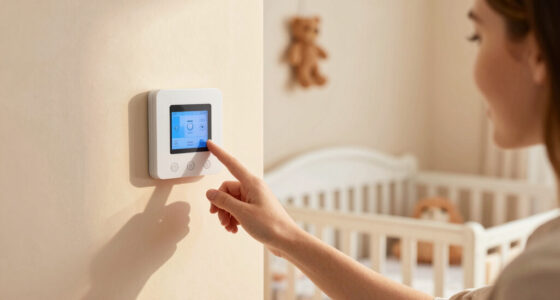
Modern nurseries are increasingly adopting smart hygrometers and automatic radiator controls to maintain stable humidity and temperature. These devices can log data, send alerts, and adjust settings automatically, reducing guesswork and ensuring consistent comfort. For example, smart sensors can monitor humidity fluctuations during the night, alerting you to deviations so you can intervene before conditions become uncomfortable or unsafe. This proactive approach minimizes the risk of over-humidifying, which can lead to mold, or under-humidifying, which causes discomfort and dryness. However, these gadgets are only as good as your maintenance routine. Regular cleaning, calibration, and filter replacements are still essential to prevent germs and mineral buildup that could compromise your baby’s health. While technology enhances your ability to maintain optimal conditions, it cannot replace regular manual checks, proper cleaning, and attentive observation. These tools support a more precise, less stressful approach to moisture control, but good old-fashioned vigilance remains key.
Frequently Asked Questions
Why does radiator heat make the nursery feel dry?
Radiator heat warms the air but doesn’t add moisture. When cold outdoor air enters and is heated indoors, its relative humidity drops, creating a dry environment that can irritate skin and airways.
What humidity is best for a baby’s room?
Between 30% and 50% relative humidity provides a comfortable and safe environment. Keep it below 60% to prevent mold growth and dust mites, which thrive in higher humidity.
Does my nursery need a humidifier?
Not automatically. First, measure your humidity. If levels are consistently below 30%, a humidifier can help. Always monitor and adjust based on actual readings—not guesswork.
Is a cool-mist humidifier safest for babies?
Generally, yes. Cool-mist models avoid scald risks, but they require regular cleaning. Ultrasonic types need distilled water to avoid mineral dust that can irritate your baby’s lungs.
Where should I put the humidifier?
On a stable, water-resistant surface, away from the crib, curtains, and electrical outlets. Keep it out of reach of your baby and ensure cords are secure.
Conclusion
Managing moisture in a radiator-heated nursery isn’t about running a humidifier nonstop. It’s about measuring, adjusting, and maintaining a comfortable balance. Think of it as creating a cozy, safe cocoon for your baby’s delicate lungs and skin.
Remember: a well-humidified nursery is a happy nursery. Keep an eye on the numbers, clean your equipment, and don’t forget to air out the room regularly. That’s how you turn winter dryness into a gentle, nurturing hug for your little one.
Fall Picks
fall essentials
As an affiliate, we earn on qualifying purchases.