TL;DR

Get baby and family essentials delivered free — and shop member deals
- Fast, free delivery on millions of items
- Access to Prime Big Deal Days deals on October 6–7
- Prime Video, Amazon Music and more included
Basement and garden-level nurseries often struggle with damp air, which can lead to mold and poor air quality. Proper moisture management involves fixing leaks, controlling humidity, and choosing the right materials—before bringing your baby in. Continuous monitoring is key to keeping the environment safe and comfortable.
Always measure and monitor humidity regularly to catch spikes early.
Fix water entry points like leaks and poor drainage before relying on dehumidification.
Choose a dehumidifier with automatic controls and continuous drainage for ease of use.
Ventilate carefully—only when outdoor conditions are dry enough to prevent adding moisture.
Address hidden mold and dampness promptly—don’t just paint over or hide the problem.
Basement and Garden-Level Nurseries: Handling Damp Air
A cool, quiet room can become a comfortable nursery—but below-grade walls, cold surfaces and limited airflow make moisture control essential. Repair water entry, stabilize humidity and verify the room before your baby moves in.
A musty smell is not normal basement character. Treat it as evidence of hidden moisture until proven otherwise.
Keep humidity in the safe middle
Install a reliable digital hygrometer near the crib but beyond a child’s reach. Record readings daily for at least a week, including after rain and during humid nights, to reveal patterns a single reading will miss.
The nursery humidity spectrum
A stable middle range protects against dampness without making the room uncomfortably dry.
A seven-day reading routine
Use consistent observations to distinguish a weather pattern from ongoing water entry.
Stop water before treating air
Inspect during or immediately after rain. Look beyond the obvious damp patch: moisture can travel from gutters, window wells, pipes or soil before appearing inside the nursery.
Grading, gutters and groundwater
Clean blocked gutters, extend downspouts and make sure the ground directs water away from the foundation.
Cracks and window wells
Check foundation joints, below-grade windows and filled window wells for seepage, stains or mineral deposits.
Pipes, drains and appliances
Inspect supply lines, drains, water heaters and nearby laundry equipment for slow leaks and condensation.
Wet laundry and unvented air
Drying clothes indoors and exhaust that terminates inside can add a steady stream of water vapor.
Condensation on walls and pipes
Warm, moist air condenses on cool masonry, windows and plumbing, creating hidden damp zones.
Humid summer ventilation
Open windows may introduce warm, muggy air that becomes even more humid as it cools below grade.
The moisture-management chain
Successful control follows a sequence. Skipping directly to an appliance can hide symptoms while wet materials continue to deteriorate.
Measure
Track humidity, temperature and weather-linked changes.
Inspect
Search walls, baseboards, closets, floors and windows.
Repair
Stop leaks and redirect exterior water away.
Dry
Remove damaged porous material and dry the assembly.
Maintain
Dehumidify, ventilate selectively and monitor continuously.
Choose tools for cool basement conditions
Capacity, automatic control and easy drainage matter more than novelty features. Locate every device away from the crib, secure cords and preserve open airflow around the unit.
Dehumidifier profile
| Control method | Removes moisture? | Fixes leaks? | Best use |
|---|---|---|---|
| Drainage or leak repair | ✓ Yes | ✓ Yes | Stops water at its source |
| Dehumidifier | ✓ Yes | ✗ No | Maintains indoor humidity after repairs |
| Dry-weather ventilation | ~ Sometimes | ✗ No | Short air exchange when outdoors is drier |
| HEPA air cleaner | ✗ No | ✗ No | Reduces some airborne particles |
| Paint or fragrance | ✗ No | ✗ No | Masks evidence; not a moisture solution |
Open windows only when outside air helps
“Fresh” does not always mean “dry.” Compare outdoor conditions before ventilating, and remember that warm air can become relatively humid after it enters a cool basement.
Dry, breezy weather
A short opening during a genuinely dry fall morning can exchange stale air without loading the room with moisture.
Warm, muggy weather
Humid summer air can condense on cool walls and pipes. Use controlled mechanical ventilation and dehumidification instead.
Build for drying, cleaning and inspection
Moisture-tolerant finishes reduce places where dampness can hide. They do not replace leak repair, but they make the room easier to monitor and recover after a small incident.
Easy-to-dry materials
Moisture-trapping materials
Moisture is only one part of readiness
Before using any below-grade room for sleep, confirm that it is physically suitable, legally permitted and free from hazards introduced by moisture-control equipment.
Avoid irritants and ozone
Keep the nursery free from smoking, fragrances, harsh sprays and ozone-producing “air purifiers.” HEPA filtration does not solve dampness.
Test below-grade rooms
Basements often have a building’s highest radon exposure. Long-term testing gives a better picture; elevated results require mitigation.
Verify sleeping-room rules
Check local requirements for emergency escape, window dimensions, ceiling height, heating, ventilation and room use.
Install working detectors
Provide correctly located smoke and carbon-monoxide alarms and test them according to manufacturer and local guidance.
Control cords and water
Keep appliances stable, inaccessible and away from the crib. Eliminate cord, tip-over, burn, noise and reservoir hazards.
Preserve safe clearance
Position the crib away from windows, radiators, heaters, dehumidifiers, damp walls and all dangling cords.
From damp clue to safer nursery
Each observation should lead to a physical check, a root-cause repair and continued verification—not cosmetic concealment.
Before the baby moves in
The room is ready only when moisture sources are corrected, readings are stable and ordinary nursery-safety requirements are satisfied.
How to Keep Basement Humidity in Check Without Making It Worse
Controlling humidity in a basement nursery requires more than just turning on a dehumidifier. The first step is measuring moisture levels with a reliable hygrometer. Aim for 30-50%. Anything above 60% invites mold and dust mites.
Place the sensor near the crib but out of reach, and check it daily for a week. This helps you spot patterns—like spikes after rain or during humid nights.
To keep humidity in check:
- Fix leaks and improve drainage
- Seal cracks around windows and walls
- Use a dehumidifier suited for cool spaces
Maintaining proper humidity is crucial because too high levels create an environment where mold spores thrive, potentially leading to respiratory issues for your baby. Conversely, overly aggressive dehumidification can dry out the air excessively, causing discomfort and static buildup. Striking the right balance ensures a healthy, comfortable environment that minimizes health risks and mold growth.
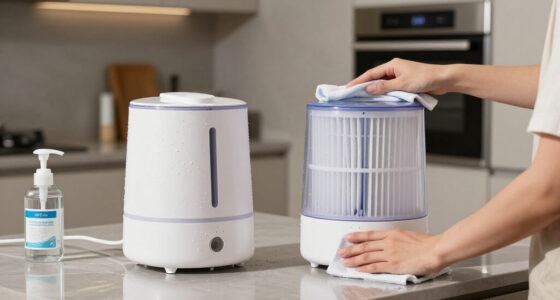
basement dehumidifier with automatic drain
As an affiliate, we earn on qualifying purchases.
As an affiliate, we earn on qualifying purchases.
Identifying and Fixing the Real Moisture Sources Before Running a Dehumidifier
Dehumidifiers can’t fix the root of the problem. If water seeps in from foundation cracks, groundwater, or blocked gutters, that moisture keeps the air damp regardless of your efforts.
Imagine a heavy rain filling the window well, seeping through small cracks. Fixing this involves repairing foundation leaks, improving grading around the house, and cleaning gutters. Only then can a dehumidifier do its job effectively.
Steps include:
- Inspect after rain or during humid weather
- Seal foundation cracks
- Ensure proper drainage away from the house
- Fix plumbing leaks
Addressing these issues is critical because hidden or ongoing water entry sources can undermine all your efforts to control indoor moisture. Failing to fix these problems means your dehumidifier will be working against a continuous influx of moisture, making it less effective and prolonging the risk of mold development. Understanding the source of moisture helps prioritize repairs, ultimately creating a more stable and safe environment for your baby.
As an affiliate, we earn on qualifying purchases.
Choosing the Right Dehumidifier for Your Basement Nursery
Not all dehumidifiers are created equal, especially for cool, damp basement spaces. Look for models with automatic humidity control, continuous drainage options, and suitable capacity for your room size. For a typical nursery in a basement, a 30-50 pint unit is usually enough.
Place the dehumidifier where air circulates freely—away from the crib, out of reach of children. Keep it on a level surface and check filters regularly to maintain efficiency.
Modern units with smart features—like remote monitoring and auto-shutdown—make maintenance easier and keep humidity steady without constant fuss.
Choosing the right dehumidifier is a tradeoff between capacity, energy use, and ease of maintenance. An undersized unit may run constantly and fail to keep humidity in check, while an oversized one can overly dry the air, causing discomfort and static buildup. Smart features help monitor performance and prevent over-dehumidification, ensuring your nursery remains safe and comfortable for your baby.
As an affiliate, we earn on qualifying purchases.
Ventilation Tips: When Opening Windows Helps (and When It Hurts)
Ventilating a basement nursery seems natural—fresh air is good, right? Not always. During humid summer days, opening windows can flood the space with moist outdoor air, making the problem worse. But during dry, breezy fall mornings, it can help lower humidity.
Use a hygrometer to judge outdoor conditions before opening windows. If outdoor dew point is low, crack a window for a short period. Otherwise, rely on exhaust fans that vent outside, not into another interior space.
For example, during a dry autumn day, opening a window for 10 minutes can refresh the air. In humid weather, it’s better to keep sealed and use mechanical ventilation.
Deciding when to ventilate involves understanding outdoor conditions because improper timing can introduce more moisture than it removes. Opening windows during high humidity can lead to increased mold risk, while doing so during dry conditions can help reduce indoor moisture levels. Proper ventilation timing is essential to avoid tradeoffs that might compromise indoor air quality and moisture control.
As an affiliate, we earn on qualifying purchases.
How to Prevent Condensation and Keep Walls Dry
Condensation happens when cold surfaces meet warm, moist air—think of water beads on a cold glass. To prevent this in your nursery:
- Insulate cold pipes and exterior walls
- Improve air circulation with fans or vents
- Keep furniture away from exterior walls to allow airflow
- Leave space behind dressers and storage units for airflow and drying
Imagine a chilly wall with a damp patch—insulation and proper spacing can stop that from turning into mold. When surfaces are cold, moisture in the air condenses, creating a perfect environment for mold and mildew. Proper insulation reduces surface temperatures, preventing condensation. Additionally, ensuring good airflow prevents pockets of humid air from lingering, which can otherwise lead to damp patches and structural damage over time. This proactive approach minimizes long-term repair costs and health hazards, making your nursery safer and more durable.
Materials That Stand Up to Moisture (And Those That Don’t)
In a damp basement, choosing moisture-tolerant materials makes a difference. Avoid carpeting, cardboard storage, or fabric furniture directly against below-grade walls. Instead, opt for washable, hard-surfaced flooring and easily cleaned furniture.
For example, a vinyl or sealed laminate floor resists mold better than plush carpet, which traps moisture and dust mites. Regular cleaning and quick drying of surfaces prevent microbial growth. Selecting appropriate materials is a tradeoff: while soft furnishings may be more comfortable, they often harbor moisture and mold, increasing health risks. Hard, sealed surfaces may be less cozy but significantly safer in high-moisture environments. Proper material choices, combined with regular maintenance, reduce the likelihood of mold and bacterial growth, ensuring a healthier space for your baby.
Spotting Mold and Musty Odors—What They Mean and What to Do
If you notice a musty smell or see dark spots behind furniture or along baseboards, it’s a red flag. Mold can grow within 24-48 hours on wet porous materials, even if it’s not immediately visible. A persistent earthy odor often points to concealed moisture.
Address these issues by removing affected materials, cleaning surfaces with mold-safe solutions, and fixing moisture sources. Don’t ignore the smell—mold exposure can impact your baby’s respiratory health. Early detection is key because mold can spread unseen behind walls or furniture, creating hidden health hazards. Regular inspections, especially in high-moisture areas, help catch problems early. Acting promptly prevents mold from establishing deep roots, which can be difficult and costly to remediate later, and helps maintain a safe environment for your baby.
Ensuring Good Indoor Air Quality in a Damp Basement Nursery
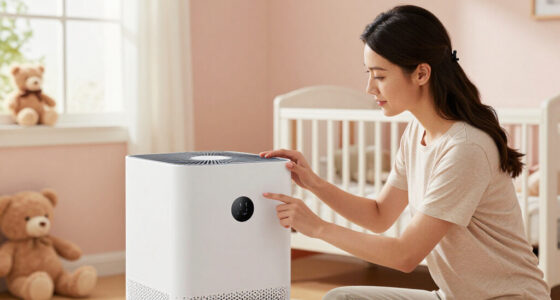
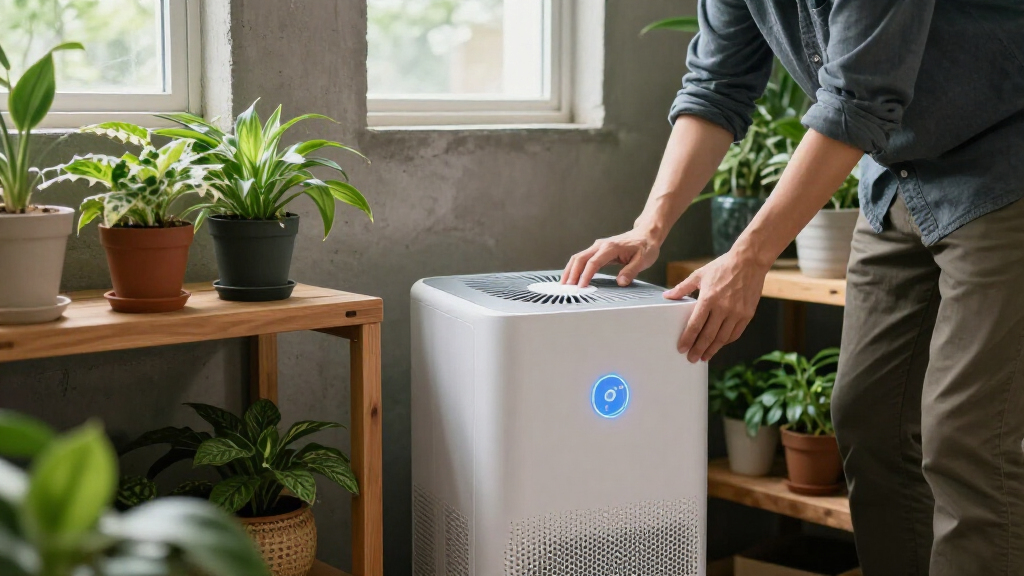
Maintaining air quality means reducing airborne particles, odors, and microbial spores. Avoid smoking, strong fragrances, ozone generators, and chemical sprays in the nursery. A HEPA air cleaner can help remove allergens and spores but doesn’t solve moisture problems.
Imagine a quiet, clean space with fresh air—this is what good air quality feels like. Continuous moisture control is essential; an air purifier alone won’t prevent mold or dust mites.
Combine air cleaning with moisture management for the best results. Effective air quality management involves reducing sources of contamination while controlling humidity levels. Relying solely on air purifiers without addressing moisture issues can lead to persistent mold and dust mite problems, as they thrive in damp environments. Therefore, a comprehensive approach—combining filtration, ventilation, and moisture control—is necessary to create a truly healthy nursery environment.
The Role of Temperature in Dampness and How to Keep It Steady
Cool air can feel dry but actually hold more moisture relative to its temperature. Keeping a stable, comfortable temperature—around 68-72°F—is key. Overheating can cause humidity to rise, making condensation more likely.
Think of a chilly wall with warm indoor air—if not managed, it leads to damp patches. Use a thermostat and avoid overheating the nursery, especially in a basement setting.
Maintaining a consistent temperature prevents fluctuations that cause condensation. Rapid changes in temperature can lead to dew formation on walls and surfaces, which then fosters mold growth. Keeping the temperature steady reduces the risk of such moisture issues, creating a stable environment that supports your baby’s health and comfort. Proper climate control is an investment in long-term safety and reduces the need for costly repairs or remediation.
Radon: The Invisible Threat in Your Basement
Radon is a radioactive gas that seeps from soil into basements and can accumulate to dangerous levels. Testing is the only way to know if radon is a concern in your nursery.
Long-term tests over 90 days give a more accurate picture than short tests. Elevated radon levels require mitigation—such as vent pipes or sealing cracks—to protect your baby.
Remember, radon doesn’t have a smell or taste. It’s invisible but potentially very harmful in high concentrations. Ignoring radon risks can lead to serious health issues over time, making testing and mitigation a crucial part of basement nursery safety.
Safety Checks Before Using Your Basement Nursery
Before setting up your nursery, verify that the space is safe and compliant. Look for active leaks, mold, proper egress windows, smoke and carbon monoxide alarms, and safe electrical outlets. The space should meet local building codes and safety standards.
Imagine a room with no safe escape route or a window too small for quick exit—these are hazards to resolve first. Proper heating and ventilation are also essential to maintain a stable environment.
Always keep furniture away from windows, radiators, and dehumidifiers, and ensure cords are out of reach.
Thorough safety checks prevent accidents and health hazards, ensuring the space is suitable for your baby’s needs. Overlooking these details can lead to dangerous situations, such as suffocation risks, electrical hazards, or inadequate ventilation, which compromise safety and peace of mind.
Frequently Asked Questions
What humidity level is safe for a nursery in a basement?
Aiming for 30-50% relative humidity is best. Short-term fluctuations are okay, but sustained levels above 60% can promote mold and dust mites, which are harmful for babies.
Is a basement nursery automatically unsafe?
No. A well-ventilated, radon-tested, moisture-controlled basement can be safe. The key is fixing active leaks, controlling humidity, and ensuring proper safety features are in place before bringing your baby in.
Will opening windows help with dampness?
Only if outdoor air is drier. During humid weather, opening windows can let in moisture, making the problem worse. Use a hygrometer to judge outdoor conditions before airing out.
Do I need a dehumidifier if I fix leaks?
If humidity stays high despite fixing leaks and improving drainage, a dehumidifier can help. Choose one rated for your room size and keep it out of your child’s reach, with continuous drainage if possible.
Can a HEPA air purifier prevent mold?
Not entirely. While a HEPA purifier reduces airborne spores and particles, controlling moisture and fixing leaks are essential to prevent mold growth in the first place.
Conclusion
Handling damp air in a basement nursery isn’t about quick fixes—it’s about consistent, informed action. Fix leaks, control moisture, and keep an eye on the environment. A healthy, mold-free nursery makes all the difference for your baby’s comfort and safety. Start with your moisture sources, and your efforts will pay off in peace of mind.Fall Picks
fall essentials
As an affiliate, we earn on qualifying purchases.