TL;DR
Listen free for 30 days with Audible
Thousands of audiobooks and originals — cancel anytime.
Start your free trialAs an affiliate, we earn on qualifying purchases.
Night light colors influence a baby’s sleep and mood. Soft, warm hues like amber promote coziness, while cooler tones like blue are calming. Adjustable, safe lights with dimming features help create the perfect nursery environment.
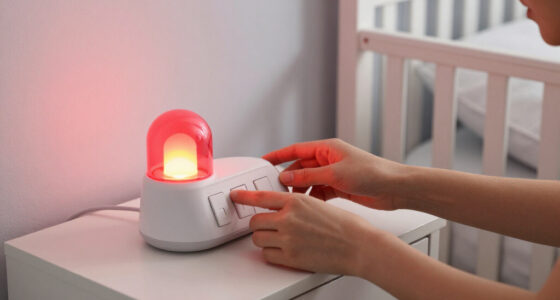
Choose dim, warm hues like amber or red to promote sleep and relaxation.
Always select night lights that meet safety standards and have adjustable brightness.
Smart, color-changing and circadian rhythm lights can enhance convenience and support natural sleep cycles.
Blue light, while calming in some contexts, can interfere with melatonin if used excessively at night.
Test different colors to see what best soothes your baby—there’s no one-size-fits-all.
Why Color Choice Matters for Your Baby’s Sleep and Mood
Night light colors do more than illuminate—they influence your baby’s feelings and sleep quality. Warm tones like amber and red evoke comfort but can be stimulating if too bright, potentially making it harder for your baby to settle back into sleep if overused. Cooler hues, such as blue and green, are naturally calming because they mimic the environment of a peaceful, natural setting—like a clear sky or lush grass—which can help signal to your baby that it’s time to relax or sleep. According to BabyUI, choosing a soft, dim light in calming colors can help your baby relax and fall asleep faster. However, it’s important to recognize that the calming effect of these colors depends on their brightness and context; a too-bright blue light, for example, might have the opposite effect and cause alertness. Understanding these nuances helps you select lights that truly support your child’s sleep cycle, rather than inadvertently disrupting it.
Picture a night when your baby wakes up fussing. A dim, warm glow can gently coax them back into sleep, while a bright, cool light might wake them further or make them more alert. The color you choose influences the overall environment and mood of the nursery, affecting how easily your baby transitions between sleep and wakefulness. This is why thoughtful selection of light hue and intensity matters—it can either promote restful sleep or contribute to unnecessary stimulation, impacting your child’s mood and sleep quality over time.
adjustable night light for nursery
As an affiliate, we earn on qualifying purchases.
As an affiliate, we earn on qualifying purchases.
How to Pick the Right Night Light Color for Your Nursery
- Start with warm, soft hues like amber or red—these mimic sunset and have a natural calming effect, promoting relaxation and helping your baby wind down. Using these colors during night-time routines can signal to your child’s biological clock that it’s time to sleep, which is crucial for establishing healthy sleep habits.
- Test different colors to see what calms your baby—each child responds differently. Some may find gentle green or pastel shades more soothing, which can be especially useful if your baby shows signs of overstimulation with certain hues. Observing your baby’s reactions helps you tailor lighting to their unique needs, fostering a more restful environment.
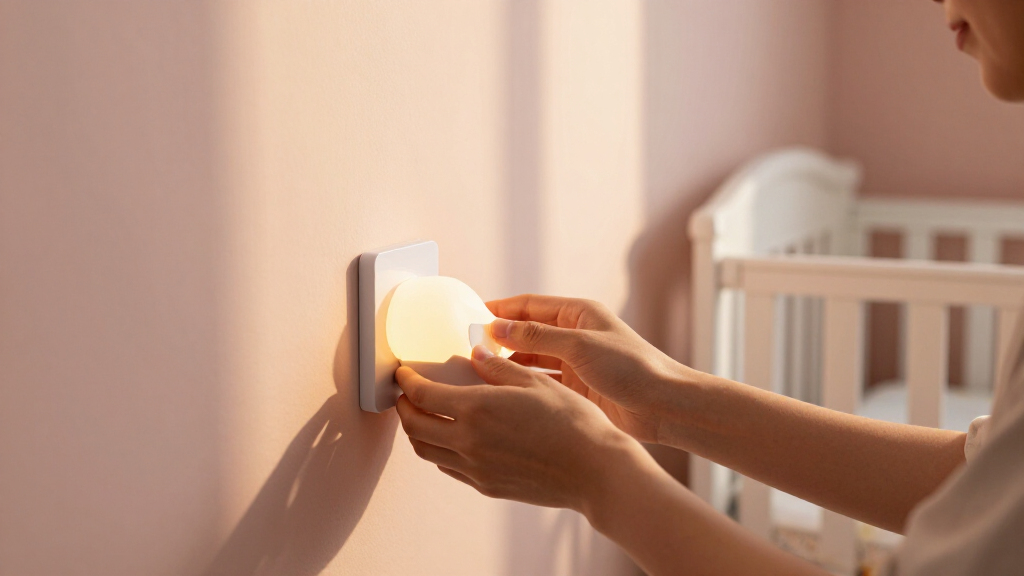
- Use a night light with adjustable brightness—dim enough to not disturb sleep but bright enough for safety. The tradeoff here is between safety and sleep quality; too bright, and it might wake your baby; too dim, and you risk safety hazards or difficulty seeing during night-time care. An adjustable dimmer allows you to strike the right balance for each situation.
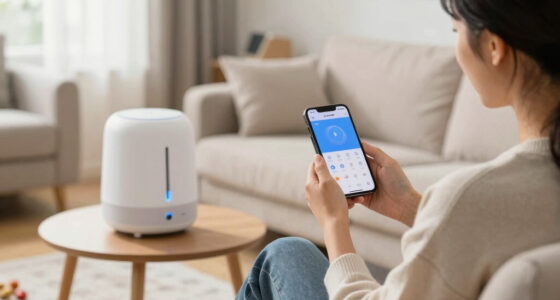
- Consider smart lights that change hues—so you can shift from warm to cooler tones as needed. This flexibility lets you adapt the lighting to different times of day or activities, supporting your baby’s circadian rhythm and making nighttime routines smoother.
- Check safety standards—ensure the light uses non-toxic materials, low heat emission, and has a stable base. Safety isn’t just about compliance; it’s about preventing accidents and ensuring the light won’t pose hazards if touched or knocked over. Investing in high-quality, certified lights reduces risks and provides peace of mind.
As an affiliate, we earn on qualifying purchases.
Compare Popular Night Light Colors and What They Do
| Color | Effect | Best For |
|---|---|---|
| Amber | Warm, cozy, promotes sleep | Nighttime feedings, calming |
| Red | Less disruptive, enhances melatonin production, supports sleep cycles | Late-night diaper changes, soothing |
| Blue | Calming but can suppress melatonin if too bright or used excessively at night | Early evening relaxation, general calming |
| Green | Soothing, helps with focus and relaxation without interfering with melatonin if used at low brightness | Quiet play, calming down, gentle wake-up routines |
As an affiliate, we earn on qualifying purchases.
Frequently Asked Questions
What is the safest night light color for newborns?
Warm, dim colors like amber or red are safest because they support melatonin production and don’t disrupt sleep. Always ensure the light meets safety standards and is used at low brightness levels.
Can I use a color-changing night light all night?
Yes, but it’s best to set it to a warm, dim hue during sleep hours. Use features like timers or sleep modes to prevent overexposure to blue or bright lights that could interfere with your baby’s sleep cycle.
How do I know if a night light is safe for my nursery?
Look for certifications like CPSC compliance, choose LED-based lights that emit minimal heat, and avoid cords or small parts. Safety always comes first—your baby’s environment should be sturdy, non-toxic, and free from hazards.
As an affiliate, we earn on qualifying purchases.
Conclusion
The right hue transforms a nursery from a mere space to a sanctuary of sleep. Focus on warm, dim lighting that suits your child’s needs and safety. A gentle glow—soft amber, perhaps—can make those midnight moments calmer and more restful for everyone. Think of your nursery as a tiny universe where light shapes dreams—choose your hue wisely, and sleep will follow.NFL season / tailgating Picks
team gear
As an affiliate, we earn on qualifying purchases.