TL;DR
Listen free for 30 days with Audible
Thousands of audiobooks and originals — cancel anytime.
Start your free trialAs an affiliate, we earn on qualifying purchases.
Twin feeding is complex but manageable with the right tech. Shared apps, smart bottles, and efficient workflows save time, reduce errors, and help caregivers stay coordinated. Building a repeatable system makes all the difference.
Feeding twins often feels like a constant juggling act—bottles, schedules, diapers, and sleepless nights. But what if technology could lighten that load?
Today’s feeding tech isn’t about gadgets for gadget’s sake. It’s about creating a smooth, repeatable system that saves you time, cuts down on mistakes, and keeps both babies fed and happy. Whether you’re nursing, pumping, or using formula, the right tools can make a real difference—especially when every minute counts at 3 a.m.
Use shared digital logs with caregiver attribution to cut record-keeping time by half, freeing you for more bonding and rest.
Double electric pumps can reduce pumping sessions from 30 to 15 minutes when fitted and maintained properly.
Smart bottles and scales offer targeted insights but should be used selectively—routine weighted feeds aren’t necessary for most twins.
Organizing with color-coded bottles and labeled storage prevents mix-ups during late-night chaos.
Embrace responsive feeding—apps and tech support watching your babies’ cues, not forcing rigid schedules.
Twin systems briefing · feeding logistics
Twin Feeding Logistics: Tech That Saves Double Duty
Twin feeding becomes manageable when tools form one repeatable system. Shared logs, efficient pumps, selective smart devices, and a well-stocked station reduce preparation, errors, cleaning, and overnight guesswork—while each baby’s cues remain the priority.
01 · The repeatable loop
Build the workflow before buying more gadgets
The best setup removes tiny decisions. Label supplies, prepare one station, record every handoff, and reset immediately so the next feed starts ready.
Identify
Baby + cues
Confirm Twin A or Twin B, then check hunger, alertness, and individual needs.
Prepare
Right bottle
Use color coding, clear labels, measured supplies, and verified preparation.
Feed
Safe position
Feed together only when both babies can do so safely with active supervision.
Record
Sync once
Log time, amount, method, caregiver, symptoms, and relevant diaper output.
Reset
Clean + restock
Separate used items, refill the station, and stage clean equipment for later.
02 · Technology stack
Choose tools by the work they remove
Useful technology reduces repetitive labor or uncertainty. Selective use beats a dashboard full of measurements that nobody trusts or maintains.
Coordinate
Shared care apps
Multi-child profiles can track feeds, pumping, diapers, sleep, medication, and growth. Prioritize live syncing, timestamps, caregiver names, reminders, and easy corrections.
Best universal valueExpress
Double electric pumps
Simultaneous pumping can sharply shorten sessions. Correct flange fit, comfortable suction, spare parts, and effective milk removal matter more than maximum power.
High time-saving potentialMobilize
Wearable pumps
Movement can continue while pumping, but fit, capacity, cost, volume estimates, and milk removal vary. Test performance before making one the primary pump.
Convenience with tradeoffsMeasure
Smart bottles + scales
Targeted data may help with reflux, prematurity, or slow weight gain. Measurements can fluctuate, and routine weighted feeds are generally unnecessary without professional guidance.
Use for a defined questionPrepare
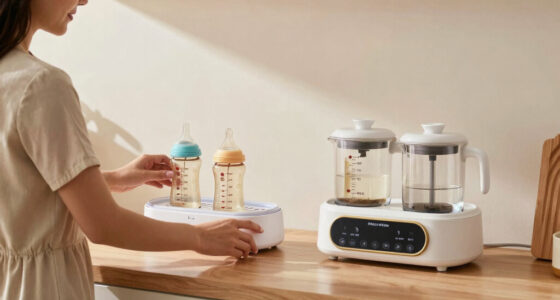
Formula machines
Automation can speed night feeds, but caregivers must verify powder-to-water ratios, compatible formula, water guidance, consistency, and the full cleaning procedure.
Verify every setupClean + warm
Washers, sterilizers, warmers
Drying sterilizers and bottle washers can reduce labor. Warmers add consistency, though babies do not medically require warm milk. Never microwave bottles.
Capacity often beats novelty03 · Decision matrix
Convenience is only useful when it stays safe
Evaluate each tool by time saved, maintenance burden, measurement reliability, and whether it solves a recurring problem in your household.
| Technology | Primary gain | Daily value | Verification burden | Best fit | Main caution |
|---|---|---|---|---|---|
| Shared care app | Coordination | ✓ High | ✓ Low | Multiple caregivers | Everyone must log consistently |
| Double electric pump | Shorter sessions | ✓ High | ~ Medium | Frequent expression | Fit and maintenance affect output |
| Wearable pump | Mobility | ~ Variable | ~ Medium | Multitasking | Milk removal may be weaker |
| Smart bottle or scale | Targeted data | ~ Selective | ~ Medium | Defined feeding concern | Imperfect data may increase anxiety |
| Formula prep machine | Fast preparation | ✓ High | ✗ High | Frequent formula feeds | Ratio and cleaning checks are essential |
| Warmer | Consistent temperature | ~ Optional | ✓ Low | Babies who prefer warm milk | Check temperature; never microwave |
| Washer or sterilizer | Less hands-on labor | ✓ High | ~ Medium | High bottle volume | Cleaning and sterilizing differ |
| Twin positioning pillow | Tandem support | ~ Variable | ✓ Low | Safe tandem feeding | Support never replaces supervision |
Interpretation: “High” value assumes the tool matches your feeding method and is used correctly. Medical concerns, prematurity, swallowing difficulty, reflux, or poor weight gain may change the safest workflow.
04 · Operational playbook
Design for the 3 a.m. version of you
Nighttime errors happen when tired caregivers must search, remember, or interpret. Make the correct next action obvious before the household goes to sleep.
Station design
Keep every repeat-use item within reach
- Color-code bottles and label milk, formula, time, and baby clearly.
- Stock burp cloths, measured supplies, water, snacks, chargers, and cleaning items.
- Use clearly separated containers for clean, ready, and used equipment.
- Keep duplicate pump parts available so one set can dry while another is used.
Night protocol
Reduce choices, light, and walking
- Pre-position clean equipment and open the shared log before the first wake-up.
- Use dim task lighting that is bright enough to verify labels and bottle contents.
- Assign handoff roles: one caregiver prepares while the other feeds or changes.
- Reset immediately after feeding so the next cycle begins from a known state.
The non-negotiable layer
Supervision, responsive feeding, accurate preparation, and hygiene come before speed. Never prop a bottle and leave a baby unattended. Follow formula-label and local water-safety guidance, check temperatures, and seek clinical advice when feeding or growth is a concern.
How digital tools help you track twin feeds without losing your mind
Keeping track of each twin’s feeding schedule, intake, and diaper output can feel overwhelming, especially with little sleep. Digital apps designed for multitasking parents make a huge difference. They sync in real-time, so any caregiver can see what’s been done, when, and by whom.
For example, a shared app allows you to log a bottle of expressed milk for Twin A at 7:15 a.m., and your partner can see that entry instantly. This reduces duplicate efforts and prevents overfeeding or missed cues. The most useful features include timestamping, caregiver attribution, reminders, and easy corrections. It’s like having a co-pilot for every feeding.
Imagine a busy morning: you’re juggling a toddler, a diaper change, and a feeding. Your partner feeds Twin B while you prepare bottles. Both of you update the app. Later, during a quick check, you see the logs—no second-guessing, no missed feeds. That’s the power of digital tracking.
As an affiliate, we earn on qualifying purchases.
Smart bottles and scales: Are they worth the hype?
Smart bottles and connected scales can provide real-time data on how much each baby is drinking. They estimate intake, monitor feeding position, and track weight trends. But, according to BabyUI, they’re most helpful when used selectively—routine weighted feeds aren’t necessary for most healthy twins.
For example, a parent might use a smart bottle for a baby with reflux to ensure proper intake, or a connected scale to monitor weight gain in a premature twin. However, measurements can be off—bottles can leak, scales may fluctuate—and routine use can sometimes add more stress than clarity.
It’s important to understand why you’re using these tools. For instance, if your baby has medical issues like reflux or slow weight gain, precise data can guide feeding adjustments and reassure you that your baby is getting enough. But if used indiscriminately, these devices might lead to unnecessary worry or overfeeding. The key is to integrate tech thoughtfully, recognizing its limits and tradeoffs.
In many cases, simple visual cues and regular weight checks at the pediatrician’s office provide enough insight. But for babies with special needs, tech like smart bottles can offer peace of mind and precise data when used appropriately.
As an affiliate, we earn on qualifying purchases.
Double electric pumps: Cut your pumping time in half
If you’re pumping milk, a double electric pump can drastically reduce your session time. Instead of spending 20-30 minutes per side, you can finish both in about 15 minutes. The secret to success? Proper flange fit, enough replacement parts, and effective milk removal.
For instance, a parent reports that switching to a high-quality double pump cut her pumping sessions from 30 to 15 minutes, freeing her up to focus on the babies or grab a few precious moments of rest. The key is to ensure the pump’s suction is comfortable and consistent—poor fit or weak suction can cut milk output and extend sessions.
It’s also worth noting that the efficiency of double pumping depends on your individual physiology. Some women find that they get more milk in less time with double pumps, while others may not see as dramatic a difference. The tradeoff is investing in quality equipment and proper technique, which can make a significant difference in your pumping routine and overall milk supply. Regular maintenance and correct flange sizing are essential for maximizing efficiency and comfort.
Remember, the goal isn’t just speed. It’s efficient, comfortable milk removal. Regularly replacing worn-out parts and maintaining the equipment makes a noticeable difference in how much milk you get and how quickly you can finish.
As an affiliate, we earn on qualifying purchases.
Automating formula prep: Does it really save time?
Formula dispensers and prep machines can take the hassle out of measuring and mixing. Simply fill them with water and formula powder, and they dispense a pre-measured bottle. But accuracy and cleanliness are key. You must verify they dispense the correct ratio and are cleaned thoroughly.
For example, a parent uses a formula prep machine to quickly prepare bottles at night. It saves her 10-15 minutes per feed, which adds up over a week. Still, she always checks the output before feeding—automation doesn’t replace attention to detail.
It’s also important to understand that these machines have limitations. They may not work well with all formula brands or water types, and improper cleaning can lead to bacterial growth. The tradeoff is convenience versus the need for vigilance. Properly maintained, these devices can streamline your routine, but they shouldn’t be seen as foolproof solutions. They work best when integrated into a well-organized routine, with regular checks to ensure safety and accuracy.
Ultimately, automation can save significant time, especially during late-night feeds, but it’s essential to stay attentive to the details—accuracy, cleanliness, and consistency are non-negotiable for your baby’s health.
As an affiliate, we earn on qualifying purchases.
Warmers, sterilizers, and other gadgets: Do they really make life easier?
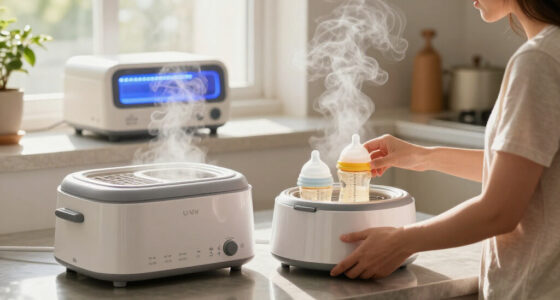
Warmers and sterilizers are handy, especially for night feeds and on-the-go use. A bottle warmer maintains a consistent temperature, reducing the risk of hot spots, while sterilizers cut cleaning time by sanitizing bottles with steam. But many babies accept room temperature or chilled milk just as well.
For instance, a parent keeps a small warmer beside her bed for night feeds. It takes just a few minutes to warm a bottle, making middle-of-the-night feeds smoother. Meanwhile, sterilizers can be a lifesaver in busy households, ensuring bottles are germ-free without extra effort.
However, it’s crucial to weigh the convenience against safety concerns. Microwaving bottles can create uneven hot spots, risking burns, so safer warming options are recommended. Also, if your baby tolerates chilled or room temperature milk, a warmer might be an unnecessary expense. The key is to balance ease of use with your baby’s preferences and safety considerations, recognizing that these gadgets are tools to support, not replace, good hygiene and safe feeding practices.
Positioning systems and accessories: Supporting tandem feeding and bottle-holding
Proper positioning makes tandem feeding or supervised bottle-feeding safer and more comfortable. Purpose-built pillows and adjustable supports hold both babies in safe, ergonomic positions, freeing your hands. But fit varies—what works for one caregiver or baby might not for another.
For example, a mom uses a twin feeding pillow with adjustable straps. It keeps both babies at the right height and angle, allowing her to feed them side-by-side without straining her back. Washable covers and easy adjustments are must-haves.
These tools aren’t magic. They support safe positioning but still require active supervision. Babies can shift or wiggle, and pillows can’t replace vigilant care. Using the right accessories can reduce strain and improve safety, but they should be viewed as aids—not substitutes—for attentive caregiving. Ensuring proper fit and comfort for both babies and caregivers helps prevent strain injuries and promotes a more relaxed feeding experience.
Labels, organization, and low-tech tricks that keep you sane
Sometimes simple solutions beat high-tech. Color-coded bottles, reusable labels, and well-organized fridge zones help prevent mix-ups. Pre-measured supplies stored in labeled containers save time and frustration.
For instance, a parent labels each twin’s bottles with a different color and timestamp. She keeps separate fridge sections for each baby’s milk, avoiding confusion during late-night chaos. These low-tech hacks are reliable, easy to implement, and cost next to nothing.
Effective organization doesn’t just prevent mistakes; it reduces stress and saves precious time. When everything has a designated place and clear labels, you can quickly grab what you need without second-guessing. This simplicity is especially valuable in the middle of the night or when multiple caregivers are involved, fostering consistency and confidence in your routine.
What’s new and trending in twin feeding tech?
Recent trends focus on making twin feeding more intuitive and less time-consuming. Apps now support multiple profiles and caregiver syncing, while wearable pumps are smaller, quieter, and easier to use. Bottle-washing appliances combine cleaning, sanitizing, and drying into one step, saving hours weekly.
Parents are also paying attention to privacy, data ownership, and whether new features really add value. For example, some families prefer simple, straightforward apps that track just the essentials, rather than overly complex systems that create more work.
Clinicians are emphasizing responsive feeding, which means watching each baby’s cues instead of rigid schedules. Technology should support this approach, not replace your instinct and observation. The evolving landscape offers tools that can help you adapt your routines for more natural, responsive care, but it’s essential to evaluate whether new gadgets genuinely improve your experience or add unnecessary complexity.
Frequently Asked Questions
Should twins always follow the same feeding schedule?
No. While coordinating feeds can streamline care, each baby’s cues and needs matter most. Some families feed twins on a shared schedule, while others respond individually. The key is staying responsive and flexible, based on each baby’s growth and comfort.
Can one adult safely bottle-feed both twins at once?
Yes, with proper positioning and supervision. It’s safest for babies to be fed in a supported, seated position, not propped. Never leave either baby unattended during feeding, especially if they’re still learning to swallow or have medical concerns.
Are wearable pumps as effective as traditional ones?
They work well for some parents, especially when discreet or hands-free operation is needed. However, performance varies based on fit, breast anatomy, and milk supply. Many find traditional pumps more reliable for maximum milk removal.
Should I buy a formula prep machine?
They can save time if used correctly, but require careful cleaning and verification of accurate dispensing. Always follow manufacturer instructions and check that the machine’s settings match your formula brand and water safety guidelines.
Is a bottle warmer essential?
No. Many babies accept room temperature or chilled milk just fine. A warmer is mainly for convenience—if you prefer warm milk, choose a safe, easy-to-use model, but it’s not a medical necessity.
Conclusion
Building a twin feeding system that works takes experimentation, but the right tech can make a world of difference. It’s about choosing tools that save time, boost safety, and support your intuition.
Remember, no gadget replaces your care and attention. Use technology as a helper, not a crutch, and stay flexible. Before long, your routine will feel natural—like a well-oiled machine that keeps both babies fed and your sanity intact.
College move-in / dorm season Picks
dorm essentials
As an affiliate, we earn on qualifying purchases.